Group · Dairy
Mozzarella
Mozzarella is an Italian pasta filata cheese, recognisable by its soft, melting and slightly elastic texture. It comes in several forms: mozzarella di bufala made with buffalo milk, fior di latte made with cow’s milk, small balls in brine (bocconcini, ciliegine) or the firmer version intended for cooking. With around 227 kcal per 100 g, it provides good protein (16.1 g) and calcium, for little carbohydrate. Its freshness and mildness make it an ally in summer as well as in hot dishes. Well incorporated, it has its place in a varied, balanced diet, as long as you play on the portions.
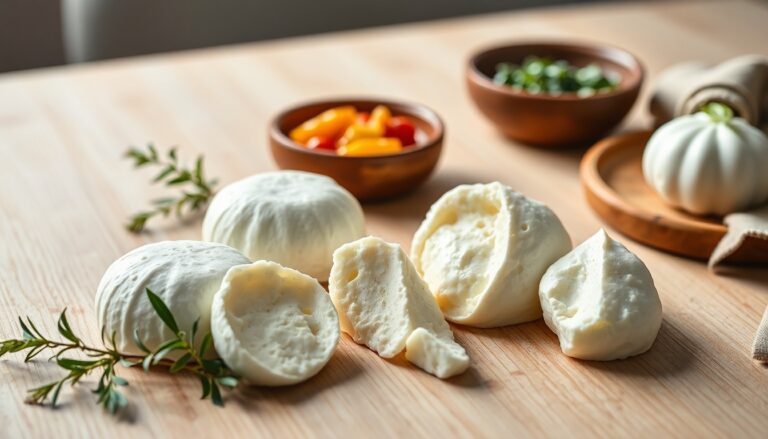
Macronutrient breakdown
Nutrition table per 100 g
| Calories | 227 kcal |
| Kilojoules | 942 kJ |
| Protein | 16,1 g |
| Carbohydrate | 0,7 g |
| Fat | 17,7 g |
Micronutrients per 100 g
All measured nutrients, ranked by share of the daily reference intake.
- Vitamin B122,28 µg91 %
- Calcium598 mg75 %
- Phosphorus354 mg51 %
- Selenium16,3 µg30 %
- Zinc2,92 mg29 %
- Iodine37,2 µg25 %
- Vitamin A179 µg22 %
- Vitamin B20,28 mg20 %
See the other 16 nutrients
- Vitamin D0,4 µg8 %
- Magnesium20 mg5 %
- Potassium76 mg4 %
- Vitamin B97 µg4 %
- Omega-6 LA0,34 g3 %
- Total omega-30,08 g3 %
- Iron0,44 mg3 %
- Vitamin K12,3 µg3 %
- Omega-3 ALA0,06 g3 %
- Vitamin B10,03 mg3 %
- Vitamin B60,04 mg3 %
- Vitamin B50,14 mg2 %
- Vitamin E0,19 mg2 %
- Manganese0,03 mg2 %
- Copper0,01 mg1 %
- Vitamin B30,1 mg1 %
Anses Ciqual 2025. Source: Anses, 2025, Ciqual food composition table
Tips
Mozzarella can be enjoyed in a thousand ways. Raw, it elevates a caprese salad with tomatoes, basil and a drizzle of olive oil, in the spirit of the Mediterranean diet. Melted, it tops pizzas, gratins, aubergine parmigiana or panini. To preserve its milky flavour, take it out of the fridge a few minutes before serving, and eat the fresh version soon after opening, keeping it in its brine.
Nutrition facts and benefits: with 16.1 g of protein and only 0.7 g of carbohydrate per 100 g, mozzarella has an interesting profile. Its glycaemic index is very low. However, its 17.7 g of fat explain its 227 calories per 100 g. It provides calcium, phosphorus and vitamin B12, which are useful to the body. The buffalo milk version is a little richer and more fragrant than fior di latte.
- Portion guide: 30 to 50 g is enough to enrich a plate without weighing down the calorie count.
- Pairings: tomatoes, courgettes, rocket, cured ham, fresh herbs, for light, colourful meals.
- Cooking: it releases water, so remember to drain it and pat it dry before putting it in the oven.
Weight-loss tips: if you are watching your weight, stick to measured quantities and choose drained mozzarella rather than breaded or fried. Compared with fattier, saltier cheeses such as roquefort, it remains relatively mild. To lighten a recipe further, pair it with crunchy vegetables and limit the dressing oil. You can find all the figures in our food calorie table.
For active people: its protein content makes it a handy option to round out a recovery meal or a snack. A few balls with tomatoes and a little wholemeal bread provide protein, carbohydrate and calcium after exercise. To vary your dairy intake, alternate with a lighter 0% fat fromage blanc, or a semi-skimmed milk ricotta. Discover all the dairy products to put together balanced menus to suit your goals, whether bulking up or managing your weight.
Pregnant? Mozzarella made with pasteurised milk is allowed, and always once cooked. The rules are in our guide to mozzarella during pregnancy.
Recipes with mozzarella
Guides about mozzarella
The 20 lowest-calorie cheeses (ranked by kcal per 100 g)
Cheese and diabetes: no sugar, but salt and fat
How much cheese a day? 30 g, and which to choose
