Group · Starchy foods
Soba noodles (buckwheat)
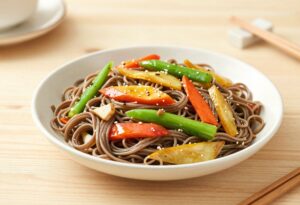
Soba noodles are Japanese noodles made from buckwheat flour, with a distinctive, slightly rustic taste. When they are 100% buckwheat, they are naturally gluten-free and higher in protein and fibre than wheat noodles. They can be enjoyed hot in a broth or cold in a salad.
Macronutrient breakdown
Nutrition table per 100 g
| Calories | 99 kcal |
| Kilojoules | 414 kJ |
| Protein | 5,1 g |
| Carbohydrate | 21,5 g |
| Fat | 0,1 g |
| Fibre | 1,5 g |
Micronutrients per 100 g
All measured nutrients, ranked by share of the daily reference intake.
- Manganese0,37 mg19 %
- Vitamin B10,09 mg9 %
- Vitamin B50,24 mg4 %
- Phosphorus25 mg4 %
- Iron0,48 mg3 %
- Vitamin B30,51 mg3 %
- Vitamin B60,04 mg3 %
- Magnesium9 mg2 %
See the other 5 nutrients
- Vitamin B20,03 mg2 %
- Potassium35 mg2 %
- Zinc0,12 mg1 %
- Copper0,01 mg1 %
- Calcium4 mg1 %
USDA FoodData Central (SR Legacy)
Tips
Soba noodles cook in a few minutes; rinse them in cold water to stop the cooking and stop them sticking. They are perfect in a stir-fry, as in the vegetable and soba noodle stir-fry, or in a cold salad.
- Nutrition values: higher in protein and fibre than wheat noodles; a more moderate glycaemic index.
- Good to know: check the ingredients: many soba noodles mix buckwheat and wheat. For a gluten-free version, choose 100% buckwheat.
Made from buckwheat, they fit into gluten-free recipes. See the Starchy foods family.
Sources
Average nutrition values per 100 g, given as a guide only (they may vary by brand and preparation).