Group · Sweet foods
Icing sugar
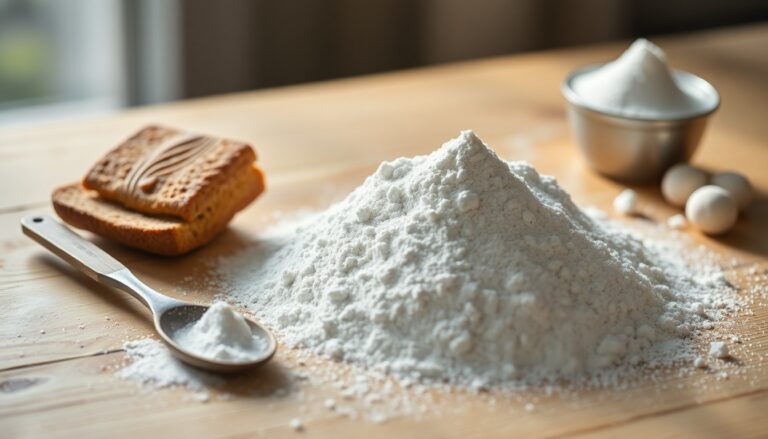
Icing sugar, also called powdered or confectioners’ sugar, is refined sugar ground to an extremely fine, almost floury texture. A pinch of starch is often added to stop it clumping. It is above all a finishing and decorating ingredient in baking: it is used to dust cakes and to make icings, glazes or smooth butter creams. Nutritionally, it is almost pure sugar: around 389 kcal and nearly 99.7 g of carbohydrate per 100 g, with no protein, fat or fibre. Like all sugary products, it should be eaten in moderation as part of a balanced diet.
Macronutrient breakdown
Nutrition table per 100 g
| Calories | 399 kcal |
| Kilojoules | 1700 kJ |
| Carbohydrate | 99,7 g |
Micronutrients per 100 g
All measured nutrients, ranked by share of the daily reference intake.
- Vitamin B20,02 mg1 %
- Potassium13,5 mg1 %
- Iron0,08 mg1 %
- Copper0,01 mg1 %
- Calcium3,69 mg0 %
- Magnesium1,65 mg0 %
- Manganese0,01 mg0 %
- Zinc0,02 mg0 %
Voir le dernier nutriment
- Iodine0,3 µg0 %
Anses Ciqual 2025. Source: Anses, 2025, Ciqual food composition table
Tips
Icing sugar is valued for its fineness and its ability to dissolve instantly. This texture makes it ideal for icings, royal icing, meringues and decorative dusting. Here are a few practical tips for using it well without overdoing it.
- Portions: for decoration, a fine dusting of icing sugar (1 to 2 g) is enough to dress up a dessert while keeping calories low.
- Homemade icing: mix it with a little water, lemon juice or egg white to coat biscuits and brioches.
- Storage: keep it in an airtight container, away from humidity, as it tends to harden and form lumps.
- Slimming tip: dusting gives an impression of indulgence for very little sugar, which is better than a thick glaze.
In terms of nutrition facts, icing sugar is a simple carbohydrate with a high glycaemic index: it causes a rapid rise in blood sugar. With around 389 calories per 100 g and nearly 99.7 g of fast carbohydrate, it provides no fibre, protein or vitamins. It is a source of what are known as empty calories, to be used sparingly in a balanced diet plan.
In the kitchen, icing sugar stands apart from its cousins by its particle size. You can compare its uses with classic table sugar or light brown sugar, which is more colourful and aromatic. It also goes with many preparations in the sugary foods family, such as macarons or dusted doughnuts.
For active people: icing sugar has no specific nutritional value in itself, but its fast carbohydrates can help out for an immediate energy boost or to sweeten a post-exercise preparation. That said, for recovery and snacks, more complete sources (fruit, oat flakes, dairy products) remain preferable. If you are aiming for lean mass gain or weight loss, watch your intake of added sugars and favour the quality of your carbohydrates.
Weight watch-outs: its calorie density is high and it slips easily into baking without being noticed. Measure it, prefer a light dusting to rich icings, and keep icing sugar for occasions rather than every day.