Group · Fish
Bluefin tuna
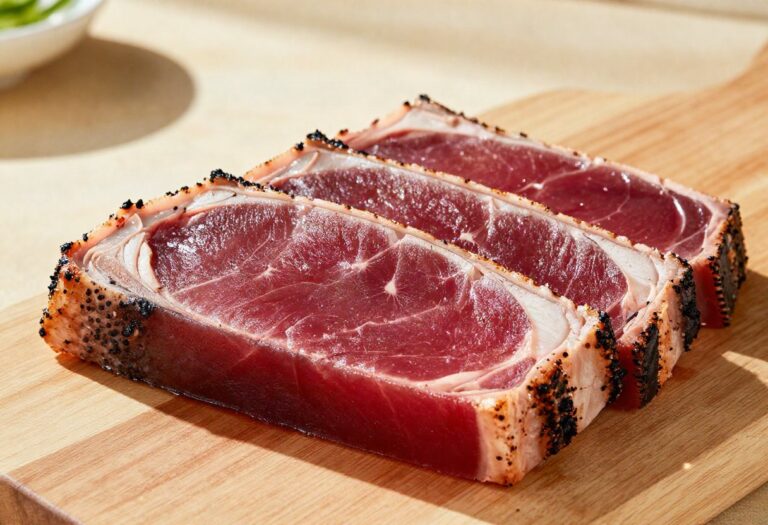
Bluefin tuna is a sea fish prized for its dense, red, flavourful flesh, often compared to meat because its texture is so firm. A star of Japanese cuisine (sushi, sashimi, tataki), it is also eaten raw, medium-rare or grilled in Mediterranean cooking. Nutritionally, it is a fish rich in protein (about 23.3 g per 100 g) and relatively moderate in calories, with 157 kcal per 100 g and 0.59 g of carbohydrates. Its fat content stays reasonable (6.81 g), with a useful share of omega-3 fatty acids. An excellent ally in a balanced diet, bluefin tuna combines nutrient density with great versatility in the kitchen.
Macronutrient breakdown
Nutrition table per 100 g
| Calories | 157 kcal |
| Kilojoules | 659 kJ |
| Protein | 23,3 g |
| Carbohydrate | 0,6 g |
| Fat | 6,9 g |
Micronutrients per 100 g
All measured nutrients, ranked by share of the daily reference intake.
- Vitamin B129,43 µg377 %
- DHA0,89 g356 %
- Selenium73,4 µg133 %
- Vitamin D5,7 µg114 %
- EPA0,28 g112 %
- Vitamin A655 µg82 %
- Vitamin B38,65 mg54 %
- Total omega-31,17 g47 %
See the other 14 nutrients
- Phosphorus254 mg36 %
- Vitamin B60,46 mg33 %
- Vitamin B10,24 mg22 %
- Vitamin B20,25 mg18 %
- Vitamin B51,05 mg18 %
- Magnesium50 mg13 %
- Potassium252 mg13 %
- Copper0,09 mg9 %
- Vitamin E1 mg8 %
- Iron1,02 mg7 %
- Zinc0,6 mg6 %
- Calcium8 mg1 %
- Vitamin B92 µg1 %
- Manganese0,02 mg1 %
Anses Ciqual 2025. Source: Anses, 2025, Ciqual food composition table
Tips
Bluefin tuna can be enjoyed in many ways. Fresh, it is good raw as a tartare or sashimi, seared for a few seconds on each side to keep a pink centre, or grilled on a griddle with a drizzle of olive oil, sesame and a little soy sauce. Quick cooking is ideal: cook it for too long and this noble flesh dries out. A portion of 100 to 150 g suits a meal well. Pair it with crunchy vegetables, brown rice or avocado for a complete, colourful dish.
In terms of nutritional values, bluefin tuna stands out for its 23.3 g of complete protein per 100 g, its lack of carbohydrates and its 144 kcal. It provides omega-3, vitamin D, B vitamins (notably B12) as well as selenium, phosphorus and iron. Its glycaemic index is zero, making it a good food for a balanced diet or for cooking inspired by the Cretan diet.
For active people, bluefin tuna is an excellent supplier of lean protein that supports muscle recovery and the maintenance of muscle mass. Included in a post-workout meal with a source of carbohydrates (rice, sweet potato), it supports the rebuilding of muscle fibres. When cutting, its low calorie density and lack of sugars are an advantage. To vary your protein intake, you can also look at protein snacks.
- Storage: fresh tuna should be eaten very quickly (24 to 48 hours in the fridge) or frozen as soon as you buy it, which is recommended before eating it raw.
- Seasonality: bluefin tuna fishing is governed by strict quotas; choose a responsible, labelled source.
- Cooking: medium-rare or seared to keep it tender and preserve nutrients.
Points to watch: like other large predatory fish, bluefin tuna can accumulate mercury, so it is advisable to moderate how often you eat it, particularly for pregnant women and young children. To lighten a dish, choose cooking methods without added fat and light side dishes. You can compare its calories with those of other species such as yellowfin tuna or salmon, and explore the whole fish family to diversify your menus. Eaten in moderation, bluefin tuna remains a tasty and nourishing fish.