Group · Fish
Rainbow trout
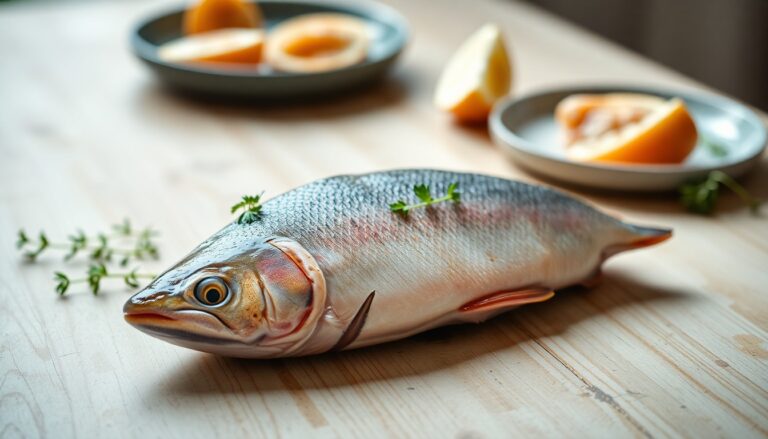
Rainbow trout is a freshwater fish recognisable by the iridescent stripe along its side. Mostly raised on fish farms, it is sold as fillets, steaks or whole, and lends itself to many preparations. Its pink, fine and fairly lean flesh makes it a great ally in a balanced diet. With around 143 kcal per 100 g, it provides nearly 21.5 g of very good quality protein, with no carbohydrates or fibre at all, and only 6.33 g of fat, including beneficial fatty acids. Full of flavour and easy to cook, rainbow trout appeals to fans of simple cooking and to athletes who care about their nutritional values.
Macronutrient breakdown
Nutrition table per 100 g
| Calories | 143 kcal |
| Kilojoules | 600 kJ |
| Protein | 21,5 g |
| Fat | 6,4 g |
Micronutrients per 100 g
All measured nutrients, ranked by share of the daily reference intake.
- Vitamin D15 µg300 %
- DHA0,65 g260 %
- Vitamin B124,56 µg182 %
- EPA0,3 g120 %
- Total omega-31,15 g46 %
- Phosphorus263 mg38 %
- Vitamin B35,42 mg34 %
- Vitamin B51,79 mg30 %
See the other 19 nutrients
- Vitamin B60,37 mg26 %
- Potassium391 mg20 %
- Vitamin E1,9 mg16 %
- Vitamin B10,17 mg15 %
- Omega-3 ALA0,2 g10 %
- Vitamin B20,11 mg8 %
- Omega-6 LA0,78 g8 %
- Calcium60,5 mg8 %
- Magnesium28,3 mg8 %
- Iodine9,5 µg6 %
- Zinc0,59 mg6 %
- Vitamin B911 µg6 %
- Selenium2,85 µg5 %
- Vitamin C2,9 mg4 %
- Copper0,03 mg3 %
- Iron0,35 mg3 %
- Manganese0,03 mg1 %
- Vitamin A9,5 µg1 %
- Vitamin K10,1 µg0 %
Anses Ciqual 2025. Source: Anses, 2025, Ciqual food composition table
Tips
Rainbow trout can be cooked in a thousand ways. To best preserve its nutritional qualities, choose gentle cooking: steamed, baked in a parcel, poached in court-bouillon or simply pan-fried with a drizzle of oil. A portion of 120 to 150 g suits a balanced meal, served with steamed vegetables and a wholegrain cereal. Lemon, dill, parsley, shallot or flaked almonds bring out its delicate flesh without weighing the dish down.
Nutritional values and benefits: rainbow trout is a remarkable source of complete protein, containing all the essential amino acids. It supplies quality fats, notably omega-3, as well as vitamin D, B vitamins (B12 in particular), phosphorus, selenium and potassium. Its glycaemic index is zero since it contains no carbohydrates, which makes it a useful food for anyone watching their blood sugar.
- For your waistline: at 143 kcal per 100 g, it is a fish moderate in calories. Avoid breadcrumbs and creamy sauces, which push up the energy count.
- Freshness: eat it soon after buying or freeze it straight away. The flesh should be firm and the sea smell discreet.
- Similar varieties: you can ring the changes with salmon trout, which has more colourful flesh, or ordinary trout.
Tips for active people: thanks to its 21.5 g of protein per 100 g, rainbow trout is perfect for muscle recovery and for maintaining lean mass. Include it in a post-workout meal with starchy foods to replenish glycogen, or in a cutting phase thanks to its low calorie density. Its omega-3 contributes to joint comfort for regular exercisers. To top up your protein over the day, also discover our ideas for protein snacks.
In terms of seasonality, farmed trout is available all year round, which makes meal planning and batch cooking easier. You can prepare it as cold fillets for a salad, as homemade rillettes or simply grilled. To explore other protein-rich fish, browse the fish family, and easily compare the energy content of your foods with the calorie table. In short, rainbow trout ticks many boxes: tasty, versatile, rich in protein and reasonable in calories, it has its place in a varied diet suited to weight-loss or sporting goals.