Group · Herbs & spices
Zaatar
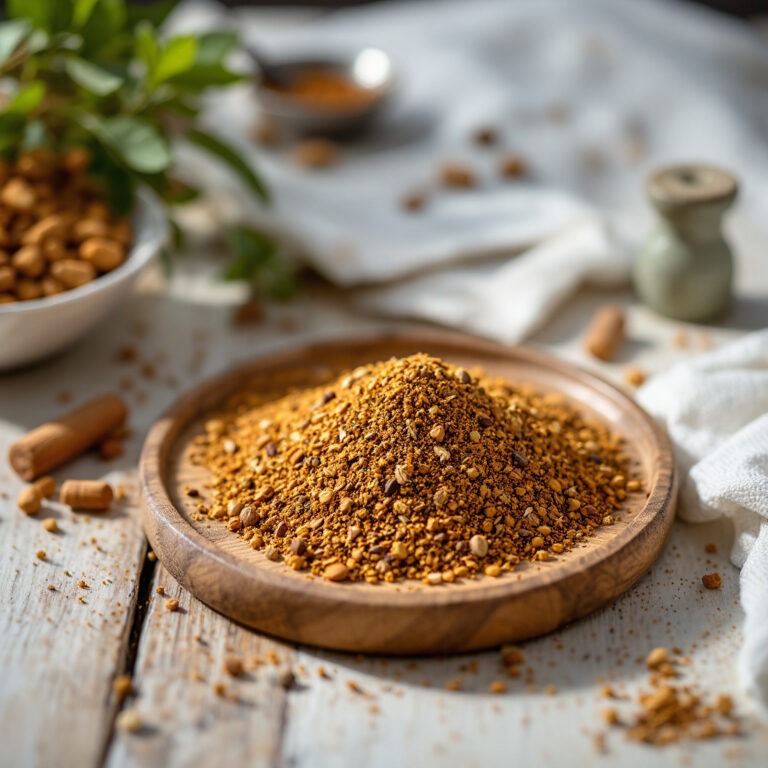
Zaatar is the spice blend of the Levant: dried thyme or wild oregano, sumac for tartness, toasted sesame seeds and a touch of salt. The word refers to both the plant and the blend, which is why two jars bought in two countries do not always resemble each other.
On nutrition facts, the entry shows 327 kcal per 100 g, with 37.8 g of carbohydrate, 27.7 g of fibre, 12.6 g of protein and 7.85 g of fat. These figures are those of the line « Spice (average food) » in the Ciqual table: no blend is measured separately there. The missing precision has no consequence, because nobody eats 100 g of zaatar.
Macronutrient breakdown
Nutrition table per 100 g
| Calories | 327 kcal |
| Kilojoules | 1370 kJ |
| Protein | 12,6 g |
| Carbohydrate | 37,8 g |
| Fat | 7,9 g |
| Fibre | 27,7 g |
Micronutrients per 100 g
All measured nutrients, ranked by share of the daily reference intake.
- Manganese13,6 mg680 %
- Vitamin K1116 µg155 %
- Iron18 mg129 %
- Copper0,93 mg93 %
- Potassium1430 mg72 %
- Calcium479 mg60 %
- Magnesium186 mg50 %
- Vitamin E4,76 mg40 %
- Vitamin B9dietary folate equivalents26,3 µg
See the other 14 nutrients
- Vitamin B51,65 mg28 %
- Phosphorus190 mg27 %
- Omega-3 ALA0,53 g27 %
- Vitamin B60,31 mg22 %
- Selenium9,18 µg17 %
- Zinc1,63 mg16 %
- Omega-6 LA1,49 g15 %
- Vitamin B10,12 mg11 %
- Vitamin B31,52 mg10 %
- Vitamin B20,09 mg6 %
- Iodine9,12 µg6 %
- Vitamin A46,1 µg6 %
- Vitamin C4,29 mg5 %
- Vitamin D0,09 µg2 %
Anses Ciqual 2025. Source: Anses, 2025, Ciqual food composition table
Tips
What a spoonful really provides. A level teaspoon weighs about 2 g, or 6.5 kcal. The same spoonful gives 0.55 g of fibre and 0.25 g of protein. In other words, nothing that weighs on a day. The value of zaatar is not nutritional, it is in the flavour, and that is already a lot, because a dish with flavour needs no added fat.
Sumac does the job of lemon. That is what sets zaatar apart from other blends: its tartness comes from a dried berry, not from a juice. It wakes a dish up without adding liquid, which is valuable on an already dressed salad or a roasted vegetable.
Three uses that work every time. Mixed with olive oil and spread on a bread dough, it makes Lebanese man’ouche. Sprinkled on strained plain yoghurt, it makes a dip in thirty seconds. And on diced oven-baked potato, it is a good replacement for a sauce.
Beware of the salt in the jar. Most shop-bought zaatars are salted during manufacture, in proportions that vary widely from one brand to another. Taste before adding salt: it is the only habit that counts with this product. See also salt for reference points.
Storage. Toasted sesame contains oil, and that oil goes rancid. A jar of zaatar keeps for six months away from light, not two years like a pure dry spice. If it smells of cardboard, it is past it. The other blends in the Herbs & Spices family keep for longer.
Sources
Average nutrition values per 100 g, given for guidance (spices and condiments are eaten in small amounts; values vary by brand and preparation).