Group · Fats & oils
Butter
Butter is a dairy fat made by churning milk cream. Unsalted or lightly salted, farmhouse, raw, pasteurised or reduced-fat, it comes in many forms depending on region and use. With around 717 kcal and 80.8 g of fat per 100 g, it is an energy-dense food, rich in fatty acids and a carrier of fat-soluble vitamins such as vitamin A. Prized for its creaminess and characteristic flavour, butter has pride of place in French cooking, on toast and in baking. In a balanced diet it can be enjoyed, as long as you keep to reasonable amounts day to day.

Macronutrient breakdown
Nutrition table per 100 g
| Calories | 732 kcal |
| Kilojoules | 3010 kJ |
| Protein | 0,5 g |
| Carbohydrate | 0,7 g |
| Fat | 80,8 g |
Micronutrients per 100 g
All measured nutrients, ranked by share of the daily reference intake.
- Omega-3 ALA0,4 g20 %
- Total omega-30,45 g18 %
- EPA0,04 g16 %
- Vitamin E1,77 mg15 %
- Omega-6 LA1,16 g12 %
- Vitamin K16,11 µg8 %
- Phosphorus24 mg3 %
- Vitamin B120,08 µg3 %
See the other 6 nutrients
- Calcium24 mg3 %
- Magnesium7,4 mg2 %
- Potassium35 mg2 %
- Zinc0,17 mg2 %
- Iron0,23 mg2 %
- Vitamin B50,05 mg1 %
Anses Ciqual 2025. Source: Anses, 2025, Ciqual food composition table
Tips
Butter is best used in small touches. A 10 g knob on a slice of toast or on steamed vegetables is enough to flavour a dish without adding too many calories. Given its nutrition facts (80.8 g of fat, nearly 732 kcal per 100 g), moderation is the watchword, especially if you are watching your weight.
Varieties and choosing. There is unsalted butter, lightly salted butter and salted butter, as well as reduced-fat versions with a lower fat content. Depending on how you use it, you can compare salted butter and reduced-fat butter, the latter being useful for cutting the fat on your morning toast.
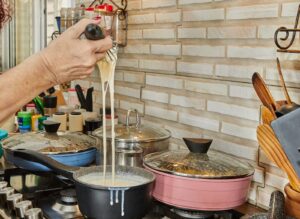
Cooking and storage. Butter does not cope well with high temperatures: it browns and breaks down quickly. For searing or browning, choose clarified butter, which is more stable under heat, or keep fresh butter for finishing a sauce or enriching a velouté off the heat. Store it in the fridge, well wrapped, away from light and odours. To preserve the flavours and nutrients in your dishes, gentle cooking remains an excellent ally.
Key nutrients. Butter provides mostly saturated fatty acids and vitamin A. It contains almost no carbohydrate, protein or fibre: its glycaemic index is negligible, but its energy density is high. To vary your fat intake, you can alternate with vegetable oils such as olive oil or rapeseed oil, sources of unsaturated fatty acids.
Advice for active people. Butter is not the ideal fat around exercise: it is too rich and slows digestion before training. Keep it for meals well away from your session. For recovery and protein intake, turn instead to suitable options such as a balanced protein snack.
Weight control points. Its high calorie density calls for care. Weigh your portions, avoid cooking with butter every time and favour a balanced diet in which fats are spread across the day. To see where butter sits among other fats and compare calories, explore the fats and oils family. Well measured, butter keeps its place in the pleasure of eating without compromising your goals.