Group · Vegetables
Curly kale
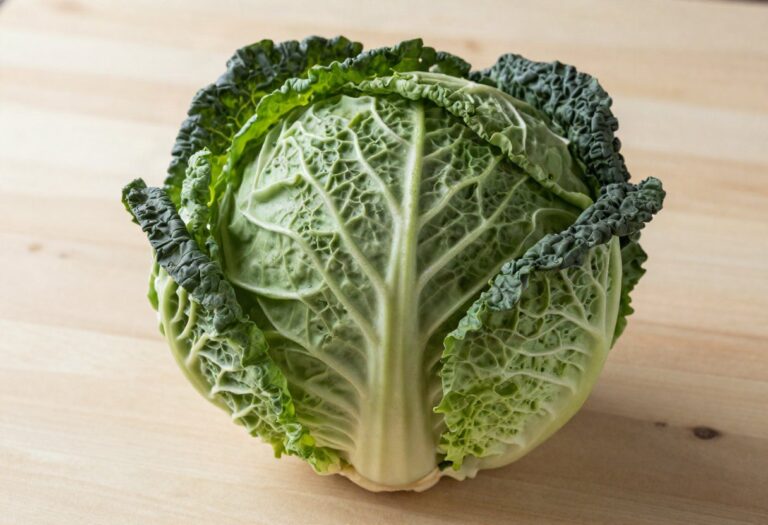
Curly kale, also known as curly green cabbage, is a leafy vegetable with ruffled, frilly leaves, recognisable by its dark green colour, sometimes tinged with purple. A member of the large cabbage family, it comes in several varieties and is enjoyed from autumn to winter, when the cold sweetens its leaves. Low in calories (around 29.7 kcal per 100 g), it provides plant protein, moderate carbohydrates, very little fat and fibre. Popular with active people and anyone watching their waistline, curly kale fits naturally into a balanced diet, raw in salads, sautéed or blended. Its nutrition facts make it a versatile, tasty ally every day.
Macronutrient breakdown
Nutrition table per 100 g
| Calories | 30 kcal |
| Kilojoules | 125 kJ |
| Protein | 1,9 g |
| Carbohydrate | 3,7 g |
| Fat | 0,4 g |
| Fibre | 2 g |
Micronutrients per 100 g
All measured nutrients, ranked by share of the daily reference intake.
- Vitamin K1817 µg1089 %
- Vitamin C41 mg51 %
- Manganese0,42 mg21 %
- Copper0,16 mg16 %
- Potassium228 mg11 %
- Vitamin B60,14 mg10 %
- Calcium72 mg9 %
- Vitamin E0,85 mg7 %
- Vitamin B9dietary folate equivalents13 µg
See the other 8 nutrients
- Iron0,9 mg6 %
- Vitamin B20,07 mg5 %
- Vitamin B10,05 mg5 %
- Magnesium18 mg5 %
- Phosphorus28 mg4 %
- Vitamin B30,5 mg3 %
- Zinc0,24 mg2 %
- Vitamin B50,05 mg1 %
Anses Ciqual 2025. Source: Anses, 2025, Ciqual food composition table
Tips
Curly kale lends itself to countless uses in the kitchen. Raw, its leaves massaged with olive oil and lemon become tender and soft in a salad. Cooked, you can fry it in a pan with garlic, add it to a soup, a stir-fry or a slow-cooked dish, or turn it into crispy oven-baked chips. To best preserve its colour, vitamins and minerals, choose gentle cooking such as steaming rather than prolonged boiling.
As for key nutrients, this cabbage is among the most generous green vegetables: vitamin C, vitamin K, provitamin A (beta-carotene), plant-based calcium, potassium and antioxidants. Its fibre helps with fullness and regular digestion, an asset for weight loss. With a low glycaemic index and only 29.7 calories per 100 g, it offers an excellent ratio of volume to calorie density: you can enjoy a generous portion without overloading your plate.
- Portions: aim for 80 to 150 g per meal, raw or cooked.
- Pairings: with wholegrain cereals, pulses or a drizzle of oil to optimise the absorption of carotenoids.
- Storage: a few days in the fridge wrapped in a damp cloth, or blanched and then frozen.
To keep things varied, alternate with other members of the family such as red cabbage, broccoli or Brussels sprouts, all rich in fibre and beneficial compounds. You will find more ideas in the vegetable family.
For active people: curly kale is a source of slow-release carbohydrates and micronutrients useful for recovery. Slip it into a green smoothie before or after exercise, or add its leaves to a protein bowl. It pairs well with a more concentrated protein intake: to go further, discover our protein snack ideas. Remember to hydrate too, as fibre and a plant-rich diet call for plenty of water.
Points to watch: eaten in excess and always raw, it can be a little irritating for sensitive guts, so introduce it gradually. Above all, watch fatty preparations (bacon lardons, butter, sauces), which push up the calorie bill. Plain or lightly seasoned, curly kale remains an excellent nutritional benefit for a light, balanced plate.