Group · Vegetables
Brussels sprouts
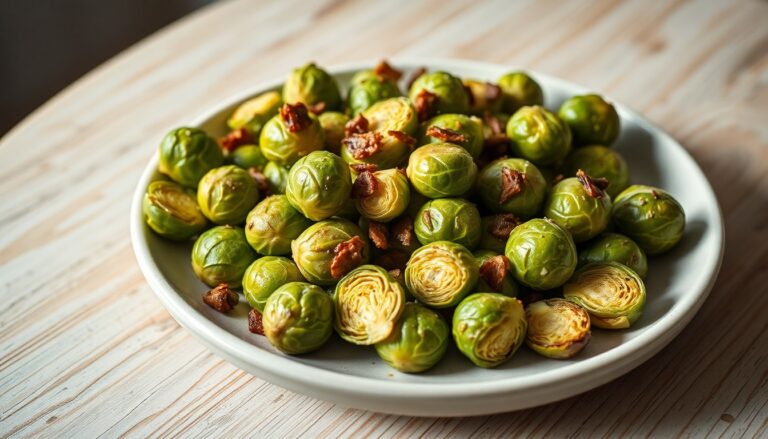
Small green cabbages that look like mini apples, Brussels sprouts belong to the large brassica family, like cauliflower and broccoli. They are harvested along long stalks, mostly from autumn to winter, which makes them a seasonal vegetable particularly appreciated on cold days. Fresh, frozen or cooked roasted, they suit a thousand preparations. On nutrition facts, they are low in calories (44.4 kcal per 100 g), rich in fibre and provide interesting vitamins and minerals. Their slightly bitter flavour and firm texture make them a great ally in a balanced diet, for food lovers and for athletes watching their figure alike.
Macronutrient breakdown
Nutrition table per 100 g
| Calories | 44 kcal |
| Kilojoules | 187 kJ |
| Protein | 3,2 g |
| Carbohydrate | 5,4 g |
| Fat | 0,5 g |
| Fibre | 4,8 g |
Micronutrients per 100 g
All measured nutrients, ranked by share of the daily reference intake.
- Vitamin K161,8 µg82 %
- Vitamin C55,4 mg69 %
- Potassium410 mg21 %
- Copper0,13 mg13 %
- Manganese0,2 mg10 %
- Phosphorus62 mg9 %
- Vitamin B60,11 mg8 %
- Vitamin B10,07 mg6 %
- Vitamin B9dietary folate equivalents49,3 µg
See the other 10 nutrients
- Vitamin B50,33 mg6 %
- Magnesium19 mg5 %
- Calcium35 mg4 %
- Vitamin B20,06 mg4 %
- Vitamin E0,44 mg4 %
- Iron0,51 mg4 %
- Zinc0,31 mg3 %
- Vitamin B30,48 mg3 %
- Vitamin A18 µg2 %
- Total omega-30,03 g1 %
Anses Ciqual 2025. Source: Anses, 2025, Ciqual food composition table
Tips
With just 44.4 kcal, 3.19 g of protein, 5.4 g of carbohydrate and 4.8 g of fibre per 100 g, Brussels sprouts have an ideal profile for those watching their weight. Their low energy density and richness in fibre promote fullness, which makes them a valuable vegetable for slimming or a balanced diet.
How to eat them? Avoid prolonged cooking in lots of water, which makes them soft and sulphurous and leaches out some of the vitamins (notably vitamin C). Favour short steaming, pan-frying or roasting in the oven with a drizzle of olive oil: they caramelise and their bitterness softens. To preserve nutrients, gentle cooking remains the best option. Cut a cross into the base before cooking for an even result.
- Pairings: they go with garlic, walnuts, parmesan, lemon, bacon or spices such as cumin and paprika.
- Portion: allow 150 to 200 g as a side, a generous portion for few calories.
- Storage: a few days in the fridge, or several months in the freezer after quick blanching.
- Seasonality: in full season from autumn to the heart of winter.
On micronutrients, Brussels sprouts provide vitamin C, vitamin K, folate (vitamin B9) and potassium. They also contain sulphur compounds characteristic of brassicas, which are also found in broccoli and cauliflower. Their fibre supports good transit; introduce them gradually if you are not used to them.
For active people, this vegetable is an excellent complement to meals: low in calories, it helps fill the plate and reach your micronutrient intake without weighing on the energy balance. During a cutting or fat-loss phase, it lets you eat in volume while keeping a calorie deficit. Combined with a source of protein (chicken, eggs, fish) and a starchy food, it completes a balanced recovery meal.
Curious to compare their energy content with other foods? Take a look at the food calorie table, or explore more ideas in the vegetable family. Vary your cooking methods so that you never tire of these little cabbages full of nutritional benefits.