Group · Drinks
Diet cola
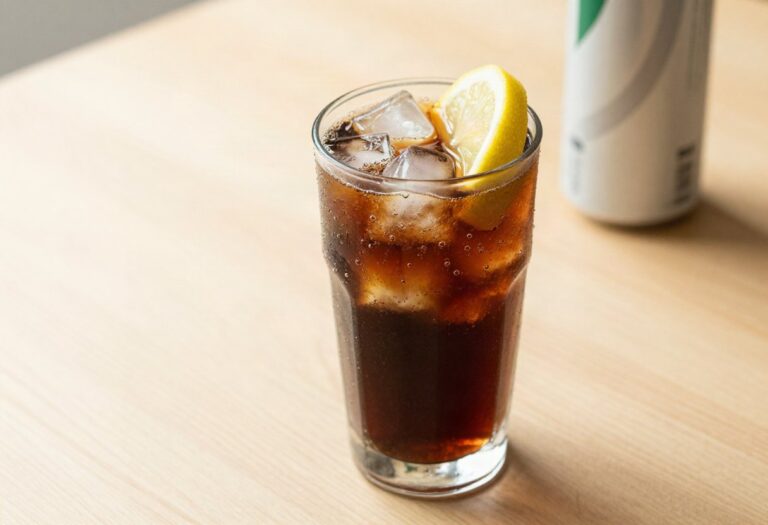
Diet cola is a lighter version of cola soft drinks, made with no added sugar thanks to intense sweeteners (aspartame, acesulfame-K, sometimes sucralose). Its promise: the characteristic cola taste, its caramelised notes and its fizzy zing, for almost no calories. At about 1.04 kcal per 100 g, its nutrition facts show very little carbohydrate, protein and fat. It also comes in zero, caffeine-free or reduced-caffeine versions. A treat drink above all, diet cola provides no worthwhile vitamins or minerals, but it appeals to people watching their weight who are looking for an alternative to very sugary classic soft drinks.
Macronutrient breakdown
Nutrition table per 100 ml
| Calories | 1 kcal |
| Kilojoules | 4 kJ |
| Protein | 0,1 g |
| Carbohydrate | 0,3 g |
| Fat | 0,1 g |
| Fibre | 0,1 g |
Micronutrients per 100 ml
All measured nutrients, ranked by share of the daily reference intake.
- Vitamin B20,02 mg2 %
- Phosphorus10 mg1 %
- Copper0,01 mg1 %
- Magnesium2,38 mg1 %
- Iodine0,8 µg1 %
- Iron0,07 mg0 %
- Vitamin B10,01 mg0 %
- Potassium6 mg0 %
Voir le dernier nutriment
- Calcium2,26 mg0 %
Anses Ciqual 2025. Source: Anses, 2025, Ciqual food composition table
Tips
Diet cola is best served chilled, with a meal or during a break. For weight loss, its advantage is obvious: almost no calories or sugar, unlike traditional soft drinks. But this advantage should not hide its limits. It is a drink with so-called empty calories: it provides no useful nutrients, no fibre, no vitamins and no minerals.
- Moderation: the absence of sugar does not allow unlimited consumption. The intense sweet taste of sweeteners can keep up a craving for sweetness, and the acidity of cola is not ideal for tooth enamel.
- Hydration: diet cola does not replace water. Keep it as an occasional drink and choose still water or plain sparkling water day to day.
- Caffeine: most recipes contain it. Avoid it late in the day if you are sensitive, and choose a caffeine-free version or an herbal tea in the evening.
For active people: diet cola provides neither carbohydrate for exercise nor protein for recovery. It is therefore not a sports drink. Its caffeine can give a one-off boost, but to support a session or recovery, it is better to rely on suitable food and, if needed, a well-planned snack. Discover our ideas for protein snacks to manage your intake around training. For hydration during exercise, water remains the benchmark, possibly enriched with electrolytes during long sessions.
A useful comparison: compared with regular cola, which is very high in sugar, diet cola is an interesting compromise for occasionally cutting calorie intake. But it cannot compete with drinks that really offer something, such as tomato juice or unsweetened tea.
Storage: close the bottle tightly to keep the fizz and drink it soon after opening. Serve it well chilled, with a slice of lemon to vary things without adding calories.
In short, diet cola has a place as an occasional drink in a balanced diet. To explore other options, browse the family of drinks and make your choices according to your goals.