Group · Drinks
Tomato juice
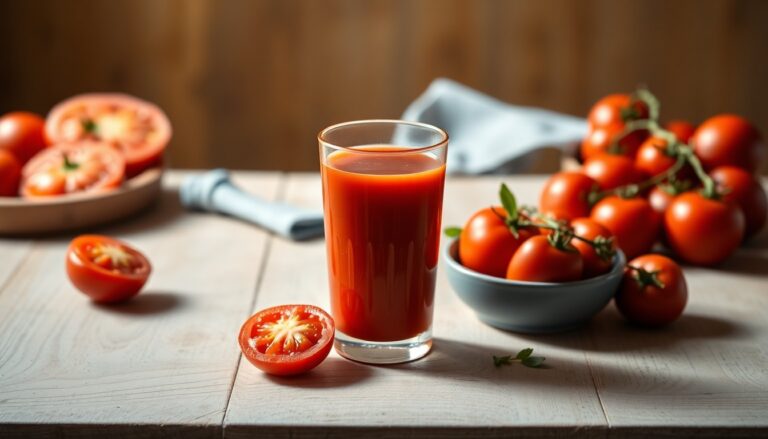
Tomato juice is a savoury drink made from ripe tomatoes, pressed or blended, often with a pinch of salt, pepper or spices added. It comes in several forms: pure juice, made from concentrate, bottled, in cartons or homemade. It is a rather unusual drink in the juice family, because it comes from a vegetable–fruit rather than a sweet fruit. At 21.7 kcal per 100 g, tomato juice is relatively light and offers an original nutritional profile, including carotenoid compounds such as lycopene. Enjoyed as an aperitif or at breakfast, it fits easily into a balanced, varied diet without a load of added sugar.
Macronutrient breakdown
Nutrition table per 100 ml
| Calories | 22 kcal |
| Kilojoules | 92 kJ |
| Protein | 0,9 g |
| Carbohydrate | 3,8 g |
| Fat | 0,2 g |
| Fibre | 0,4 g |
Micronutrients per 100 ml
All measured nutrients, ranked by share of the daily reference intake.
- Potassium283 mg14 %
- Magnesium13,1 mg3 %
- Phosphorus21,8 mg3 %
- Calcium6,54 mg1 %
- Iodine0,3 µg0 %
Anses Ciqual 2025. Source: Anses, 2025, Ciqual food composition table
Tips
Tomato juice is best served chilled, as an alcohol-free aperitif, at brunch or alongside a light meal. To get the most from its nutrition facts, choose pure or homemade juice, with no added salt or sugar. You can liven it up with a squeeze of lemon juice, pepper, celery, Tabasco or a few fresh herbs for a virgin Mary style version.
How should you drink tomato juice? A standard serving is around 150 to 200 ml. Keep an opened bottle in the fridge and drink it within 2 to 3 days. For a homemade juice, blend very ripe tomatoes and then strain, or use a juicer to preserve the nutrients. Gentle cooking concentrates the lycopene, a fat-soluble carotenoid that is better absorbed in the presence of a little fat, such as a drizzle of olive oil.
In terms of key nutrients, tomato juice provides vitamin C, B vitamins, potassium and antioxidants. With around 21.7 kcal per 100 g, moderate carbohydrates and little natural sugar, it has a low glycaemic index, which makes it an interesting drink for weight loss and weight control. It is also a refreshing alternative to sugary drinks such as orange soda or cola.
- Watch out for: the main pitfall is salt. Commercial versions can be very salty, so check the label and choose products marked « no added salt ».
- Hydration and freshness: rich in water, it contributes to your daily fluid intake while remaining low in calories.
- Variety: alternate with other vegetable juices such as carrot juice to diversify your intake.
For active people, tomato juice is an often underrated recovery ally: its potassium and natural sodium help replace electrolytes lost through sweat after exercise. Drink it chilled after training, possibly alongside a protein snack. To find out more about eating around exercise, see our guide to fitness nutrition.
An original, low-sugar drink, tomato juice has its place in the family of drinks. Consumed in moderation and chosen well, it remains an excellent compromise between enjoyment, freshness and lightness.