Group · Seafood
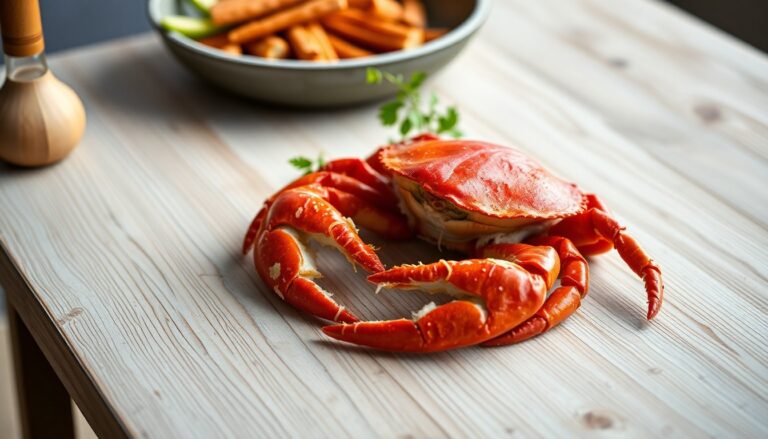
Red crab
The red crab is a crustacean prized for its fine, slightly sweet flesh and its interesting nutritional profile. Like most seafood, it belongs to the category of foods rich in protein and low in fat. It can be found fresh, frozen, tinned or already shelled, which makes it easy to include in many recipes. With just 104 kcal per 100 g, it offers nearly 19.5 g of protein, little carbohydrate (0.03 g) and very little fat (under 2.86 g). This high protein density for few calories makes it a practical ally in a balanced diet, whether you are watching your figure or simply want to vary your sources of marine protein.
Macronutrient breakdown
Nutrition table per 100 g
| Calories | 104 kcal |
| Kilojoules | 438 kJ |
| Protein | 19,5 g |
| Carbohydrate | 0,1 g |
| Fat | 2,9 g |
Micronutrients per 100 g
All measured nutrients, ranked by share of the daily reference intake.
- Vitamin B129,55 µg382 %
- Selenium82 µg149 %
- EPA0,32 g128 %
- Zinc7,7 mg77 %
- DHA0,15 g60 %
- Copper0,44 mg44 %
- Iodine60 µg40 %
- Phosphorus208 mg30 %
See the other 16 nutrients
- Vitamin E2,4 mg20 %
- Total omega-30,5 g20 %
- Vitamin B32,4 mg15 %
- Vitamin B60,21 mg15 %
- Potassium268 mg13 %
- Vitamin B925,9 µg13 %
- Vitamin B20,17 mg12 %
- Iron1,67 mg12 %
- Vitamin B50,71 mg12 %
- Magnesium42,5 mg11 %
- Calcium84 mg11 %
- Vitamin B10,1 mg9 %
- Vitamin C2,5 mg3 %
- Omega-3 ALA0,03 g2 %
- Omega-6 LA0,05 g0 %
- Vitamin A2 µg0 %
Anses Ciqual 2025. Source: Anses, 2025, Ciqual food composition table
Tips
The red crab can be enjoyed in a thousand ways. Its meat suits fresh salads as well as hot dishes: home-made rillettes, savoury tarts, gratins, vegetable stir-fries or stuffings. To preserve its delicate texture and its nutrition values, choose short cooking by steaming or in boiling salted water rather than harsh cooking. Gentle cooking remains ideal for keeping it tender and limiting added fat.
Portions and pairings: a portion of 100 to 150 g of meat suits a meal. Pair the crab with raw vegetables (avocado, cucumber, green apple), wholegrain cereals or pulses for a filling, complete dish. A touch of lemon, fresh herbs and a drizzle of olive oil bring out its flavour without adding to the calorie bill. Avoid too much mayonnaise if you are watching your weight.
Key nutrients: red crab provides good-quality protein, zinc, selenium, phosphorus and B vitamins. With a glycaemic index that is nil or almost nil (little carbohydrate) and very little fat, it is a food with a low energy density, perfect for slimming or a balanced diet. One point to watch: its sodium content can be high in tinned or prepared versions, so moderate these.
For active people: with its 19.5 g of protein for only 104 calories, red crab is an excellent source of lean protein for muscle recovery after exercise. You can include it in a post-workout meal with starchy foods to replenish glycogen, or make it a light, protein-rich snack. If you top up your intake with other sources, discover our ideas for protein snacks and our advice on fitness nutrition.
Storage: eat fresh crab quickly and keep it well chilled. Shelled meat keeps for 1 to 2 days in the fridge, or several months in the freezer. To vary your seafood, alternate with brown crab or spider crab, which offer comparable nutritional profiles and lovely sea flavours.