Group · Seafood
Brown crab
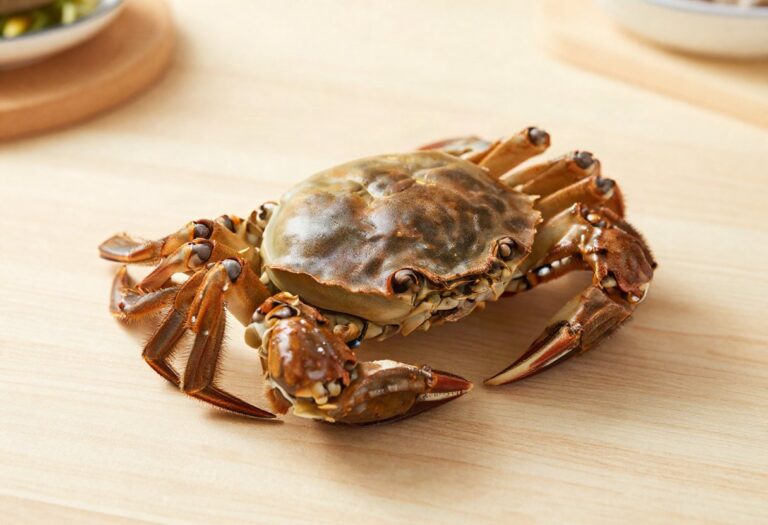
The brown crab, known in French as the tourteau or crabe dormeur, is one of the most popular crustaceans at the fishmonger’s. Recognisable by its oval red-brown shell and large claws, it offers fine, tasty meat, in both the body and the legs. It is eaten cooked, whole, on a seafood platter, or picked to fill salads and small glasses. Nutritionally, brown crab is interesting: with around 124 kcal per 100 g, it combines a good protein content (19.5 g) with little fat (4.29 g). It is therefore a lean food rich in good-quality protein, which easily fits into a balanced, varied diet.
Macronutrient breakdown
Nutrition table per 100 g
| Calories | 124 kcal |
| Kilojoules | 520 kJ |
| Protein | 19,5 g |
| Carbohydrate | 1,8 g |
| Fat | 4,3 g |
Micronutrients per 100 g
All measured nutrients, ranked by share of the daily reference intake.
- Vitamin B126,79 µg272 %
- EPA0,61 g244 %
- Copper1,99 mg199 %
- DHA0,28 g112 %
- Selenium39,6 µg72 %
- Iodine100 µg67 %
- Zinc4,42 mg44 %
- Phosphorus302 mg43 %
See the other 16 nutrients
- Total omega-31 g40 %
- Vitamin B20,53 mg38 %
- Vitamin E2,4 mg20 %
- Magnesium55 mg15 %
- Vitamin B60,2 mg14 %
- Vitamin B32,1 mg13 %
- Vitamin B925,5 µg13 %
- Potassium248 mg12 %
- Vitamin B50,73 mg12 %
- Iron1,62 mg12 %
- Vitamin B10,08 mg8 %
- Calcium53 mg7 %
- Omega-3 ALA0,11 g6 %
- Vitamin C3,6 mg5 %
- Manganese0,09 mg4 %
- Omega-6 LA0,08 g1 %
Anses Ciqual 2025. Source: Anses, 2025, Ciqual food composition table
Tips
To get the best from brown crab, choose one that feels heavy for its size, a sign of generous meat. The most classic way to cook it is in a court-bouillon: plunge the live crab into well-salted water flavoured with aromatics, then cook according to size. Once cool, carefully pick the body and crack the claws to get at the white meat. You can also keep the brown meat and the creamy part to make homemade rillettes or a stuffing.
As for nutrition facts, brown crab appeals with its excellent protein-to-calorie ratio. Its 19.5 g of protein for only 124 kcal make it an ally of light meals. It also provides marine minerals such as zinc, selenium and copper, as well as trace elements typical of seafood. With no fibre and few carbohydrates, it stays easy to digest when eaten plain.
To vary things, pair brown crab with crunchy vegetables, a squeeze of lemon, a little avocado or a light mayonnaise. You can combine it with other crustaceans and shellfish such as prawns or scallops for a festive platter. Also discover the other treasures of the seafood family to put together iodine-rich, varied menus.
For active people: brown crab is an ideal source of lean protein when you are cutting or maintaining. Rich in amino acids and low in fat, it supports muscle recovery after a session without loading the meal with calories. You can include it in a full salad after training, with starchy foods to replenish glycogen stores. To go further on daily protein intake, see our feature on fitness nutrition.
Weight control: brown crab is low in calories as long as it is eaten plain or with a light sauce. The thing to watch is rich accompaniments: mayonnaise, melted butter or buttered bread can quickly push up the total energy. Favour simple seasonings based on lemon, fresh herbs and plain yoghurt to keep the dish slimming. You can compare its calories with other foods using our calorie table. Eaten in moderation, brown crab remains an excellent, light and indulgent choice.