Group · Fruit
Prickly pear
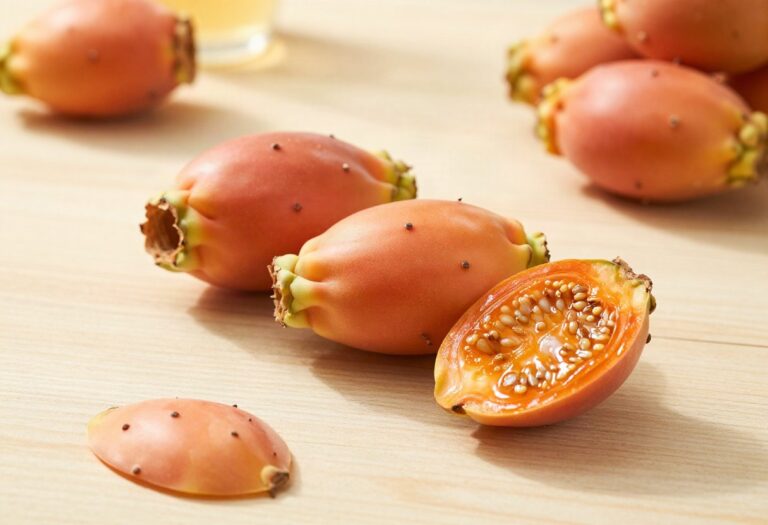
The prickly pear is the fruit of the prickly pear cactus, of the genus Opuntia, native to the Americas and widely grown around the Mediterranean. Its thick skin, bristling with fine spines, protects juicy, sweet flesh dotted with small crunchy seeds, in colours from orange to purplish red depending on the variety. Available mainly in late summer and autumn, this exotic fruit appeals with its freshness. At only 51.5 kcal per 100 g, it is low in calories, rich in water and fibre, and adds an original touch to a balanced, varied diet. A tasty, thirst-quenching fruit worth discovering.
Macronutrient breakdown
Nutrition table per 100 g
| Calories | 52 kcal |
| Kilojoules | 216 kJ |
| Protein | 0,2 g |
| Carbohydrate | 9,8 g |
| Fat | 0,2 g |
| Fibre | 5,3 g |
Micronutrients per 100 g
All measured nutrients, ranked by share of the daily reference intake.
- Manganese0,58 mg29 %
- Calcium180 mg23 %
- Magnesium69 mg18 %
- Vitamin C11 mg14 %
- Potassium130 mg7 %
- Vitamin B60,08 mg6 %
- Vitamin K12,9 µg4 %
- Vitamin B20,03 mg2 %
- Vitamin B9dietary folate equivalents8 µg
See the other 8 nutrients
- Copper0,02 mg2 %
- Vitamin B30,29 mg2 %
- Phosphorus11 mg2 %
- Iron0,2 mg1 %
- Zinc0,14 mg1 %
- Iodine1,5 µg1 %
- Vitamin B10,01 mg1 %
- Vitamin A5 µg1 %
Anses Ciqual 2025. Source: Anses, 2025, Ciqual food composition table
Tips
To enjoy the prickly pear without getting pricked, handle it with gloves or a fork: cut off both ends, slit the skin lengthways, then lift the flesh out in one go. You can eat it plain and well chilled, in a fruit salad, as juice, as sorbet or in jam. Its sweet flesh pairs nicely with other seasonal fruits such as melon, peach or the traditional fig.
In terms of nutritional values, the prickly pear is light: around 9.79 g of carbohydrate and 5.3 g of fibre per 100 g. This fibre contributes to fullness and digestive comfort. Its high water content makes it a refreshing fruit, and it provides vitamin C, magnesium, potassium and calcium. Its colourful pulp contains antioxidant pigments, a subject you can explore further in our guide to antioxidant foods.
- Recommended portion: 1 to 2 fruits a day are enough to enjoy their benefits without too much sugar.
- Storage: keep them for a few days at room temperature, or in the fridge once peeled and placed in a closed container.
- Seed tip: the small seeds are edible, but chew them well or strain the juice if you prefer a smooth texture.
For active people, the prickly pear is a useful snack before or after exercise: its natural carbohydrates provide a moderate energy boost and its water contributes to hydration. For recovery, pair it with a source of protein, for example a yoghurt or a protein snack, for a balanced bite. Its low calorie density also makes it an ally for indulgent snacks without the guilt.
If you are aiming to lose weight, this fruit has everything going for it: few calories, filling fibre and a sweet flavour that calms cravings. Stay alert, though, to processed products such as jams or syrups, which are much higher in added sugars. Favour fresh fruit and include it in an overall balanced-diet approach. You can compare its energy content with other foods using our calorie table, to put together varied meals suited to your needs.