Group · Fruit
Fruit in syrup (tinned)
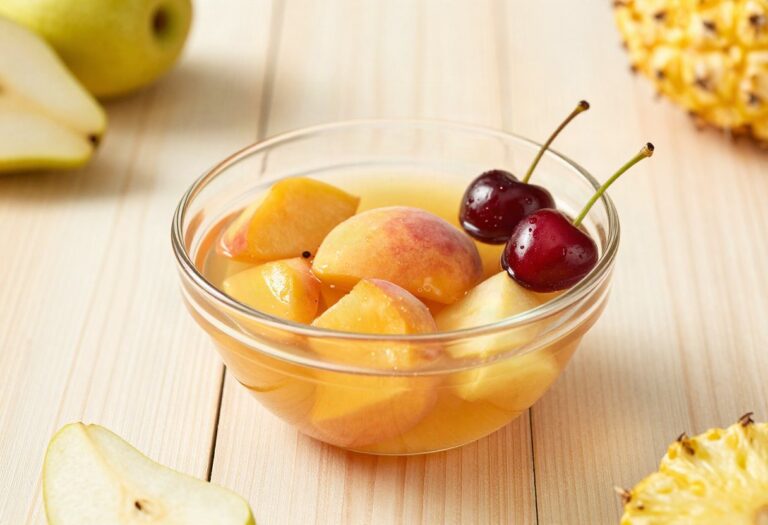
Tinned fruit in syrup covers a wide range of varieties, such as peaches, pears, apricots or mixed fruit cocktails, packed in a sweet liquid that keeps them for a long time. Practical and available all year round, they offer an alternative to fresh fruit when it is out of season. At around 74.8 kcal per 100 g for this preparation, they remain fairly light in calories, providing some carbohydrate (17.8 g), a trace of protein and fat, and nearly 1.26 g of fibre. Their nutritional value depends greatly on the syrup: light, heavy or drained. Well chosen, they can fit occasionally into a balanced, enjoyable diet.
Macronutrient breakdown
Nutrition table per 100 g
| Calories | 75 kcal |
| Kilojoules | 317 kJ |
| Protein | 0,3 g |
| Carbohydrate | 17,8 g |
| Fat | 0,1 g |
| Fibre | 1,3 g |
Micronutrients per 100 g
All measured nutrients, ranked by share of the daily reference intake.
- Copper0,05 mg5 %
- Manganese0,08 mg4 %
- Vitamin B10,04 mg4 %
- Potassium67 mg3 %
- Vitamin B60,02 mg2 %
- Calcium11 mg1 %
- Phosphorus8,36 mg1 %
- Vitamin A8,35 µg1 %
- Vitamin B9dietary folate equivalents11 µg
See the other 4 nutrients
- Magnesium3,76 mg1 %
- Vitamin C0,59 mg1 %
- Vitamin B50,03 mg1 %
- Iron0,07 mg1 %
Anses Ciqual 2025. Source: Anses, 2025, Ciqual food composition table
Tips
To enjoy fruit in syrup without too much sugar, the most useful habit is to drain it well before eating, or even rinse it briefly. This removes some of the added sugars while keeping the soft texture. Favour versions in light syrup or ‘in juice’ rather than heavy syrup, and check the nutritional values on the label to compare products.
In the kitchen, these fruits suit many ideas: spooned over fromage blanc, stirred into a yoghurt, added to a homemade fruit salad or used to fill a crumble, a clafoutis or a tart. You can also blend them into a coulis. A sensible portion is around 100 to 150 g. Once the tin is opened, transfer the contents to an airtight container and eat within 2 to 3 days, kept in the fridge.
- Common varieties: peach, pear, apricot, pineapple, cherry, fruit cocktail.
- Key nutrients: simple carbohydrates, a little fibre, traces of vitamins depending on the original fruit.
- Glycaemic index: often higher than fresh fruit because of the syrup.
If you want points of comparison, take a look at fresh versions such as the peach or the apricot, naturally richer in fibre and micronutrients. You will also find less sugary alternatives with the apple or the whole fruit family.
For active people: the quickly available carbohydrates in fruit in syrup can help out as a snack around exercise, for example to replenish stores after an intense session. Pair them with a source of protein (yoghurt, fromage blanc, a shaker) for a more complete recovery. For tasty ideas, take inspiration from these protein snacks.
Weight control: the syrup is still a source of added sugars, which increases the calorie density compared with fresh fruit. If you are trying to lose weight or follow a balanced diet, keep them for occasional treats, drain them well and limit the portion. Fresh or frozen fruit remains the better option day to day, but if managed well, fruit in syrup has its place in a varied, enjoyable diet.