Group · Herbs & spices
Fennel seeds
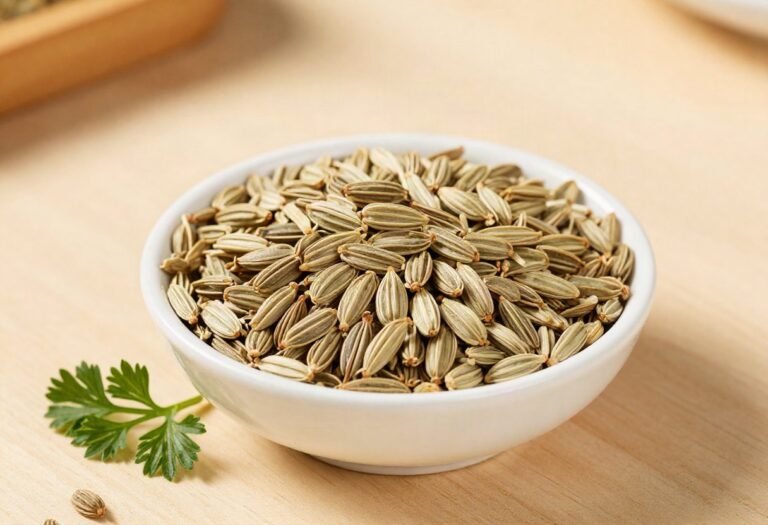
Fennel seeds are the dried fruits of common fennel (Foeniculum vulgare), an aromatic plant from the Apiaceae family. Small, oval and ridged, they give off a sweet, aniseed scent reminiscent of aniseed and liquorice. They are used whole, crushed or ground in many cuisines, from the Mediterranean to India. As for nutrition facts, these seeds provide 327 kcal per 100 g, but since they are used in very small amounts, their calorie contribution on the plate is trivial. They mainly concentrate fibre (39.8 g), plant protein and minerals. Aromatic and versatile, fennel seeds naturally find a place in a balanced, tasty diet.
Macronutrient breakdown
Nutrition table per 100 g
| Calories | 327 kcal |
| Kilojoules | 1350 kJ |
| Protein | 15,8 g |
| Carbohydrate | 12,5 g |
| Fat | 14,9 g |
| Fibre | 39,8 g |
Micronutrients per 100 g
All measured nutrients, ranked by share of the daily reference intake.
- Manganese6,53 mg327 %
- Calcium1200 mg150 %
- Iron18,5 mg132 %
- Copper1,07 mg107 %
- Magnesium385 mg103 %
- Potassium1690 mg85 %
- Phosphorus487 mg70 %
- Vitamin B36,05 mg38 %
See the other 7 nutrients
- Vitamin B10,41 mg37 %
- Zinc3,7 mg37 %
- Vitamin B60,47 mg34 %
- Vitamin C21 mg26 %
- Vitamin B20,35 mg25 %
- Omega-6 LA1,69 g17 %
- Vitamin A6,75 µg1 %
Anses Ciqual 2025. Source: Anses, 2025, Ciqual food composition table
Tips
Fennel seeds are always used in small doses, usually a pinch to a teaspoon per dish. At that scale, their calories are negligible: they add flavour without weighing down your dishes, a real plus when you are watching your weight.
How to eat fennel seeds
- Lightly dry-roasted in a frying pan, their aniseed aroma comes fully into its own before they go into a dish.
- Whole in court-bouillons, fish marinades, breads and fougasses.
- Ground, in spice blends, curries and vegetable stews.
- As an infusion: a few crushed seeds in hot water make a gentle, calorie-free digestive herbal tea.
They go well with oily fish, pork, root vegetables, tomatoes and citrus fruit. You can combine them with cumin and coriander seeds to make your own homemade blends. For storage, keep them whole in an airtight jar, away from light and moisture: they then keep their essential oils much longer than once ground.
Nutritional profile. Fennel seeds are remarkably rich in fibre (nearly 39.8 g per 100 g), which contributes to fullness and digestive comfort when they go into a variety of dishes. They also provide plant protein (15.8 g), carbohydrate (52.29 g, largely in the form of fibre) and fat (14.9 g) from aromatic oils. They contain minerals such as calcium, iron, magnesium and potassium, which are useful as part of a varied diet. Their glycaemic index makes little difference given the small amounts eaten.
For active people. Fennel seeds are an ideal slimming ally for lifting healthy dishes without added salt or unnecessary fat. An infusion after a meal can accompany a moment of relaxation, useful in a recovery routine. To structure your intake around training, rely instead on real sources of protein and carbohydrate; you can draw inspiration from our ideas for high-protein snacks and our advice on fitness nutrition.
To explore other flavourings, browse our Herbs & Spices family, and compare intakes with the food calorie table. In short, few calories in practice, plenty of flavour: an excellent habit for light, fragrant cooking.