Group · Seafood
American lobster
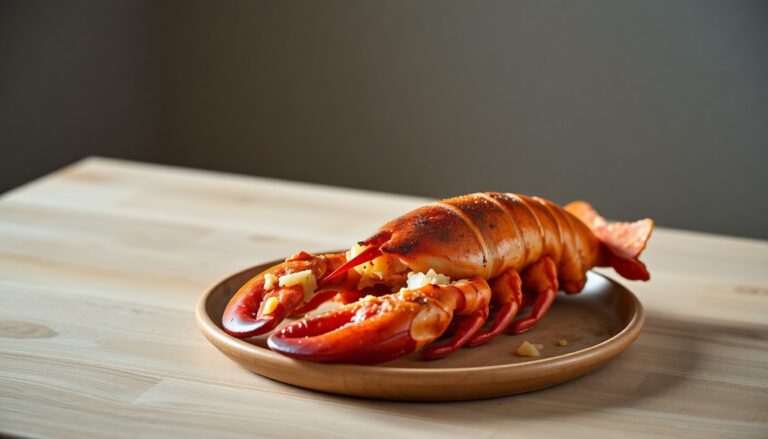
A star of festive tables and seafood menus, the American lobster (Homarus americanus) is a crustacean prized for its firm, fine, delicately sweet flesh. It is recognised by its dark shell that turns bright scarlet when cooked, and by its powerful claws packed with meat. It is sold live, frozen or cooked, whole, as tails or as shelled meat. In terms of nutrition facts, it is a light, protein-rich food: around 85.5 kcal per 100 g, 17.9 g of protein, little carbohydrate and very little fat. This high protein density for so few calories makes it an asset in a balanced diet, indulgent without being too rich.
Macronutrient breakdown
Nutrition table per 100 g
| Calories | 86 kcal |
| Kilojoules | 362 kJ |
| Protein | 17,9 g |
| Carbohydrate | 1 g |
| Fat | 1,2 g |
Micronutrients per 100 g
All measured nutrients, ranked by share of the daily reference intake.
- Iodine240 µg160 %
- Vitamin B123,78 µg151 %
- Copper1,3 mg130 %
- EPA0,18 g72 %
- DHA0,09 g37 %
- Zinc2,96 mg30 %
- Vitamin B51,47 mg25 %
- Phosphorus150 mg21 %
See the other 16 nutrients
- Total omega-30,3 g12 %
- Vitamin B31,7 mg11 %
- Potassium204 mg10 %
- Vitamin E1,19 mg10 %
- Manganese0,19 mg10 %
- Magnesium34,2 mg9 %
- Calcium68,8 mg9 %
- Vitamin B60,12 mg9 %
- Vitamin B912 µg6 %
- Vitamin B10,04 mg3 %
- Iron0,45 mg3 %
- Vitamin C2,5 mg3 %
- Vitamin B20,04 mg3 %
- Omega-3 ALA0,03 g1 %
- Vitamin A11 µg1 %
- Omega-6 LA0,04 g0 %
Anses Ciqual 2025. Source: Anses, 2025, Ciqual food composition table
Tips
The American lobster is ideally enjoyed plain or very simply seasoned to respect its delicacy. Half a tail or a 120 to 150 g portion of meat is more than enough as the main part of a meal. For cooking, choose court-bouillon, steaming or grilling rather than dishes drowned in butter and cream, which push up the calorie count. A squeeze of lemon juice, fresh herbs (tarragon, parsley, chives) or a touch of olive oil bring out the flesh without weighing it down. For inspiration on gentle methods, see our advice on gentle cooking that preserves nutrients and flavour.
Key nutrients and profile: lobster is an excellent source of complete protein (17.9 g per 100 g), low in fat (1.15 g) and almost free of carbohydrate and fibre. Like most seafood, it provides useful minerals and trace elements such as zinc, selenium, phosphorus and copper, as well as vitamin B12. Its glycaemic index is zero, which makes it a sensible choice on a plate geared towards fullness.
- Smart pairings: steamed green vegetables, asparagus, a crunchy salad, brown rice or sweet potato for a complete meal.
- Storage: eat live lobster the same day; once cooked, keep the meat cool and eat it within 24 to 48 hours.
- Best timing: as a main course at lunch or dinner, in a light, high-protein approach.
For active people: with its richness in protein and low fat content, lobster is an ally for muscle recovery and cutting phases. You can include it after training, with a source of carbohydrate to replenish your reserves. If you are looking for other sources of protein, find ideas in our feature on fitness nutrition and our articles on protein powders to supplement a busy day.
Weight control: the crustacean itself is low in calories; the real trap comes from buttery sauces, mayonnaise and bisques. Go for light seasoning to enjoy its benefits without excess. To vary your seafood treats, explore other options from the seafood family, such as spiny lobster or prawns, just as tasty and light. And to see where lobster sits among other foods, see the calorie table.