Group · Herbs & spices
Chives
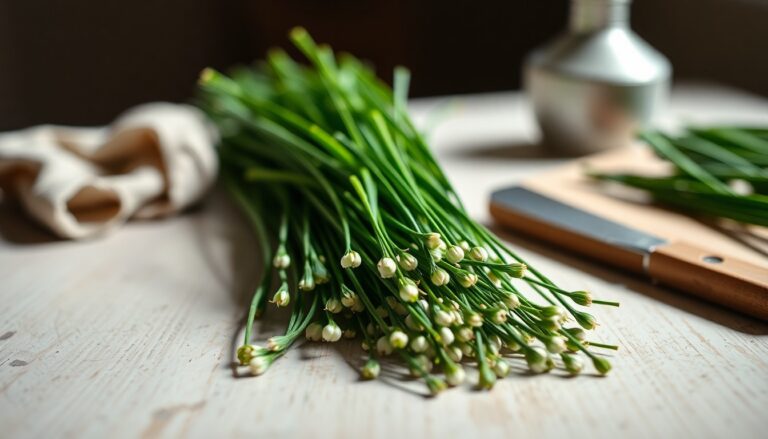
Chives are a fine aromatic herb from the allium family, a cousin of the onion, garlic and shallot. Their long, hollow green stems give off a delicate, slightly sharp scent that recalls onion in a milder form. They are mainly eaten fresh, chopped just before serving, but also exist freeze-dried or frozen. Very low in calories (about 30.8 kcal per 100 g), they add a lovely touch of flavour without weighing down the plate. Rich in fibre, vitamins and aromatic compounds, chives fit perfectly into a balanced diet. They let you lift dishes while limiting the use of salt, which makes them a valuable everyday ally.
Macronutrient breakdown
Nutrition table per 100 g
| Calories | 31 kcal |
| Kilojoules | 129 kJ |
| Protein | 2,6 g |
| Carbohydrate | 2,9 g |
| Fat | 0,5 g |
| Fibre | 2,6 g |
Micronutrients per 100 g
All measured nutrients, ranked by share of the daily reference intake.
- Vitamin K1210 µg280 %
- Vitamin C38,5 mg48 %
- Vitamin A134 µg17 %
- Potassium286 mg14 %
- Manganese0,27 mg14 %
- Copper0,12 mg12 %
- Iron1,54 mg11 %
- Calcium82 mg10 %
- Vitamin B9dietary folate equivalents84,5 µg
See the other 13 nutrients
- Magnesium31 mg8 %
- Vitamin B60,1 mg7 %
- Vitamin B20,1 mg7 %
- Phosphorus47,5 mg7 %
- Vitamin B10,07 mg6 %
- Omega-3 ALA0,1 g5 %
- Zinc0,48 mg5 %
- Vitamin B30,59 mg4 %
- Vitamin B50,2 mg3 %
- Vitamin E0,38 mg3 %
- Iodine2,2 µg1 %
- Omega-6 LA0,07 g1 %
- Selenium0,12 µg0 %
Anses Ciqual 2025. Source: Anses, 2025, Ciqual food composition table
Tips
Chives are best enjoyed raw and freshly chopped, as heat destroys some of their aromas and nutrients. Add them at the end of cooking or when serving, over an omelette, a fromage blanc, a potato salad, a soup or a vinaigrette. A few stems are enough to flavour a dish, which makes them a plus for cutting salt without losing taste.
Eating and storage tips:
- Cut the strands with scissors rather than a knife to preserve their freshness.
- Keep fresh chives in the fridge, wrapped in a damp cloth, or freeze them chopped to have them all year round.
- Freeze-dried chives are a good stand-in out of season, even if their scent is more discreet.
Nutritionally, chives are interesting: at about 30.8 kcal per 100 g, they stay very low in calories, especially as they are used in small amounts. They provide fibre (2.55 g per 100 g), a small proportion of plant protein, as well as vitamin K, vitamin C, beta-carotene and minerals. Their sulphur compounds, common to the allium members of the herbs and spices family, give them their characteristic taste. Their glycaemic index is negligible given the doses eaten.
To vary the flavours, pair chives with other fresh herbs such as fresh parsley or fresh basil, or combine them with raw shallot for sauces and marinades full of character. They also go very well with fish, eggs and fresh cheeses.
For active people: chives are not a source of energy in themselves, but they let you season dishes rich in lean protein (chicken breast, fromage blanc, omelette) with relish, without adding fat or sugars. It is an excellent habit for making recovery meals more appetising while keeping control of calories. In a balanced diet approach, they help you diversify tastes without guilt.
Weight control: no particular constraints, chives are the friend of light plates. Their calorie density is trivial and they boost the pleasure of eating, which can help you enjoy simple, healthy dishes more. The only point to note concerns the preparations that go with them (creamy sauces, compound butters), which are far higher in calories than the herb itself. Favour them in fresh, balanced recipes every day.