Group · Fats & oils
Avocado oil
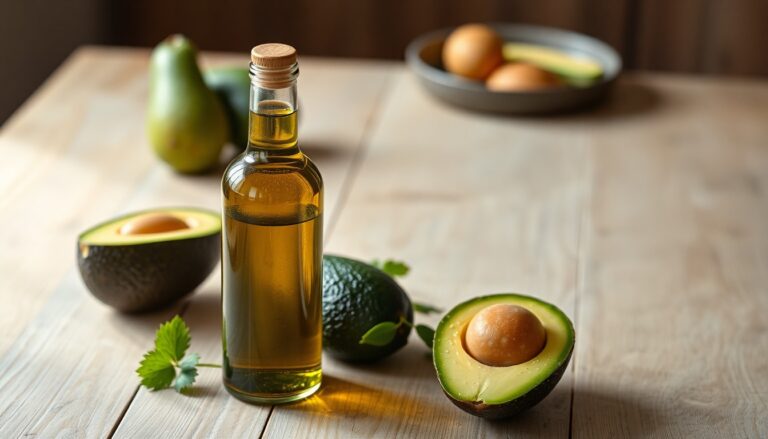
Avocado oil is a vegetable fat obtained by pressing the flesh of the fruit, not the stone. Its colour ranges from deep green to golden depending on the process, and its taste subtly recalls fresh avocado, with grassy, buttery notes. It comes in two main forms: virgin oil, lightly refined and rich in aroma, and refined oil, more neutral and heat-resistant. Like all oils, it provides 885 kcal and 100 g of fat per 100 g, with no protein or carbohydrate. Rich in monounsaturated fatty acids (oleic acid), it fits well into a balanced diet, as long as you watch the quantities day to day.
Macronutrient breakdown
Nutrition table per 100 g
| Calories | 900 kcal |
| Kilojoules | 3700 kJ |
| Fat | 100 g |
Micronutrients per 100 g
All measured nutrients, ranked by share of the daily reference intake.
- Vitamin E45,3 mg378 %
- Omega-3 ALA0,55 g28 %
- Vitamin A2,08 µg0 %
Anses Ciqual 2025. Source: Anses, 2025, Ciqual food composition table
Tips
Avocado oil is versatile. Its refined version has a high smoke point, which makes it suitable for cooking, in a frying pan or wok, without browning too quickly. The virgin version is better kept for cold dressing: vinaigrettes, a drizzle over grilled vegetables, poke bowls, carpaccios or toast. In terms of nutrition facts, it is 100% fat, mostly monounsaturated fatty acids, comparable to those in olive oil.
- Portion guide: one tablespoon (about 10 g) provides nearly 90 kcal. One to two spoonfuls a day are more than enough.
- Storage: away from light and heat, with the bottle tightly closed, to limit oxidation and preserve the aromas.
- Pairings: it goes well with citrus fruits, garlic, fresh herbs, salmon or seeds.
Among its nutritional benefits, we can note its interesting fat profile and the presence of vitamin E, a natural antioxidant. To vary your intake of good fats, you can alternate it with rapeseed oil or walnut oil, which are richer in omega-3. You will find all the options in the fats and oils family.
For active people: avocado oil is a dense, good-quality source of energy, useful during bulking phases or to meet your calorie needs without increasing the volume of food. A drizzle over post-workout starchy foods, or in a complete salad, ideally tops up the protein and carbohydrate for recovery. However, as it is a fat, it slows digestion: it is better to avoid it just before intense exercise. To structure your meals around training, fitness nutrition gives good guidelines.
Weight control: its calorie density is high, like any oil. If you are trying to lose weight, the key is portioning: use a measuring spoon rather than pouring directly, and favour steaming or oven cooking to reduce added fat. To compare its calorie density with other foods, check the calorie table. Properly measured, avocado oil remains a tasty asset to lift your dishes while providing good fatty acids.