Group · Fats & oils
Walnut oil
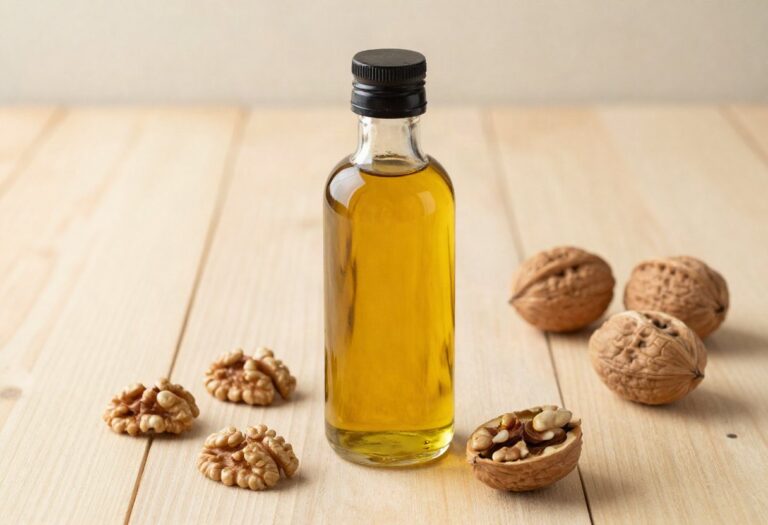
Walnut oil is a vegetable fat obtained by pressing walnut kernels. Recognisable by its lovely amber colour and intense, slightly toasted taste, it is one of the so-called oils with character. Like all oils, it provides 100% fat, or about 900 kcal per 100 g, with no protein or carbohydrate. Its distinctive feature is its richness in polyunsaturated fatty acids, notably plant-based omega-3 (alpha-linolenic acid). It is often found in virgin, cold-pressed form, which preserves its aromas and nutritional qualities. Used in moderation, it adds a tasty, nutritious touch to a balanced diet.
Macronutrient breakdown
Nutrition table per 100 g
| Calories | 900 kcal |
| Kilojoules | 3700 kJ |
| Fat | 100 g |
Micronutrients per 100 g
All measured nutrients, ranked by share of the daily reference intake.
- Omega-3 ALA11,9 g595 %
- Omega-6 LA56,7 g567 %
- Vitamin K115 µg20 %
- Iodine0,8 µg1 %
- Vitamin A0 µg0 %
Anses Ciqual 2025. Source: Anses, 2025, Ciqual food composition table
Tips
Walnut oil is best enjoyed raw, because heat spoils its delicate aromas and fragile fatty acids. It is ideal for dressing vegetable salads, chicory, lamb’s lettuce, grated carrots or even fresh cheeses. A teaspoon is often enough to flavour a dish. You can also drizzle it over a smooth soup just before serving, or combine it with a splash of balsamic vinegar for a refined vinaigrette.
In terms of nutrition facts, walnut oil stands out for its richness in polyunsaturated fatty acids, including a worthwhile share of omega-3 (alpha-linolenic acid) and omega-6. To balance your intake, it makes sense to alternate it with other oils with a complementary profile, such as olive oil, rich in oleic acid, or rapeseed oil, also a source of omega-3. You will find other options in the fats and oils family.
Storage: sensitive to light and oxidation, walnut oil should be kept cool, in a tightly closed opaque bottle, and used quickly after opening to stop it going rancid. As its pronounced taste changes quickly, it is better to buy small volumes.
- Calories: about 900 kcal per 100 g, or nearly 90 kcal per tablespoon.
- Composition: 100% fat, with no carbohydrate or protein.
- Uses: raw dressings, vinaigrettes, marinades, a finishing touch on fish or starchy foods.
For active people: walnut oil is a source of good-quality fatty acids to round off an active diet. You can add a small amount to a complete post-workout salad, alongside your protein and carbohydrate intake. It does not replace a proper recovery snack, though: for that, discover our ideas for protein snacks and our advice on a balanced diet.
Weight control: like any oil, walnut oil is very high in calories and energy-dense. If you are trying to lose weight, measure it with a spoon rather than pouring freely, and limit yourself to one or two spoonfuls a day. Its intense flavour means you can use only a little for plenty of taste. Eaten in moderation and included in a varied diet, it remains an interesting everyday fat.