Group · Fats & oils
Corn oil
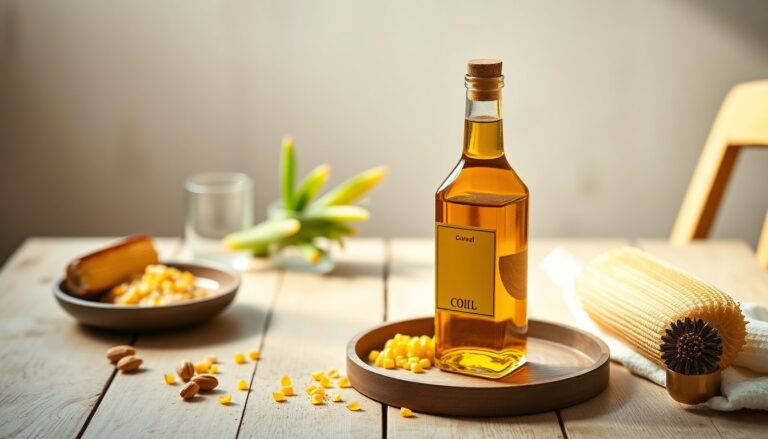
Corn oil is a vegetable fat extracted from the germ of the corn kernel. Clear, golden in colour and neutral in taste, it stands out for its richness in polyunsaturated fatty acids, notably omega-6 (linoleic acid), and for its vitamin E content. Like all oils, it has maximum energy density: 100% fat, or about 900 kcal per 100 g, with no protein, carbohydrate or fibre. It is found mainly in refined form, valued for its high smoke point. Versatile, it fits easily into a balanced diet as long as it is used in moderation, alternating with other fats with complementary profiles.
Macronutrient breakdown
Nutrition table per 100 g
| Calories | 900 kcal |
| Kilojoules | 3700 kJ |
| Fat | 100 g |
Micronutrients per 100 g
All measured nutrients, ranked by share of the daily reference intake.
- Omega-6 LA53,2 g532 %
- Vitamin E14,3 mg119 %
- Omega-3 ALA1,16 g58 %
- Vitamin K11,9 µg3 %
- Iodine0,8 µg1 %
Anses Ciqual 2025. Source: Anses, 2025, Ciqual food composition table
Tips
Corn oil lends itself to cold preparations as well as cooking. Its mild taste makes it a popular base for vinaigrettes, marinades, homemade mayonnaise or sauces, where it lets the other flavours come through. Thanks to its high smoke point, it is also suitable for pan-frying, sautéing and the occasional deep-fry. To preserve its qualities, keep it away from light and heat with the cap tightly closed, and avoid reusing heated oil several times.
In terms of nutrition facts, corn oil is very rich in omega-6. Modern diets already provide plenty of these fatty acids, so it makes sense to alternate it with oils richer in omega-3 or oleic acid. Think, for example, of rapeseed oil for everyday use, olive oil for dressing, or linseed oil drizzled cold. Varying your sources of fat remains the best strategy, as the principles of a balanced diet remind us.
When it comes to weight control, keep in mind that a tablespoon (about 10 g) already provides nearly 90 kcal. Oils are the most calorific foods per gram, and are equal to one another: their value comes not from a lower calorie count but from the quality of their fatty acids and their vitamin E content. If you are trying to lose weight, measure with a spoon rather than pouring freely, and favour gentle cooking that limits the amount of fat added. You can compare its values with other fats in the fats and oils family or check the calorie table.
- Portion guide: 1 to 2 tablespoons a day, all oils combined.
- Cold: ideal for vinaigrettes and neutral sauces.
- Hot: high smoke point, suited to occasional deep-frying.
- Storage: in a dry place, away from light, closed after use.
For active people, corn oil provides a concentrated source of energy and vitamin E, useful during a bulking phase when calorie needs are high. A drizzle over starchy foods or vegetables after training easily rounds off a recovery meal. During a cutting phase or weight loss, measure quantities rigorously and include this intake in your overall fitness nutrition strategy.