Group · Fats & oils
Soya oil
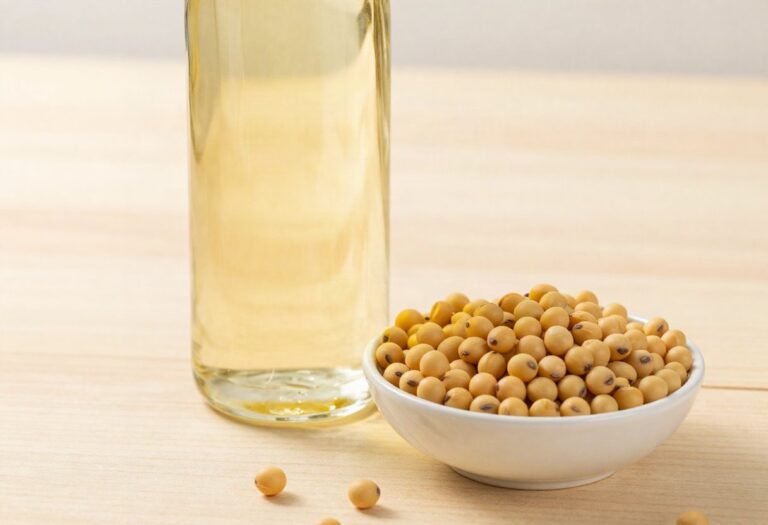
Soya oil is a vegetable fat extracted from soya beans, widely used around the world for its neutral taste and low cost. It is found in refined form, sometimes blended into the shop-bought oils labelled « vegetable ». With 100 g of fat and 900 kcal per 100 g, it is a pure fat, with no protein or carbohydrate. It stands out for its richness in polyunsaturated fatty acids, particularly omega-6 and a share of omega-3 (alpha-linolenic acid). Versatile, it suits dressings as well as some hot preparations. Like any oil, it needs to be measured as part of a balanced diet and weight control.
Macronutrient breakdown
Nutrition table per 100 g
| Calories | 900 kcal |
| Kilojoules | 3700 kJ |
| Fat | 100 g |
Micronutrients per 100 g
All measured nutrients, ranked by share of the daily reference intake.
- Omega-6 LA50,4 g504 %
- Omega-3 ALA6,79 g340 %
- Vitamin K1184 µg245 %
- Zinc0,11 mg1 %
- Manganese0,01 mg1 %
- Iodine0,8 µg1 %
- Magnesium1,52 mg0 %
- Copper0 mg0 %
See the other 2 nutrients
- Iron0,04 mg0 %
- Potassium1,85 mg0 %
Anses Ciqual 2025. Source: Anses, 2025, Ciqual food composition table
Tips
Soya oil has a mild flavour that makes it practical for everyday use, but its nutritional profile deserves a few pointers. Rich in polyunsaturated fatty acids, it provides mainly omega-6 and a fraction of omega-3, two families of essential fatty acids that your body cannot make. In terms of nutrition facts, it is 100% fat, so very dense in calories: one tablespoon (about 10 g) already provides nearly 90 kcal.
How to use soya oil?
- As a cold dressing to preserve its delicate fatty acids: vinaigrettes, marinades, cold sauces.
- For moderate cooking, it tolerates medium heat, but avoid repeated deep-frying at very high temperatures, which degrades omega-3.
- Keep the bottle away from light and heat, tightly closed, to limit oxidation and rancidity.
- A sensible portion is around 1 to 2 tablespoons a day, all oils combined.
To vary your fatty acid profiles, alternate with other oils. Rapeseed oil and linseed oil, for example, are richer in omega-3, while olive oil remains a benchmark for both hot and cold dishes. You can explore the whole fats and oils family to compare their uses.
Tips for active people
Good-quality fats contribute to overall energy intake and to the body working properly. For an athlete, soya oil can round off a meal by providing useful calories during a bulking phase, added to a portion of starchy foods or vegetables. Keep in mind, though, that it replaces neither protein nor carbohydrate: it completes the plate, it does not form its basis. During periods of effort, favour carbohydrate intake around training and keep fats for meals further from your sessions.
Weight watch-points
Like all oils, soya oil is very high in calories. If you are trying to lose weight or follow a balanced diet, the right habit is to measure it with a spoon rather than pouring freely, and to keep an eye on your total fat intake over the day. Used well, it has its place in a varied, balanced diet.