Group · Herbs & spices
Fresh peppermint
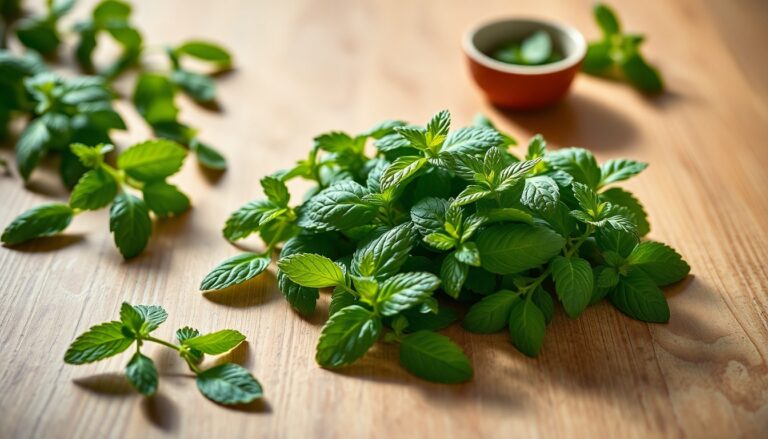
Fresh peppermint (Mentha piperita) is an aromatic herb recognisable by its fresh, intense scent, sharper and more minty than spearmint. A natural hybrid, it has dark green leaves and a distinctive flavour that comes from its high menthol content. Whether in cooking or in infusions, it adds a touch of freshness without weighing down the plate. Per 100 g it provides around 57.6 kcal, 3.52 g of protein, 5.3 g of carbohydrate, barely 0.84 g of fat and 7.4 g of fibre. Because it is used in small amounts, its calorie contribution is minimal. This herb fits easily into a balanced diet, whether to flavour dishes or to freshen up drinks.
Macronutrient breakdown
Nutrition table per 100 g
| Calories | 58 kcal |
| Kilojoules | 240 kJ |
| Protein | 3,6 g |
| Carbohydrate | 5,3 g |
| Fat | 0,9 g |
| Fibre | 7,4 g |
Micronutrients per 100 g
All measured nutrients, ranked by share of the daily reference intake.
- Iron8,48 mg61 %
- Manganese1,15 mg58 %
- Vitamin C22,6 mg28 %
- Copper0,28 mg28 %
- Calcium221 mg28 %
- Potassium514 mg26 %
- Magnesium71,5 mg19 %
- Vitamin B20,22 mg16 %
- Vitamin B9dietary folate equivalents110 µg
See the other 8 nutrients
- Zinc1,1 mg11 %
- Vitamin B60,14 mg10 %
- Phosphorus66,5 mg10 %
- Vitamin B31,33 mg8 %
- Vitamin A61,7 µg8 %
- Vitamin B10,08 mg7 %
- Vitamin B50,29 mg5 %
- Selenium0,5 µg1 %
Anses Ciqual 2025. Source: Anses, 2025, Ciqual food composition table
Tips
Fresh peppermint has plenty of uses. Finely chopped, it lifts salads, tabbouleh, yoghurt sauces, summer vegetables and fruit-based desserts. As an infusion, a few leaves in hot water make a refreshing, digestive drink with no sugar or added calories. You can also add it to chilled water with lemon for a very low-calorie drink to sip through the day.
- Portions: a tablespoon of chopped leaves is enough to flavour a dish. The amount actually eaten is small, so the impact on calories is negligible.
- Storage: keep the bunch in a glass of water in the fridge, or wrap it in a damp cloth. The leaves also freeze very well, chopped and packed into ice cube trays.
- Cooking: add it at the end of preparation to preserve its volatile aromas and its menthol content, which are fragile when heated.
Nutritionally, peppermint provides fibre (7.4 g per 100 g), aromatic compounds and various micronutrients. Its nutrition facts make it a good ally for light recipes: little fat, carbohydrate that is mostly tied up in fibre, and a glycaemic index that makes no real difference given the small amounts eaten. It is a natural fit for dishes inspired by the Cretan diet, which is rich in fresh herbs and plant foods.
To vary the flavours, pair it with other aromatic plants from the herbs and spices family. Fresh basil adds a softer note to summer salads, while fresh spearmint suits Middle Eastern dishes better. Think of fresh parsley too, to bring more sources of freshness to your plates.
Tip for active people: fresh peppermint is perfect for flavouring your drinking water during exercise, with no sugar or empty calories. As a snack, a few leaves in plain yoghurt or fromage blanc liven up a light source of protein, ideal when you are cutting or watching your weight. You can also scatter it over a carbohydrate-rich fruit salad after training for a refreshing touch.
Weight control: low in calories, fresh peppermint lets you cut back on added salt, fat or sugar by relying on flavour instead. Choose homemade infusions rather than sweetened shop-bought mint drinks, which are often high in calories. Used regularly, it helps make a balanced diet tastier, without excess.
As a herbal tea or essential oil: precautions, reflux, children and pregnancy are covered in our guide peppermint: risks and contraindications.