Peppermint: dangers of the tea and the essential oil
The short answer
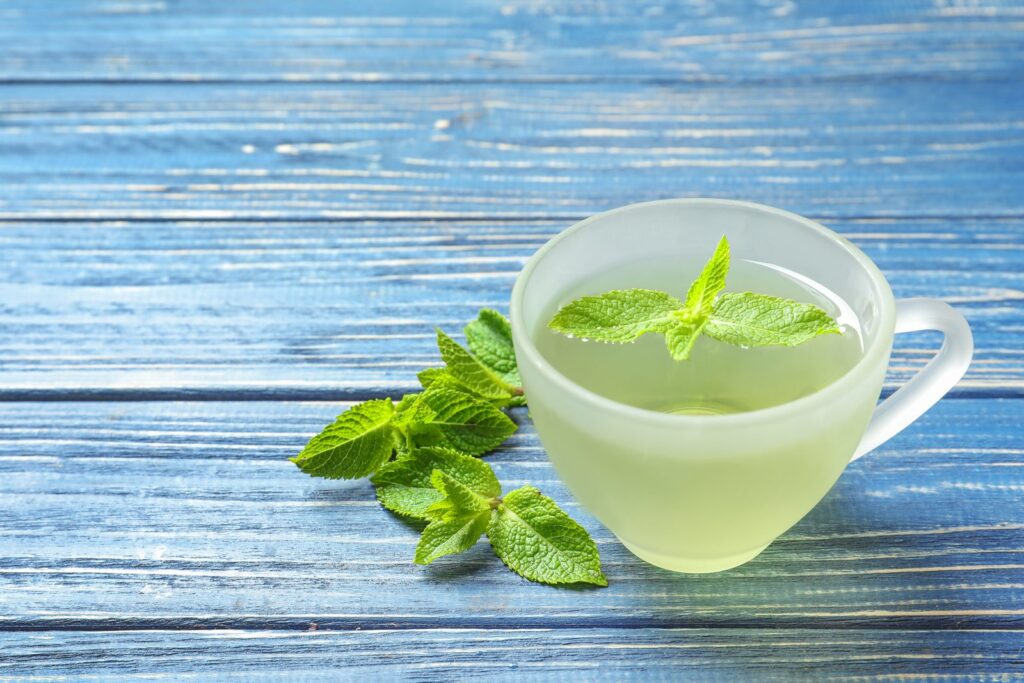
Peppermint tea is not dangerous for a healthy adult; the essential oil, however, calls for much more caution. The European Medicines Agency (EMA) recognises the traditional use of peppermint leaf to relieve digestive complaints such as difficult digestion and bloating. It reports no interactions or overdose for the tea, but advises avoiding it if you have reflux, because it can worsen heartburn, being careful with gallstones, and does not recommend it under 4 years of age or during pregnancy and breastfeeding. The essential oil is contraindicated under 2 years of age and can cause serious problems if overdosed.
This article is for information only and does not replace medical advice. If you have a chronic illness or take medication, talk to your doctor or pharmacist.
Leaf or essential oil: two different products
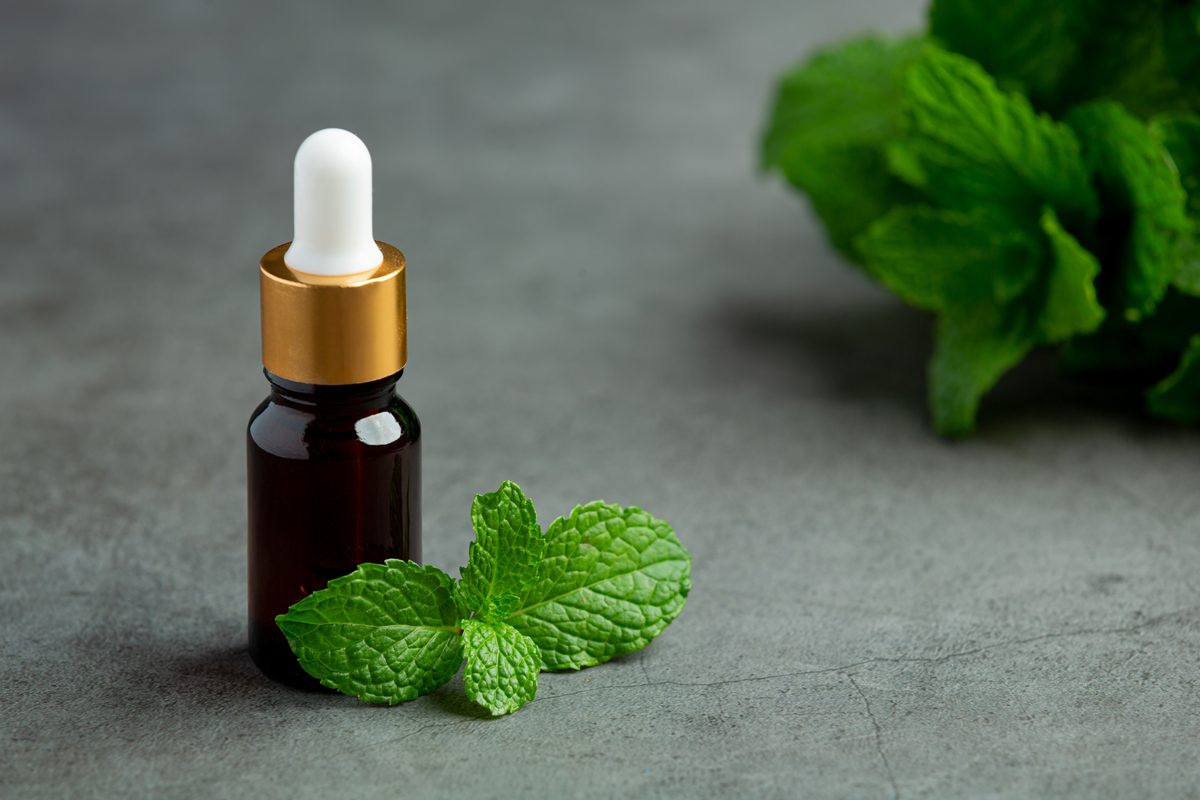
The tea is made with a few grams of dried leaves infused in water. The essential oil is a concentrate, obtained by distillation, very rich in menthol: a few drops contain as many aromatic compounds as a large quantity of leaves. The EMA devotes two separate monographs to them, with very different precautions. Never confuse them, and never add essential oil to a tea.
Peppermint tea: what the EMA says
| Point | Peppermint leaf, as a tea |
|---|---|
| Traditional use | relief of digestive complaints: difficult digestion, bloating |
| Adult dose | 4.5 to 9 g of leaves a day, in three doses |
| Children aged 4 to 12 | 3 to 5 g a day, in three doses |
| Teenagers aged 12 to 16 | 3 to 6 g a day, in three doses |
| Under 4 years | not recommended, for lack of experience |
| Duration | see a doctor if symptoms last more than 2 weeks |
| Contraindication | allergy to peppermint or menthol |
| Precautions | gastro-oesophageal reflux: avoid, heartburn may increase; gallstones and bile duct disorders: be careful |
| Pregnancy and breastfeeding | safety not established: use not recommended |
| Interactions | none reported |
| Side effects | worsening of reflux and heartburn |
| Overdose | no cases reported |
Peppermint essential oil: what the EMA says
| Point | Essential oil |
|---|---|
| Recognised oral use | in gastro-resistant capsules, digestive spasms, bloating and abdominal pain, notably in irritable bowel syndrome |
| Oral dose | 0.2 to 0.4 mL in gastro-resistant capsules up to three times a day from age 12; 0.2 mL from age 8 to 12 |
| Children | contraindicated under 2 years; not recommended from 2 to 4 years; no capsules under 8 years |
| Interactions | antacids and medicines that reduce stomach acidity, such as proton pump inhibitors, can dissolve the capsule coating too early |
| Pregnancy and breastfeeding | not recommended |
| Side effects | heartburn, nausea, allergic reactions to menthol, sometimes severe |
| Overdose | severe digestive problems, convulsions, loss of consciousness, heart rhythm disturbances, attributed to menthol |
The difference is stark: no overdose has been reported with the tea, whereas the essential oil, swallowed in excess, can cause neurological and heart problems. In children, the essential oil is contraindicated under 2 years of age. Never leave a bottle of essential oil within a child’s reach.
What the 2020 revision says about the essential oil
The EMA revised its monograph on peppermint essential oil in January 2020. Several clarifications matter for safety:
| Point | What the revised monograph says |
|---|---|
| Contraindications, capsules | allergy to peppermint or menthol; liver disease, cholangitis, achlorhydria, gallstones and any other bile duct disorder |
| Contraindications, traditional uses | children under 2 years, because menthol can cause reflex apnoea and laryngospasm; children with a history of convulsions, with or without fever |
| Taking the capsules | 30 minutes before a meal, swallowed whole, without opening or chewing them |
| Capsule dose | 0.2 to 0.4 ml per dose, 0.6 to 1.2 ml a day from age 12; 0.2 ml three times a day from age 8 to 11 |
| Duration | until symptoms disappear, usually one to two weeks; 3 months at most per course |
| Interactions | a meal or an antacid taken at the same time can release the capsule contents too early |
| Precautions | stop if heartburn or hiatus hernia gets worse; be careful with inflammation or a digestive ulcer; do not combine several peppermint oil products |
| On the skin | not on damaged or irritated skin; wash your hands to avoid eye irritation |
The most important point concerns young children: menthol balms and inhalations, common for colds, must never be used on a baby under 2 years old, or on a child who has already had convulsions.
What really ends up in your cup
Why is the tea so low-risk, when the essential oil calls for so many precautions? The EMA assessment report gives the figures. According to the European Pharmacopoeia, the whole leaf must contain at least 12 ml of essential oil per kilo, and this oil is 30 to 55% menthol. But the infusion extracts only a small part of it:
| What the leaf contains | Share found in the infusion |
|---|---|
| Essential oil, including menthol | about 20 to 25% after 10 minutes in boiling water |
| Polyphenolic compounds | about 75% |
The same goes for two closely monitored compounds, pulegone and menthofuran, which are toxic to the liver at high doses. The EMA calculated that at the tea doses in the monograph, an adult takes in roughly 0.1 to 3 mg a day. The acceptable limit it sets for lifelong intake is 37.5 mg a day for a 50 kg adult, and 15 mg a day for a 20 kg child. The tea therefore stays very far below this threshold. By contrast, the maximum dose of essential oil in capsules, 1.2 ml a day, can supply up to about 100 mg if the oil is at the upper limit of the Pharmacopoeia: hence the requirement for a quality-controlled oil, and the restriction to short courses.
Pennyroyal, the truly dangerous mint
Peppermint is not the only mint sold in herbalist shops. Pennyroyal, Mentha pulegium, has an essential oil that is 62 to 97% pulegone, against 3% at most for peppermint oil. The poisonings described are serious: according to the review cited by the EMA, swallowing 10 ml of pennyroyal essential oil caused moderate to severe toxicity, and more than 15 ml caused deaths, with massive liver destruction. Never confuse the two plants, and do not buy pennyroyal essential oil for oral use.
The real dangers of the tea: for whom?
Reflux and heartburn
This is the main precaution: mint can worsen reflux and heartburn. The EMA advises people who suffer from them to avoid peppermint tea. See our guide to what to eat with acid reflux.
Gallstones and bile ducts
The EMA recommends caution in the case of gallstones or any other bile duct disorder.
Children under 4
The tea is not recommended under 4 years of age, for lack of experience. Between 4 and 12, doses are roughly halved.
Pregnancy and breastfeeding
The EMA does not recommend it, for lack of safety data. This is a precautionary principle; mint used in cooking, in small amounts, is not affected. See eating during pregnancy.
Allergy
If you have a known allergy to mint or menthol, the tea is contraindicated. Mint belongs to the Lamiaceae family, like thyme or sage.
The traffic light by profile
| Profile | Peppermint tea | Essential oil |
|---|---|---|
| Healthy adult | 🟢 fine, up to 3 cups a day | 🟠 only in gastro-resistant capsules, on advice |
| Reflux, heartburn | 🔴 avoid | 🔴 avoid |
| Gallstones | 🟠 be careful | 🟠 medical advice |
| Antacid treatment, proton pump inhibitor | 🟢 no interaction reported | 🟠 interaction with the capsules |
| Child aged 4 to 12 | 🟢 at a reduced dose | 🟠 capsules not before 8 years, on advice |
| Child under 4 | 🔴 not recommended | 🔴 contraindicated under 2 years |
| Pregnancy, breastfeeding | 🔴 not recommended | 🔴 not recommended |
Irritable bowel: what the studies show
The best-demonstrated use of peppermint is not the tea, but the essential oil in gastro-resistant capsules for irritable bowel syndrome. Several meta-analyses agree:
| Meta-analysis | Trials | Main result |
|---|---|---|
| Ford et al., BMJ, 2008 | 4 trials, 392 patients | risk of persistent symptoms cut by more than half compared with placebo |
| Khanna et al., 2014 | 9 trials, 726 patients | overall improvement and less abdominal pain; side effects more frequent but mild, mostly heartburn |
| Alammar et al., 2019 | 12 trials, 835 patients | overall improvement and less pain; you only need to treat 3 people for one more to see their symptoms improve |
In the 2019 meta-analysis, side effects affected 9.3% of patients on peppermint oil against 6.1% on placebo, a difference that was not significant. The 2014 authors point out that these results concern short-term treatments: long-term efficacy and safety remain to be studied.
For irritable bowel, diet matters a great deal too: see our guide to the low-FODMAP diet. And if you also have heartburn, peppermint is probably not the right option.
Headaches: applying it to the temples
The other use well established by the EMA is relief of mild tension headaches in adults, with a preparation of 10% essential oil in alcohol:
- to be rubbed on the forehead and temples;
- one application, which can be repeated twice at 15-minute intervals;
- only one treatment a day;
- not recommended under 18, for lack of data.
Watch your eyes: contact with unwashed hands after application can irritate them. And never apply pure, undiluted essential oil.
The doses in the monograph revised in 2020
In January 2020 the EMA also revised the monograph for the leaf. Doses are now expressed per cup:
| Age | Leaves per cup | Water | Number of cups |
|---|---|---|---|
| Adult, older person | 1.5 to 3 g | 100 to 150 ml of boiling water | 3 a day |
| Child aged 4 to 11, teenager | 1 to 2 g | 100 to 150 ml of boiling water | 3 a day |
| Under 4 years | not recommended, for lack of data | ||
For children over 4 and teenagers, the maximum dose is therefore 6 g of leaves a day, against 9 g for adults. The revision also added tinctures, 2 to 3 ml three times a day in adults. The rest is unchanged: see a doctor if symptoms last more than two weeks or get worse, no overdose reported, and reflux and gallstones as the main precautions.
How many cups a day?
For adults, the EMA gives 4.5 to 9 g of leaves a day, in three doses, which is 1.5 to 3 g per cup. Three cups a day, with a reasonable amount of leaves, therefore stay within the guidelines. If digestive problems last more than two weeks, see a doctor.
Can you drink it in the evening?
Yes, peppermint contains no caffeine. However, if you are prone to reflux, especially when lying down, avoid it in the evening. For sleep, see our guide to foods for sleep.
Mint tea and pregnancy
Mint tea, very widespread, is not a simple herbal tea: it combines mint with green tea, and therefore with caffeine, and it is often very sweet. During pregnancy, two benchmarks apply:
- EFSA considers that a caffeine intake of up to 200 mg a day, from all sources combined, raises no safety concern for the foetus: tea counts towards this total, along with coffee, chocolate and fizzy drinks;
- the EMA does not recommend peppermint as a remedy during pregnancy and breastfeeding, for lack of data; a few mint leaves in a tea or a recipe count as food use, not a remedy dose.
In practice, an occasional glass of mint tea remains possible, as long as you keep an eye on the day’s total caffeine and on sugar. See also our guide to how much coffee a day, which details caffeine intakes.
Sweets, chewing gum and breastfeeding: the other questions
- Too many mint sweets: the EMA report cites cases of inflammation of the mouth and tongue in people who consumed excessive quantities of mint-flavoured sweets. Nothing worrying for a few lozenges, but a warning sign if you suck them all day long.
- Menthol and medicines: in a crossover trial in 11 volunteers, a dose of menthol did not markedly change the pharmacokinetics of felodipine, a blood pressure medicine sensitive to food interactions. The EMA reports no interaction for the tea.
- Breastfeeding: some books claim that peppermint could reduce milk production. The EMA mentions this claim, but without solid data to confirm it; it is one of the reasons for its caution during breastfeeding. If you are breastfeeding, talk to your midwife before drinking it regularly.
- Inhalation: the EMA reports that inhaling large quantities of menthol has caused dizziness, confusion, muscle weakness, nausea or double vision. Inhalations should therefore be used in moderation, and never in young children.
Real benefits and promises
- Digestion, bloating: traditional use recognised by the EMA for the tea.
- Irritable bowel: the essential oil in gastro-resistant capsules has a well-established use according to the EMA for abdominal spasms and pain. It is a pharmacy product, to be taken on advice. See also our guide to the FODMAP diet.
- Headaches: the diluted essential oil, applied to the forehead and temples, has a recognised use for mild tension headaches in adults, not in children.
- « Detox », « slimming »: none of these claims is recognised.
For other herbal teas, see our guides to thyme tea, nettle tea and turmeric.
Frequently asked questions
Is peppermint dangerous?
As a tea, not for a healthy adult. The essential oil is riskier: contraindicated under 2 years, and toxic if overdosed.
Is peppermint tea bad for reflux?
Yes: the EMA advises people with reflux to avoid peppermint, which can worsen heartburn.
How many cups of peppermint tea a day?
The EMA gives 4.5 to 9 g of leaves a day for adults, in three doses, which is about three cups.
Can you drink mint tea when pregnant?
The EMA does not recommend it during pregnancy or breastfeeding, for lack of data. Mint used in cooking is not affected.
Can you give mint tea to a child?
Not under 4 years. From 4 to 12, at a reduced dose: 3 to 5 g of leaves a day according to the EMA.
Is peppermint essential oil dangerous?
It is contraindicated under 2 years, not recommended during pregnancy, and an overdose can cause convulsions and heart problems. Use only on advice.
Do peppermint essential oil capsules work for irritable bowel?
Yes, in the short term: several meta-analyses show an improvement in symptoms and pain compared with placebo. They are taken 30 minutes before a meal, swallowed whole, for one to two weeks, and for 3 months at most per course.
Can you put a menthol balm on a baby?
No: the EMA contraindicates peppermint essential oil under 2 years, because menthol can cause reflex apnoea and laryngospasm, and also in children who have already had convulsions.
Does peppermint relieve headaches?
The EMA recognises applying a 10% preparation to the forehead and temples for mild tension headaches in adults.
Is mint tea allowed during pregnancy?
Occasionally, yes, counting its caffeine within the 200 mg a day limit set by EFSA, and limiting sugar.
What is the difference between peppermint and pennyroyal?
Pennyroyal essential oil contains 62 to 97% pulegone, which is toxic to the liver, against 3% at most for peppermint. Deaths have been reported after swallowing more than 15 ml.
How many leaves for a cup of peppermint tea?
According to the EMA’s revised monograph, 1.5 to 3 g of leaves in 100 to 150 ml of boiling water, three times a day for adults, and 1 to 2 g per cup from age 4 to adolescence.
Does mint tea contain a lot of menthol?
No: the infusion extracts only about 20 to 25% of the leaf’s essential oil, which explains why no overdose has been reported with the tea.
Our sources
- EMA, HMPC, Community monograph Mentha x piperita L., folium (2008, revised since).
- EMA, HMPC, Community monograph Mentha x piperita L., aetheroleum (2007, revised since).
- EMA, HMPC, monograph Mentha x piperita L., aetheroleum, revision 1 (EMA/HMPC/522410/2013), 15 January 2020.
- Ford AC et al. Effect of fibre, antispasmodics, and peppermint oil in the treatment of irritable bowel syndrome. BMJ, 2008 (PMID 19008265).
- Khanna R et al. Peppermint oil for the treatment of irritable bowel syndrome: a systematic review and meta-analysis. J Clin Gastroenterol, 2014 (PMID 24100754).
- Alammar N et al. The impact of peppermint oil on the irritable bowel syndrome: a meta-analysis of the pooled clinical data. BMC Complement Altern Med, 2019 (PMID 30654773).
- EFSA, scientific opinion on the safety of caffeine, 2015: up to 200 mg a day during pregnancy.
- EMA, HMPC. European Union herbal monograph on Mentha x piperita L., folium, revision 1 (EMA/HMPC/572705/2014), 15 January 2020.
- EMA, HMPC. Assessment report on Mentha x piperita L., folium and aetheroleum, revision 1 (EMA/HMPC/522409/2013), 2020: composition, transfer into the infusion, pulegone and menthofuran, pennyroyal.
- EMA, HMPC. Public statement on the use of herbal medicinal products containing pulegone and menthofuran (EMA/HMPC/138386/2005 Rev. 1), cited in the assessment report.