Group · Herbs & spices
Fresh basil
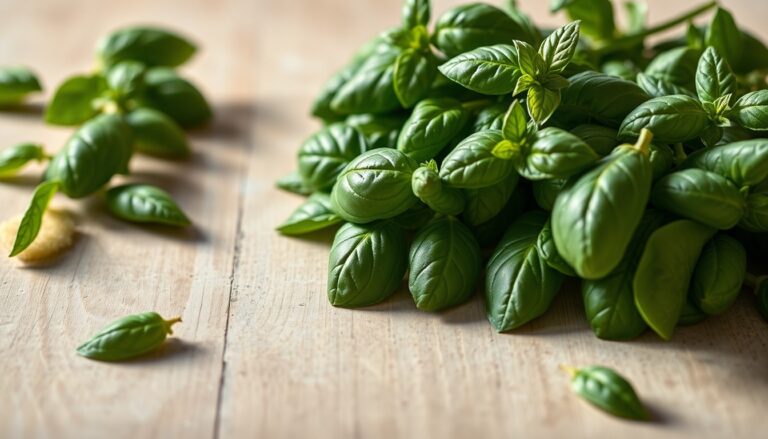
Fresh basil is an aromatic herb emblematic of Mediterranean and Asian cooking, recognisable by its sweet, slightly peppery aroma. Coming from the plant Ocimum basilicum, it comes in many varieties: Genovese basil (the great classic for pesto), purple basil, Thai basil and lemon basil. Light and low in calories, it provides only 35.2 kcal per 100 g, while also supplying fibre, a little plant protein and interesting aromatic compounds. Fresh, and torn at the last moment, it lifts a multitude of dishes without adding to the calorie count. It is a great choice in a balanced diet, ideal for naturally flavouring your recipes and cutting back on salt.
Macronutrient breakdown
Nutrition table per 100 g
| Calories | 35 kcal |
| Kilojoules | 148 kJ |
| Protein | 3,2 g |
| Carbohydrate | 3,4 g |
| Fat | 0,7 g |
| Fibre | 1,6 g |
Micronutrients per 100 g
All measured nutrients, ranked by share of the daily reference intake.
- Vitamin K1415 µg553 %
- Manganese1,15 mg58 %
- Copper0,39 mg39 %
- Vitamin A262 µg33 %
- Iron3,17 mg23 %
- Vitamin C18 mg23 %
- Calcium177 mg22 %
- Magnesium64 mg17 %
- Vitamin B9dietary folate equivalents68 µg
See the other 9 nutrients
- Potassium295 mg15 %
- Vitamin B60,16 mg11 %
- Zinc0,81 mg8 %
- Phosphorus56 mg8 %
- Vitamin E0,8 mg7 %
- Vitamin B30,9 mg6 %
- Vitamin B20,08 mg5 %
- Vitamin B50,21 mg4 %
- Vitamin B10,03 mg3 %
Anses Ciqual 2025. Source: Anses, 2025, Ciqual food composition table
Tips
Fresh basil is best enjoyed raw or added right at the end of cooking, because heat quickly destroys its volatile aromas. Tear it by hand rather than cutting it with a knife to stop it going black, and add it at the last moment to a tomato salad, pasta, a pizza or a velouté. A small handful is enough to transform a dish: there is no need to overdo it, especially as its nutrition facts are negligible at normal portions.
- Seasonality: fresh basil is at its peak from June to September, in high summer.
- Storage: keep the stems in a glass of water at room temperature, or freeze the leaves in an ice cube tray with a drizzle of olive oil.
- Pairings: tomato, mozzarella, garlic, pine nuts, lemon, courgette and strawberry all go beautifully with its aniseed notes.
In terms of nutrition, basil provides fibre (1.6 g/100 g), a little plant protein and minerals such as potassium, calcium and magnesium. Its very low calorie density makes it a good choice for slimming: it seasons without empty calories and lets you cut back on salt and fatty sauces. For inspiration, discover other aromatic herbs in the Herbs & Spices family, and compare its values in the food calorie table.
Basil combines very well with other Mediterranean herbs to vary the flavours: try it with fresh thyme in a marinade, or with fresh parsley in a homemade green sauce. For a lighter pesto, blend the basil with a little olive oil, garlic and pine nuts, using less cheese.
For active people: fresh basil does not provide significant energy, but it makes meals more appetising, which helps you vary your diet during a cutting phase or while rebalancing. Add it to your lean protein dishes (chicken, fish, eggs, pulses) for tasty, low-calorie meals, perfect for a balanced diet. Eaten regularly, it fits naturally into fresh, balanced cooking with no calorie traps.