Group · Herbs & spices
Dried spearmint
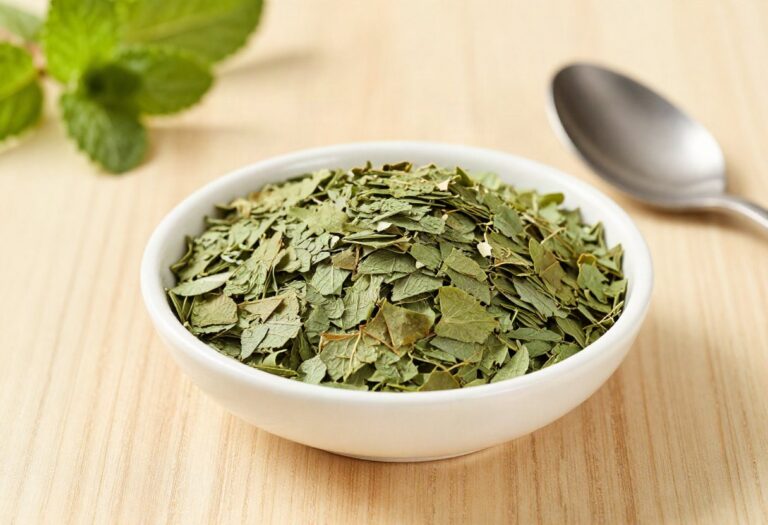
Dried spearmint is an aromatic herb made by removing the water from fresh mint leaves (Mentha spicata). Concentrated in aroma, it gives off a fresh, slightly sweet note much appreciated in Mediterranean and Middle Eastern cooking. As crumbled leaves or powder, it keeps for a long time and flavours savoury dishes and infusions alike. Like all dried herbs, it is used in small amounts, which makes its calories and macronutrients almost negligible at the scale of a pinch. Rich in fibre and aromatic compounds, dried spearmint fits naturally into a balanced diet, where it lifts flavours without adding salt or sugar.
Macronutrient breakdown
Nutrition table per 100 g
| Calories | 283 kcal |
| Kilojoules | 1180 kJ |
| Protein | 19,9 g |
| Carbohydrate | 22,2 g |
| Fat | 6,1 g |
| Fibre | 29,8 g |
Micronutrients per 100 g
All measured nutrients, ranked by share of the daily reference intake.
- Iron87,5 mg625 %
- Manganese11,5 mg575 %
- Calcium1490 mg186 %
- Vitamin B62,58 mg184 %
- Magnesium602 mg161 %
- Copper1,54 mg154 %
- Vitamin B21,42 mg101 %
- Potassium1920 mg96 %
- Vitamin B9dietary folate equivalents530 µg
See the other 5 nutrients
- Vitamin B36,56 mg41 %
- Phosphorus276 mg39 %
- Vitamin B10,29 mg26 %
- Zinc2,41 mg24 %
- Vitamin B51,4 mg23 %
Anses Ciqual 2025. Source: Anses, 2025, Ciqual food composition table
Tips
Dried spearmint is used in small pinches, because its taste is concentrated. Half a teaspoon is often enough to flavour a yoghurt sauce, a cucumber salad, a tabbouleh or a dish of vegetables. It goes wonderfully with lemon, lamb, pulses and cereals. To preserve its aroma, add it at the end of cooking or let it steep in a hot liquid.
As for nutrition facts, the 283 kcal per 100 g seem high, but a real portion weighs only a few grams. Per 100 g, there are around 19.9 g of protein, 22.2 g of carbohydrate, 6.03 g of fat and nearly 29.8 g of fibre, which are impressive figures scaled down to the pinch actually used. Its main appeal is therefore taste: lifting dishes without salt or fat, a real advantage for a slimming meal.
- Infusion: a spoonful of leaves in hot water for a calorie-free drink, pleasant after a meal.
- Fresh sauces: mixed with plain yoghurt, garlic and cucumber, like a reworked tzatziki.
- Slow-cooked dishes: added to curries, tagines and chickpea dishes.
- Light desserts: a touch in a fruit salad or fromage frais.
To vary flavours, pair it with other herbs and spices such as basil, cumin or coriander. You will find more ideas in the herbs and spices family, ideal for tasty cooking that does not add to the calorie bill.
Tip for active people: dried spearmint provides no significant energy, but it adds freshness to your dishes. Slipped into a homemade flavoured water, it makes hydration more pleasant during and after exercise. It also flavours a protein-rich fromage frais or a bowl of pulses at a recovery snack, for tasty, minimally processed meals. To structure your intake around training, draw on our guidelines on fitness nutrition.
Storage: keep it in an airtight jar, away from light and damp, to preserve its essential oils and fragrance. Replace it when the smell fades. Weight point to watch: mint itself is not caloric in normal use, but keep an eye on the dishes that go with it (sugary sauces, fatty dishes). Used on its own to lift your recipes, it remains a valuable ally of light, fragrant cooking.
As a herbal tea or essential oil: precautions, reflux, children and pregnancy are covered in our guide peppermint: dangers and contraindications.