Group · Fruit
Blackberry
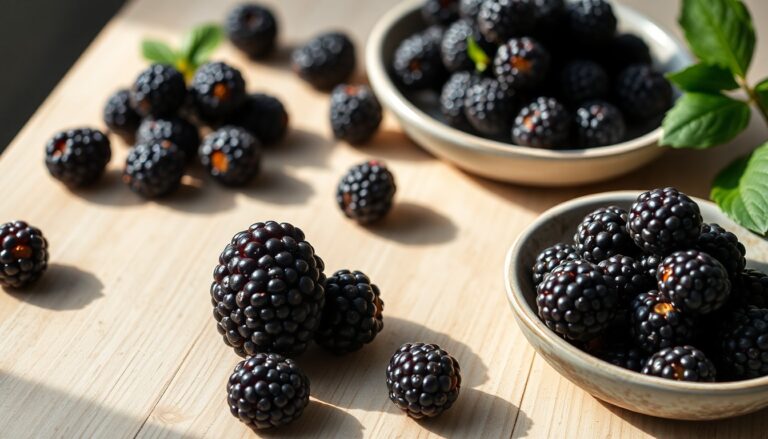
The blackberry is a small, glossy black fruit, a cousin of the raspberry, that grows on wild brambles in hedgerows or on cultivated thornless varieties. Picked from July to September, it is recognised by its flavour, both sweet and slightly tangy, and by its melting texture made up of tiny drupelets. With only 46 kcal per 100 g, it is among the least caloric fruits while being rich in fibre and in the antioxidant compounds that give it its dark colour. Delicious raw, as a coulis or in jam, the blackberry naturally has its place in a balanced, varied diet, whether you are watching your weight or simply enjoy seasonal red berries.
Macronutrient breakdown
Nutrition table per 100 g
| Calories | 46 kcal |
| Kilojoules | 192 kJ |
| Protein | 1,2 g |
| Carbohydrate | 6,6 g |
| Fat | 0,7 g |
| Fibre | 5,2 g |
Micronutrients per 100 g
All measured nutrients, ranked by share of the daily reference intake.
- Manganese1,1 mg55 %
- Vitamin K114,1 µg19 %
- Vitamin C10,1 mg13 %
- Vitamin E1,28 mg11 %
- Potassium200 mg10 %
- Copper0,07 mg7 %
- Magnesium20 mg5 %
- Vitamin B50,31 mg5 %
- Vitamin B9dietary folate equivalents17 µg
See the other 11 nutrients
- Omega-3 ALA0,08 g4 %
- Total omega-30,1 g4 %
- Calcium31 mg4 %
- Phosphorus25 mg4 %
- Omega-6 LA0,35 g4 %
- Iron0,4 mg3 %
- Vitamin B30,33 mg2 %
- Zinc0,18 mg2 %
- Vitamin A13 µg2 %
- Vitamin B20,02 mg1 %
- Vitamin B60,02 mg1 %
Anses Ciqual 2025. Source: Anses, 2025, Ciqual food composition table
Tips
The nutrition facts of the blackberry make it a good everyday choice: per 100 g, it provides 6.53 g of carbohydrate, 1.13 g of protein, 0.7 g of fat and above all 5.2 g of fibre, a high level for a fruit. This fibre contributes to fullness and digestive comfort. In terms of micronutrients, the blackberry is valued for its vitamin C, vitamin K, manganese and anthocyanins, pigments with antioxidant properties that colour its flesh.
A reasonable portion is a small handful (about 80 to 125 g). You can eat it as it is at breakfast, as a topping on a plain yoghurt or fromage blanc, in a smoothie, or mixed with other red berries such as raspberry or blueberry. Cooked, it turns into a coulis, jelly or clafoutis, but watch the added sugar, which pushes up the calorie count.
- Storage: the blackberry is fragile. Keep it in the fridge and eat it within 2 to 3 days. It freezes very well spread flat on a tray, which is handy for enjoying its benefits out of season.
- Cooking: favour gentle, brief heat to preserve vitamin C, which is sensitive to heat.
- Washing: rinse it gently just before eating to stop it from getting crushed.
For active people, the blackberry is a smart snack: low in calories, hydrating and rich in readily available simple carbohydrates, it can top up a banana before light exercise or join a recovery bowl after training. Paired with a source of protein (Greek yoghurt, fromage blanc or a protein shake), it makes a balanced snack. To go further, you will find more high-protein snack ideas to add to your routine.
For slimming or weight control, the blackberry ticks many boxes: low glycaemic index, low energy density and a good amount of filling fibre. The pitfall is sweet preparations (jams, syrups, pastries), which greatly increase the calories. It is therefore better to enjoy it fresh or plain. You can compare its nutrition with other fruits using the food calorie table, and explore the full richness of the fruit family to vary your treats through the seasons.