Group · Nuts & seeds
Hazelnuts
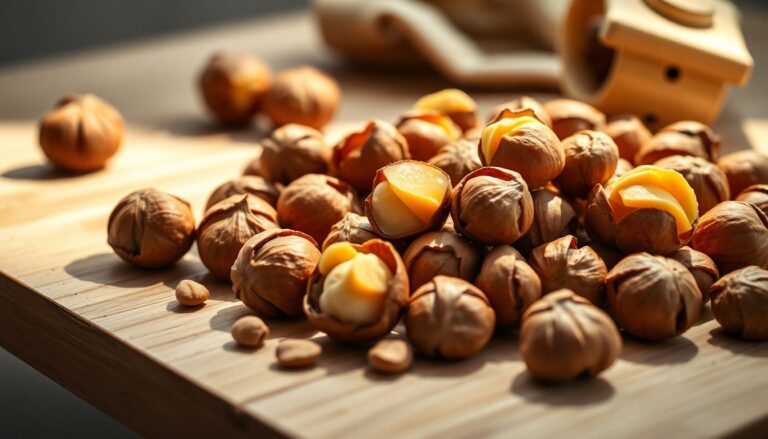
The hazelnut is the nut of the hazel tree, crunchy and delicately fragrant. It comes in several forms: whole, blanched, ground, as toasted pieces or made into a butter and a paste. A star of sweet and savoury recipes alike, it features as readily in desserts as in salads or mueslis. Nutritionally, the hazelnut provides around 632 kcal per 100 g, with mostly healthy fat (56.9 g), a worthwhile share of plant protein (17 g) and nearly 11.6 g of fibre. Rich in vitamin E and minerals, it fits perfectly into a balanced diet, as long as you respect portions. A tasty, filling snack.
Macronutrient breakdown
Nutrition table per 100 g
| Calories | 632 kcal |
| Kilojoules | 2610 kJ |
| Protein | 17 g |
| Carbohydrate | 7,2 g |
| Fat | 56,9 g |
| Fibre | 11,6 g |
Micronutrients per 100 g
All measured nutrients, ranked by share of the daily reference intake.
- Copper1,7 mg170 %
- Manganese3,3 mg165 %
- Vitamin E16,3 mg136 %
- Omega-6 LA5,35 g54 %
- Phosphorus340 mg49 %
- Potassium860 mg43 %
- Magnesium160 mg43 %
- Vitamin B10,35 mg32 %
- Vitamin B9dietary folate equivalents65,2 µg
See the other 10 nutrients
- Vitamin B51,64 mg27 %
- Zinc2,3 mg23 %
- Iron3 mg21 %
- Calcium120 mg15 %
- Vitamin B60,21 mg15 %
- Vitamin B20,09 mg6 %
- Vitamin B30,71 mg4 %
- Total omega-30,07 g3 %
- Omega-3 ALA0,05 g3 %
- Vitamin A1,33 µg0 %
Anses Ciqual 2025. Source: Anses, 2025, Ciqual food composition table
Tips
The hazelnut is an energy-dense food, so a small portion is enough: count on about 20 to 30 g a day, or a large handful. This lets you enjoy its benefits without pushing up the calorie bill. Ideal as a snack, it keeps you full for a long time thanks to its trio of fibre, protein and healthy fat.
How to eat hazelnuts?
- Plain, raw or toasted: light toasting in a frying pan or the oven brings out their aroma. To preserve nutrients, favour gentle cooking and moderate heat.
- As pieces on a yoghurt, a porridge or a lamb’s lettuce salad.
- Ground in cakes, financiers and creams.
- As a butter on toast, with no added sugar to keep it natural.
For storage, keep your hazelnuts in an airtight container, away from light and heat, to stop the fats going rancid. Blanched and ground versions keep for less time.
Nutrition facts and strengths
The hazelnut provides mostly monounsaturated fatty acids, vitamin E, magnesium, manganese, copper and phosphorus. Its 11.6 g of fibre per 100 g contribute to digestive comfort and fullness. Its glycaemic index is very low, making it a useful snack for avoiding cravings. Like other nuts, it fits well into an antioxidant-rich diet.
Tip for active people
Before exercise, a few hazelnuts with a piece of fruit provide gradual energy. After training, pair them with a source of protein to support recovery. They also have their place in homemade protein snacks, mixed with other nuts such as almonds or cashew nuts. When bulking up, their calorie density is an asset for increasing intake without a large volume.
Weight control
At 632 kcal per 100 g, the hazelnut calls for moderation if you are watching your figure. Weigh your portions rather than dipping into the packet, and choose versions that are unsalted and not sugar-coated. To compare with other nuts, take a look at the Nuts & Seeds family or the food calorie table. Well portioned, the hazelnut remains a tasty, nutritious ally.