Group · Nuts & seeds
Pecan nuts
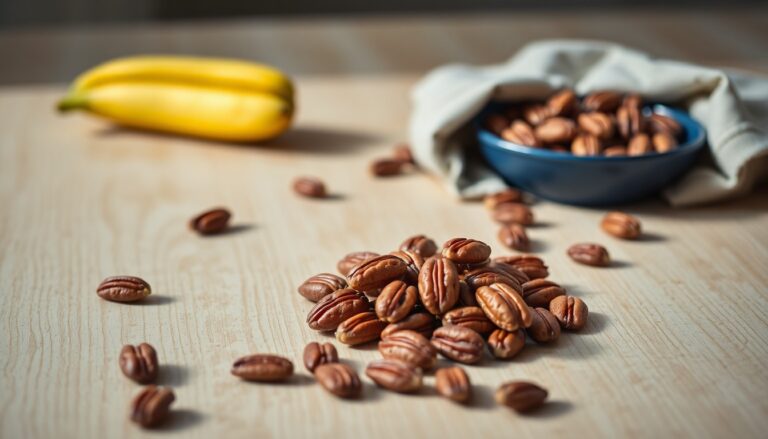
Native to North America, the pecan nut is a nut with an elongated shape and a mild, buttery, slightly sweet taste. You find it raw, as halves, roasted or in pieces for baking. A star of desserts such as the famous pecan pie, it also slips into savoury dishes, salads or homemade muesli. Nutritionally, it is an oil-rich nut particularly high in good-quality fat, fibre and micronutrients. At 727 kcal per 100 g, it is high in calories but nourishing. Included in moderation, the pecan adds crunch, indulgence and nutrient density to a balanced diet.
Macronutrient breakdown
Nutrition table per 100 g
| Calories | 727 kcal |
| Kilojoules | 3000 kJ |
| Protein | 10,8 g |
| Carbohydrate | 4,3 g |
| Fat | 72 g |
| Fibre | 9,6 g |
Micronutrients per 100 g
All measured nutrients, ranked by share of the daily reference intake.
- Manganese4,5 mg225 %
- Omega-6 LA20,7 g207 %
- Copper1,2 mg120 %
- Vitamin B10,66 mg60 %
- Omega-3 ALA0,94 g47 %
- Zinc4,53 mg45 %
- Phosphorus277 mg40 %
- Magnesium121 mg32 %
- Vitamin B9dietary folate equivalents22 µg
See the other 13 nutrients
- Potassium410 mg21 %
- Iron2,53 mg18 %
- Vitamin B60,21 mg15 %
- Vitamin B50,86 mg14 %
- Vitamin E1,4 mg12 %
- Selenium5,2 µg9 %
- Vitamin B20,13 mg9 %
- Calcium70 mg9 %
- Vitamin B31,17 mg7 %
- Vitamin K13,5 µg5 %
- Vitamin C1,1 mg1 %
- Iodine2 µg1 %
- Vitamin A2,42 µg0 %
Anses Ciqual 2025. Source: Anses, 2025, Ciqual food composition table
Tips
The pecan nut has the typical nutrition facts of nuts: 727 kcal, 72 g of fat, 4.25 g of carbohydrate, 10.8 g of protein and 9.6 g of fibre per 100 g. Its fat is mostly unsaturated, and it provides copper, manganese, zinc, magnesium and vitamin E. Its glycaemic index is low, which makes it a filling snack.
As for portions, aim for about 20 to 30 g a day, a small handful. That is enough to enjoy its benefits without weighing down the calorie total. The pecan can be eaten plain, but also toasted for a few minutes in a pan to bring out its aromas. You can compare it with other nuts such as roasted pecan nuts, the ordinary walnut or the almond, which each have their own profile.
- At breakfast: crushed over yoghurt, porridge or a bowl of fromage blanc.
- In salad: with bitter leaves, apple, goat’s cheese and a vinaigrette.
- In baking: in cookies, brownies, crumbles or pecan pie.
- In a savoury version: to crumb a fish fillet or liven up a risotto.
For storage, keep the halves in an airtight container, away from light and heat. Rich in fats, they can go rancid; the fridge or freezer extends their freshness for several months.
For active people, the pecan is a dense and practical source of energy. A small handful makes an ideal snack before a long session, or can go into homemade energy bars and balls. Its magnesium content supports normal muscle function. After exercise, pair it with a source of protein such as a dairy product or a suitable powder: discover our protein snack ideas to combine carbohydrate, fat and protein.
For weight control, keep the high energy density in mind: snacking by the handful adds up fast. Prefer weighed portions to an open packet in front of you. Avoid caramelised or sugar-coated versions, closer to sugary products. To explore other nuts and compare their calories, browse the Nuts & Seeds family. In the right amount, the pecan remains an indulgent and nutritious ally every day.