Group · Pulses
Fresh garden peas
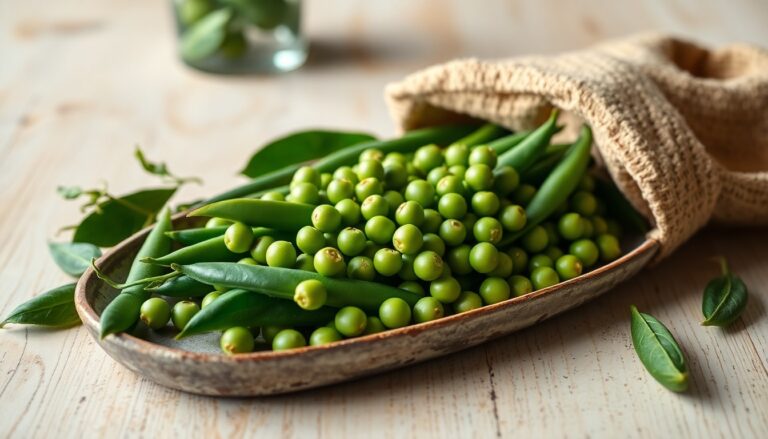
Fresh garden peas are the tender, sweet seeds of Pisum sativum, picked from their pods at the peak of the season, generally in spring. Often classed as pulses, they actually sit halfway between a green vegetable and a mild starchy food, thanks to their useful content of carbohydrate and plant protein. With around 81.2 kcal per 100 g, they remain relatively light while providing a good dose of fibre (5.1 g) and micronutrients. Their fresh, sweet flavour makes them very popular in the kitchen, whether shelled by hand or bought frozen. As part of a balanced diet, they combine fullness, colour and flavour on the plate.
Macronutrient breakdown
Nutrition table per 100 g
| Calories | 81 kcal |
| Kilojoules | 342 kJ |
| Protein | 5,5 g |
| Carbohydrate | 11,4 g |
| Fat | 0,4 g |
| Fibre | 5,1 g |
Micronutrients per 100 g
All measured nutrients, ranked by share of the daily reference intake.
- Vitamin C40 mg50 %
- Vitamin K124,8 µg33 %
- Vitamin B10,27 mg25 %
- Manganese0,41 mg21 %
- Copper0,18 mg18 %
- Phosphorus108 mg15 %
- Vitamin B32,09 mg13 %
- Zinc1,24 mg12 %
- Vitamin B9dietary folate equivalents65 µg
See the other 13 nutrients
- Potassium244 mg12 %
- Vitamin B60,17 mg12 %
- Iron1,47 mg11 %
- Vitamin B20,13 mg9 %
- Magnesium33 mg9 %
- Vitamin A37,4 µg5 %
- Calcium25 mg3 %
- Vitamin B50,1 mg2 %
- Omega-6 LA0,16 g2 %
- Omega-3 ALA0,03 g2 %
- Selenium0,74 µg1 %
- Vitamin E0,13 mg1 %
- Iodine1,05 µg1 %
Anses Ciqual 2025. Source: Anses, 2025, Ciqual food composition table
Tips
Fresh garden peas are best enjoyed in spring, when they are at their most tender. To get the most from their nutrition facts, eat them soon after buying, as their sugars quickly turn to starch once the pod is picked. A portion of 100 to 150 g makes an ideal side, both tasty and nourishing.
- Cooking: favour gentle cooking, steamed or braised for just a few minutes, to preserve the green colour, the soft texture and the heat-sensitive vitamins. Discover the principles of gentle cooking to preserve nutrients.
- Pairings: they go wonderfully with mint, butter, spring onion, ham or a cereal such as rice. Combined with a cereal, they complete the amino acid intake of plant proteins.
- Storage: once shelled, they keep for 2 to 3 days in the fridge, or several months in the freezer.
In terms of nutrients, fresh garden peas provide fibre, which promotes fullness and healthy digestion, plant protein (5.42 g), vitamin C, B vitamins, iron, manganese and antioxidants such as lutein. Their glycaemic index is moderate, which makes them a useful source of carbohydrate for a filling meal. If you are watching your waistline, bear in mind that they are higher in calories than typical green vegetables: count them as a mild starchy food and adjust your portion accordingly. To find your way around, check the food calorie table.
For active people, fresh garden peas are an excellent recovery ally: their carbohydrates help to replenish glycogen stores after exercise, while their plant protein contributes to muscle maintenance. Add them to a post-workout bowl with quinoa and chicken, or in a light soup in the evening. To top up your protein intake, you can combine them with other pulses such as lentils or chickpeas.
Versatile, fresh garden peas come as purées, soups, risottos, spring stir-fries or fresh salads. Explore the whole pulses family for variety, and take inspiration from the advice on eating a balanced diet every day. Fresh, sweet and versatile, they deserve a regular place on your plate.