Group · Pulses
Garden peas
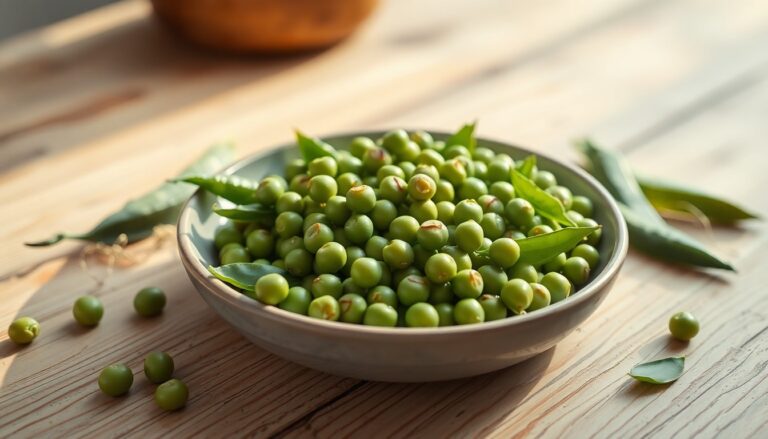
Garden peas are among the best-loved pulses, halfway between a green vegetable and a plant protein source. Fresh, frozen or tinned, they keep a mild, slightly sweet flavour that appeals to the whole family. With just 65.8 kcal per 100 g, they offer a good balance of carbohydrate (7.95 g), protein (5.15 g) and fibre (5.5 g), for very little fat (0.27 g). They are a versatile food, easy to include in a balanced diet, whether you want to vary your plates, increase your fibre intake or put together filling meals without piling on the calories. A classic worth rediscovering.
Macronutrient breakdown
Nutrition table per 100 g
| Calories | 66 kcal |
| Kilojoules | 277 kJ |
| Protein | 5,2 g |
| Carbohydrate | 8 g |
| Fat | 0,3 g |
| Fibre | 5,5 g |
Micronutrients per 100 g
All measured nutrients, ranked by share of the daily reference intake.
- Vitamin K124 µg32 %
- Vitamin B10,28 mg25 %
- Manganese0,28 mg14 %
- Vitamin A104 µg13 %
- Vitamin C9,9 mg12 %
- Phosphorus77 mg11 %
- Copper0,11 mg11 %
- Iron1,52 mg11 %
- Vitamin B9dietary folate equivalents59 µg
See the other 10 nutrients
- Vitamin B31,48 mg9 %
- Vitamin B60,11 mg8 %
- Vitamin B20,1 mg7 %
- Zinc0,67 mg7 %
- Magnesium22 mg6 %
- Potassium110 mg6 %
- Calcium24 mg3 %
- Vitamin B50,14 mg2 %
- Selenium1 µg2 %
- Vitamin E0,03 mg0 %
Anses Ciqual 2025. Source: Anses, 2025, Ciqual food composition table
Tips
In terms of nutrition facts, garden peas have plenty going for them: fibre for fullness and digestion, plant protein and carbohydrate with a moderate glycaemic index, but also vitamins (notably B vitamins and vitamin C) and minerals such as iron, magnesium and potassium. Their low calorie density makes them a useful ally if you are trying to lose weight, as long as you watch the extras (cream, butter, bacon pieces).
How to eat garden peas? A portion of 100 to 150 g works well as a side. Favour short cooking, steamed or in simmering water, to preserve their colour, bite and vitamins, in the spirit of gentle cooking. You can pair them with cereals for a complete meal, or add them to a risotto, a vegetable stir-fry, a warm salad or a soup.
- Seasonality: fresh garden peas are enjoyed in spring and early summer; the rest of the year, frozen ones retain their nutritional qualities very well.
- Smart pairings: carrots, fresh mint, spring onion, or even lentils and chickpeas to vary your plant protein sources.
- Storage: once cooked, keep them for 2 to 3 days in the fridge, perfect for batch cooking.
For active people: garden peas provide carbohydrate that is useful for refilling energy stores, and plant protein that contributes to muscle recovery. You can include them in a post-workout meal rich in complex carbohydrate (rice, quinoa), or make a green protein purée to pair with a complete protein source. Their fibre content also helps you feel full between sessions, which is welcome during a phase of rebalancing your diet.
Points to watch: tinned versions can be saltier and sometimes sweetened, so remember to rinse them. Stir-fries with cream or butter quickly climb in calories. If you are watching your weight, go for light cooking and simple seasonings (herbs, lemon, spices).
Keen to explore other pulses? Discover the pulses family and compare intakes using the food calorie table to put together balanced plates day to day.