Group · Herbs & spices
Fresh rosemary
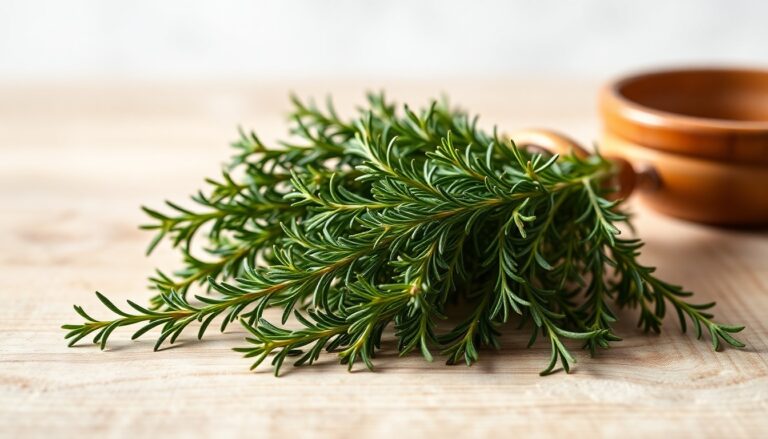
Fresh rosemary is a Mediterranean aromatic herb, recognisable by its fine, dark green needle-like leaves and its resinous, slightly camphorous scent. Grown as small shrubs, it can be picked almost all year round and flavours meat as well as roasted vegetables. Used in modest amounts, it adds plenty of flavour for very few calories on the plate. Its nutrition facts per 100 g show 131 kcal, 3.31 g of protein, 6.6 g of carbohydrate, 5.86 g of fat and above all 14.1 g of fibre. In a balanced diet, fresh rosemary is a great ally for fragrant, tasty dishes, and it helps you cut back on salt and fat.
Macronutrient breakdown
Nutrition table per 100 g
| Calories | 121 kcal |
| Kilojoules | 498 kJ |
| Protein | 3,4 g |
| Carbohydrate | 6,6 g |
| Fat | 5,9 g |
| Fibre | 14,1 g |
Micronutrients per 100 g
All measured nutrients, ranked by share of the daily reference intake.
- Manganese0,96 mg48 %
- Iron6,65 mg48 %
- Calcium317 mg40 %
- Potassium668 mg33 %
- Copper0,3 mg30 %
- Vitamin C21,8 mg27 %
- Vitamin B60,34 mg24 %
- Magnesium91 mg24 %
- Vitamin B9dietary folate equivalents109 µg
See the other 6 nutrients
- Vitamin B50,8 mg13 %
- Vitamin B20,15 mg11 %
- Phosphorus66 mg9 %
- Zinc0,93 mg9 %
- Vitamin B30,91 mg6 %
- Vitamin B10,04 mg3 %
Anses Ciqual 2025. Source: Anses, 2025, Ciqual food composition table
Tips
Fresh rosemary is used in small amounts: one or two sprigs are enough to flavour a whole dish. Slip it under a chicken, into a marinade of olive oil and garlic, or in with potatoes and oven-roasted vegetables. Its powerful flavour is released during cooking, which makes it ideal for slow-cooked dishes, grills and stews. You can also infuse it in a flavoured oil or a fragrant herbal tea.
How best to eat fresh rosemary? Favour gentle cooking to preserve its aroma, and remove the woody sprigs before serving. To store it, keep it in the fridge wrapped in a damp cloth for a few days, or dry it hanging upside down in an airy spot.
As for nutrition facts, fresh rosemary is very rich in fibre (14.1 g per 100 g), but because it is used in small amounts, what you actually get remains modest. It provides aromatic compounds and antioxidants typical of Mediterranean plants. If you are interested in cell protection, read our guide to antioxidant foods.
- Varieties and pairings: it goes with fresh thyme, bay leaf and sage, classics of herbes de Provence.
- Seasonality: available all year, especially fragrant in spring and summer.
- Culinary uses: grills, ratatouille, focaccia, infusions, flavoured oils.
For active people, fresh rosemary is not a source of energy, but it is an excellent way to make healthy eating tastier without adding sugar or multiplying fats. Season your chicken breasts, steamed vegetables or wholegrain starchy foods with it: it makes recovery meals more appetising while keeping a good calorie balance. Remember to vary your herbs so you do not get bored, by exploring other flavours from the herbs and spices family.
For weight control, fresh rosemary is a handy ally: at the amounts used, its real calorie density on the plate is almost nil. It helps lift light dishes and cuts down the need for salt and fatty sauces. Make it part of your balanced diet routine to cook healthy, simple and tasty food every day.