Group · Herbs & spices
Ground sage
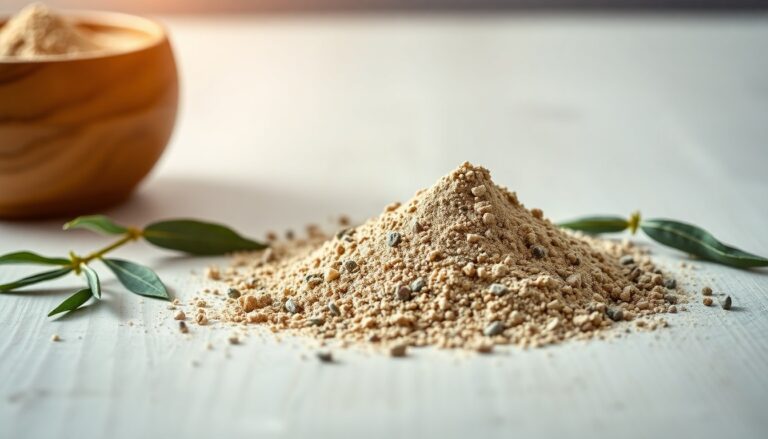
Ground sage comes from drying and then grinding the leaves of common sage, an aromatic herb emblematic of the Mediterranean basin. Its intense, slightly camphorous and peppery flavour makes it a spice with character that flavours meats, stuffings and sauces. Concentrated by dehydration, it is used in very small amounts. In terms of nutrition facts, ground sage provides about 320 kcal per 100 g, but as it is eaten in pinches, its real calorie contribution remains negligible. It is especially remarkable for its fibre content (over 40.3 g) and brings a touch of protein and minerals. It is a valuable flavour ally in balanced home cooking.
Macronutrient breakdown
Nutrition table per 100 g
| Calories | 320 kcal |
| Kilojoules | 1320 kJ |
| Protein | 10,6 g |
| Carbohydrate | 20,4 g |
| Fat | 12,8 g |
| Fibre | 40,3 g |
Micronutrients per 100 g
All measured nutrients, ranked by share of the daily reference intake.
- Vitamin K11710 µg2280 %
- Calcium1650 mg206 %
- Iron28,1 mg201 %
- Vitamin B62,69 mg192 %
- Manganese3,13 mg157 %
- Magnesium428 mg114 %
- Copper0,76 mg76 %
- Vitamin B10,75 mg68 %
- Vitamin B9dietary folate equivalents274 µg
See the other 8 nutrients
- Vitamin E7,48 mg62 %
- Potassium1070 mg54 %
- Zinc4,7 mg47 %
- Vitamin C32,4 mg41 %
- Vitamin A290 µg36 %
- Vitamin B35,72 mg36 %
- Vitamin B20,34 mg24 %
- Phosphorus91 mg13 %
Anses Ciqual 2025. Source: Anses, 2025, Ciqual food composition table
Tips
In practice, ground sage is used sparingly: a pinch is enough to lift a dish. It traditionally goes with white meats, pork, poultry and veal, but also stuffings, gratins, pasta with butter and pulses. Its aromatic power lets you reduce salt and fats while keeping flavour, an asset when switching to a balanced diet.
How to eat it? Add it at the end of cooking or in marinades to preserve its fragrance. Here are a few ideas:
- Sprinkled on roast poultry or a pork fillet;
- Mixed into a butter sauce for gnocchi or ravioli;
- Added to a mash of squash or potatoes;
- Infused in a broth or soup for a herbal note.
As for nutrition facts, ground sage is very rich in fibre (about 40.3 g per 100 g), and provides carbohydrates mostly linked to that fibre, a little protein and some fat. At the doses used, its calories have almost no impact on the energy balance: it is a seasoning, not a source of macronutrients. It does, however, provide interesting minerals and aromatic compounds. To compare other seasonings, the food calorie table can help you see clearly.
To vary flavours, pair it with other herbs from its family: thyme and rosemary make a perfect Mediterranean trio for roasts and oven-baked vegetables. You will also find a wide choice of aromatics in the Herbs & Spices family.
For active people: ground sage provides no energy useful for exercise, but it makes recovery dishes tastier without superfluous calories. You can season a portion of chicken and sweet potato after training with it, or flavour a protein omelette. It is a good strategy for keeping the pleasure of taste while monitoring your intake. To structure your plate around exercise, reading about nutrition for fitness complements these habits well.
Storage: keep it in an airtight jar, away from light, moisture and heat. Like all ground spices, it gradually loses its aroma: ideally use it within six to twelve months. In home cooking, ground sage remains a seasoning of choice, tasty and light, to include without excess to enjoy its flavour benefits.