Group · Vegetables
Jerusalem artichoke
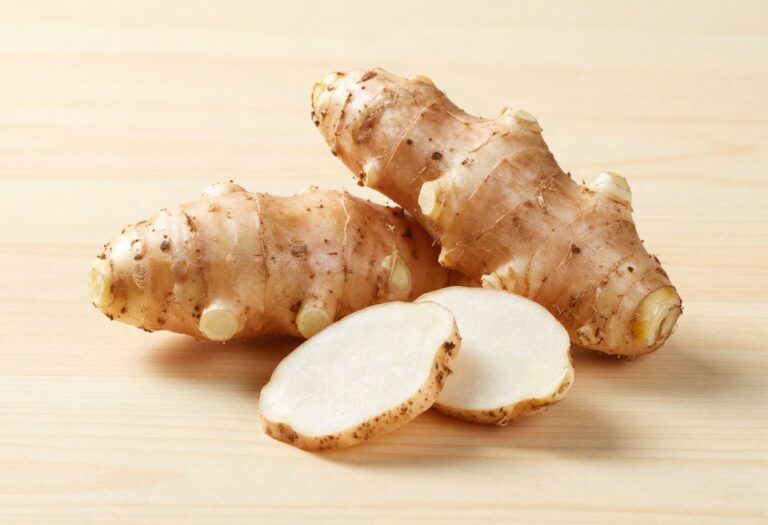
The Jerusalem artichoke is a hardy tuber, sometimes nicknamed sunchoke or earth apple, thanks to its mild, slightly sweet flavour reminiscent of artichoke hearts. Long forgotten, this root vegetable is making a comeback on winter market stalls. It has a beige, pink or purplish skin and white, crunchy flesh. At around 69.3 kcal per 100 g, it provides mostly carbohydrate (14.4 g), little protein (1.8 g) and almost no fat. Its particular strength is its richness in inulin, a fermentable fibre. Versatile in the kitchen, raw or cooked, the Jerusalem artichoke fits easily into a varied, seasonal diet.
Macronutrient breakdown
Nutrition table per 100 g
| Calories | 69 kcal |
| Kilojoules | 293 kJ |
| Protein | 1,8 g |
| Carbohydrate | 14,4 g |
| Fat | 0,1 g |
| Fibre | 2,2 g |
Micronutrients per 100 g
All measured nutrients, ranked by share of the daily reference intake.
- Potassium452 mg23 %
- Phosphorus64 mg9 %
- Vitamin B50,38 mg6 %
- Calcium32,9 mg4 %
- Vitamin C3,2 mg4 %
- Magnesium14,1 mg4 %
- Zinc0,34 mg3 %
- Vitamin B60,04 mg3 %
- Vitamin B9dietary folate equivalents44,3 µg
See the other 6 nutrients
- Vitamin B20,03 mg2 %
- Vitamin E0,19 mg2 %
- Iron0,2 mg1 %
- Vitamin B30,05 mg0 %
- Vitamin A2,08 µg0 %
- Vitamin K10,1 µg0 %
Anses Ciqual 2025. Source: Anses, 2025, Ciqual food composition table
Tips
The Jerusalem artichoke lends itself to many preparations. Raw and finely grated in a salad, it has a crunchy texture close to celeriac and a light hint of hazelnut. Cooked, it turns into a smooth mash or soup, or can be roasted or pan-fried. To preserve its nutritional value, choose gentle cooking by steaming, which limits the loss of nutrients and flavour.
As for key nutrients, the Jerusalem artichoke provides potassium, iron, phosphorus and B vitamins. Its star fibre, inulin, gives it a sweet taste while keeping the calorie content moderate. However, inulin can cause bloating and digestive discomfort in sensitive people: start with small portions (around 100 to 150 g) and increase gradually.
For storage, keep the tubers in the fridge salad drawer wrapped in a cloth, or somewhere cool and dry. Scrub them rather than peeling them to keep the fibre and minerals. A squeeze of lemon juice stops the flesh turning brown once cut.
- Tasty pairings: it goes well with leek, carrot or parsnip in a winter vegetable sauté.
- Weight-control idea: as a homemade soup without cream, it adds volume and fullness for few calories.
- Side dish: roasted in the oven with a drizzle of olive oil and herbs, alongside fish or white meat.
For active people, the Jerusalem artichoke is a source of carbohydrate best included in meals rather than as a snack just before exercise, as its fermentation in the gut can cause discomfort during an intense session. Eaten a few hours beforehand or in your recovery meal, it helps refuel the body. Pair it with a protein source (egg, poultry, pulses) for a complete, balanced meal. Discover more ideas in the vegetables family and compare its content using the food calorie table.
In short, the Jerusalem artichoke offers an excellent balance of benefits, flavour and low calorie density. Eaten in moderation and well cooked, it enriches a varied diet throughout the winter.