Group · Drinks
Red wine
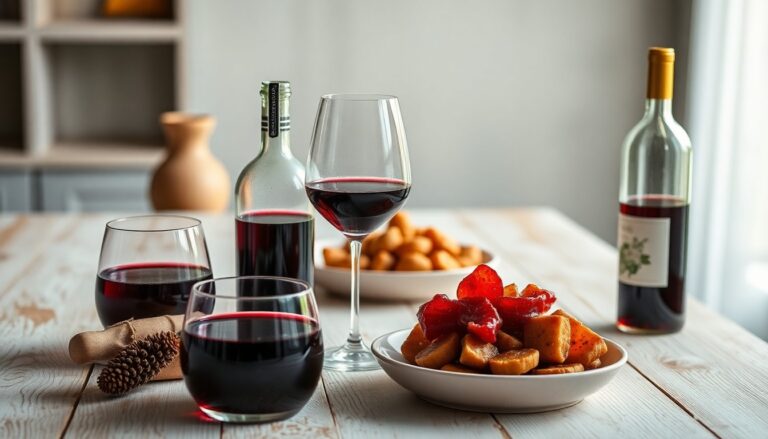
Red wine is an alcoholic drink made by fermenting the juice of black grapes, with the skins macerated in it to give the wine its colour and tannins. Cabernet sauvignon, merlot, pinot noir, syrah, grenache: grape varieties and terroirs offer a wide range of aromas, from light and fruity wines to full-bodied, tannic ones. A part of French food culture, it is often enjoyed with meals. In terms of nutrition facts, it provides about 75.7 kcal per 100 g, with 0 g of carbohydrate, traces of protein and no fat or fibre. Appreciated for its polyphenol compounds, red wine is nonetheless a source of alcohol, to be drunk in moderation as part of a balanced diet.
Macronutrient breakdown
Nutrition table per 100 ml
| Calories | 76 kcal |
| Kilojoules | 314 kJ |
| Protein | 0,2 g |
Micronutrients per 100 ml
All measured nutrients, ranked by share of the daily reference intake.
- Manganese0,15 mg8 %
- Potassium115 mg6 %
- Vitamin B60,05 mg4 %
- Phosphorus21,5 mg3 %
- Magnesium10,5 mg3 %
- Iron0,36 mg3 %
- Vitamin B10,02 mg2 %
- Calcium6,31 mg1 %
- Vitamin B9dietary folate equivalents0,85 µg
See the other 2 nutrients
- Vitamin B20,01 mg1 %
- Vitamin A1,25 µg0 %
Anses Ciqual 2025. Source: Anses, 2025, Ciqual food composition table
Tips
Red wine is best enjoyed at the table, with a meal rather than on an empty stomach. A reasonable serving is one glass (about 100 to 125 ml). Serve light red wines (pinot noir, gamay) slightly chilled at around 14 to 16 degrees, and more structured wines (Bordeaux, Côtes du Rhône) at 16 to 18 degrees. For storage, an open bottle keeps for 2 to 3 days in a cool place, re-corked and away from light.
Pairings and cooking uses:
- Full-bodied wines with red meats, game and stews (beef bourguignon, daube).
- Fruity wines with poultry, cured meats and mature cheeses.
- In the kitchen: deglazing, wine sauces, marinades, poached pears.
Nutritionally, red wine provides about 75.7 kcal per 100 g, mainly from the alcohol, as it has 0 g of carbohydrate. It contains no fat or fibre and only traces of protein. It contains polyphenols such as tannins and resveratrol, antioxidant compounds found in grape skin. If the topic interests you, see our feature on antioxidant foods.
Weight control: be careful, as alcohol is high in calories and these add up quickly over a meal. Wine does not make you feel full and can stimulate the appetite. If you are trying to slim, limit how often you drink it and choose water or herbal teas day to day. To manage your intake better, see our food calorie table and our guide to a balanced diet.
Advice for active people: alcohol has no place around exercise. It encourages dehydration, disrupts muscle recovery and sleep quality, and slows the rebuilding of muscle fibres. It is better to keep red wine for an occasional treat, well away from training, and to prioritise good hydration. If you want to explore other choices in the drinks family, go for tea or water, which suit an active person’s everyday life better.
In short, red wine is a sociable drink to be enjoyed in moderation. Drunk sensibly, alongside a good meal, it is part of the pleasure of the table without excess.