Lion’s mane mushroom: benefits, side effects and dosage
The short answer
Lion’s mane (Hericium erinaceus) is an edible mushroom studied mainly for memory. The benefits rest on a handful of small trials: in older adults with mild cognitive impairment or early Alzheimer’s disease, memory scores were better than with a placebo. In young, healthy adults, results are weak or absent. As for side effects, it is generally well tolerated: reports mostly involve stomach discomfort, headache and, less often, allergic reactions. It is a serious lead, not a proven “brain booster”.
This article is for information and does not replace medical advice.
What is lion’s mane mushroom?
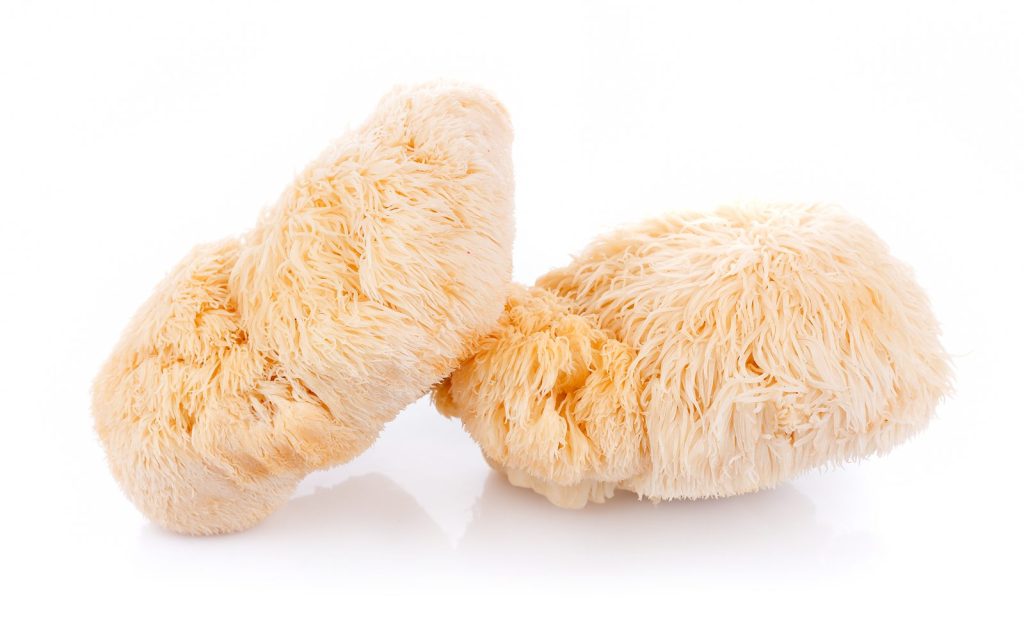
Hericium erinaceus is also called hedgehog mushroom, pom pom mushroom or yamabushitake in Japan. It grows on hardwood trunks as a ball of long white spines, hence the name. It is eaten cooked, with a mild taste often compared to crab or scallops.
Researchers focus on two groups of compounds:
- hericenones, found in the fruiting body (the part you eat);
- erinacines, found in the mycelium (the network of threads that grows in the substrate).
In the lab, these molecules stimulate nerve growth factors, which is where its brain reputation comes from. But an effect on cells or animals does not prove an effect in people. One practical point when choosing a supplement: fruiting body and mycelium extracts do not contain the same compounds, and the trials did not all use the same form.
Lion’s mane benefits: what human trials show
A 2025 systematic review (Menon et al., Frontiers in Nutrition) found 5 randomized trials and 3 pilot trials in humans. That is not much, and most enrolled a few dozen people. Here are the main ones.
| Study | Participants | What was taken | Result |
|---|---|---|---|
| Mori, 2009 (Japan) | 30 people aged 50 to 80 with mild cognitive impairment | Dried mushroom powder, 3 g a day, 16 weeks | Better cognitive scores than placebo at weeks 8, 12 and 16; scores fell 4 weeks after stopping |
| Saitsu, 2019 (Japan) | Adults (number not given in the abstract) | Fruiting body, 12 weeks | Improvement on the MMSE only; no difference on the two other memory tests |
| Li, 2020 (Taiwan) | Mild Alzheimer’s disease | Erinacine A-enriched mycelium, 3 capsules of 350 mg a day, 49 weeks | Better MMSE, CASI and daily-living scores than placebo; pilot trial |
| Docherty, 2023 (UK) | 41 healthy adults aged 18 to 45 | 1.8 g a day, 28 days | Faster on an attention test 60 minutes after one dose; non-significant trend toward less stress; several null results |
| Grozier, 2022 (US) | 24 young adults | 10 g a day baked into muffins, 4 weeks | No effect on cognition or exercise metabolism |
In the 2025 review, the average gain on the MMSE (a memory test scored out of 30) was 1.17 points when two trials were pooled. Measurable, but modest.
The limits, to read these results correctly:
- the trials are small (24 to 41 people where the number is given), and several involve manufacturers;
- the positive signals mostly concern older adults with cognitive decline, not healthy students or workers;
- in the 2009 trial, the benefit faded after stopping;
- each trial used a different form (powder, fruiting body, enriched mycelium) at a different dose, so results do not transfer to any supplement.
Lion’s mane does not treat Alzheimer’s disease. If you notice memory problems in yourself or a loved one, see a doctor first.
Lion’s mane for anxiety, mood, ADHD or sleep?
Human data are even thinner. The 2023 trial found only a trend toward less perceived stress, below the statistical threshold. None of the clinical trials we read looked at ADHD. For everyday stress, diet and lifestyle come first: see our guide diet and stress management. For brain health, foods high in omega-3 have much stronger evidence.
Lion’s mane side effects and safety
Lion’s mane is an edible mushroom with a long history of use in Asia. In trials, it was generally well tolerated. In the 2009 trial, blood tests showed no adverse effects over 16 weeks.
| Reported effect | What we know |
|---|---|
| Stomach discomfort, nausea | Listed in the 2025 review; 4 dropouts for abdominal discomfort, nausea or skin rash in the 49-week trial (Li, 2020) |
| Headache | Listed in the 2025 review, rarely reported |
| Allergy | Allergic reactions are possible; allergic contact dermatitis was described in a person handling the mushroom at work (Netherlands, 1999) |
Ask a doctor before taking it if:
- you are pregnant or breastfeeding: there are no safety data;
- you are allergic to mushrooms;
- you take long-term medication (blood thinners, diabetes drugs, immune treatments): interactions have not been studied, so caution is wise;
- you have surgery planned: tell your care team, as with any supplement.
If a rash, itching or breathing trouble appears, stop taking it and talk to a doctor.
Lion’s mane dosage: how to take it
- Doses studied: about 1 g (enriched mycelium) to 3 g a day (powder), and up to 10 g in a trial that found no effect. There is no official dose.
- Duration: positive trials in older adults lasted 12 to 49 weeks. Any effect cannot be judged in a few days.
- Timing: no study compares morning and evening. Take it at the same time each day, with a meal for digestive comfort.
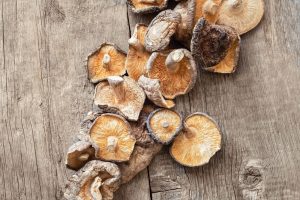
- As food: slice and pan-fry it until well cooked, like other mushrooms. Our shiitake guide covers cooking rules for Asian mushrooms.
If your main goal is focus or energy, look first at sleep, coffee and iron intake: our best supplement for fatigue comparison reviews the best-studied options.
Nutrition•pro: a Lion’s Mane made in France
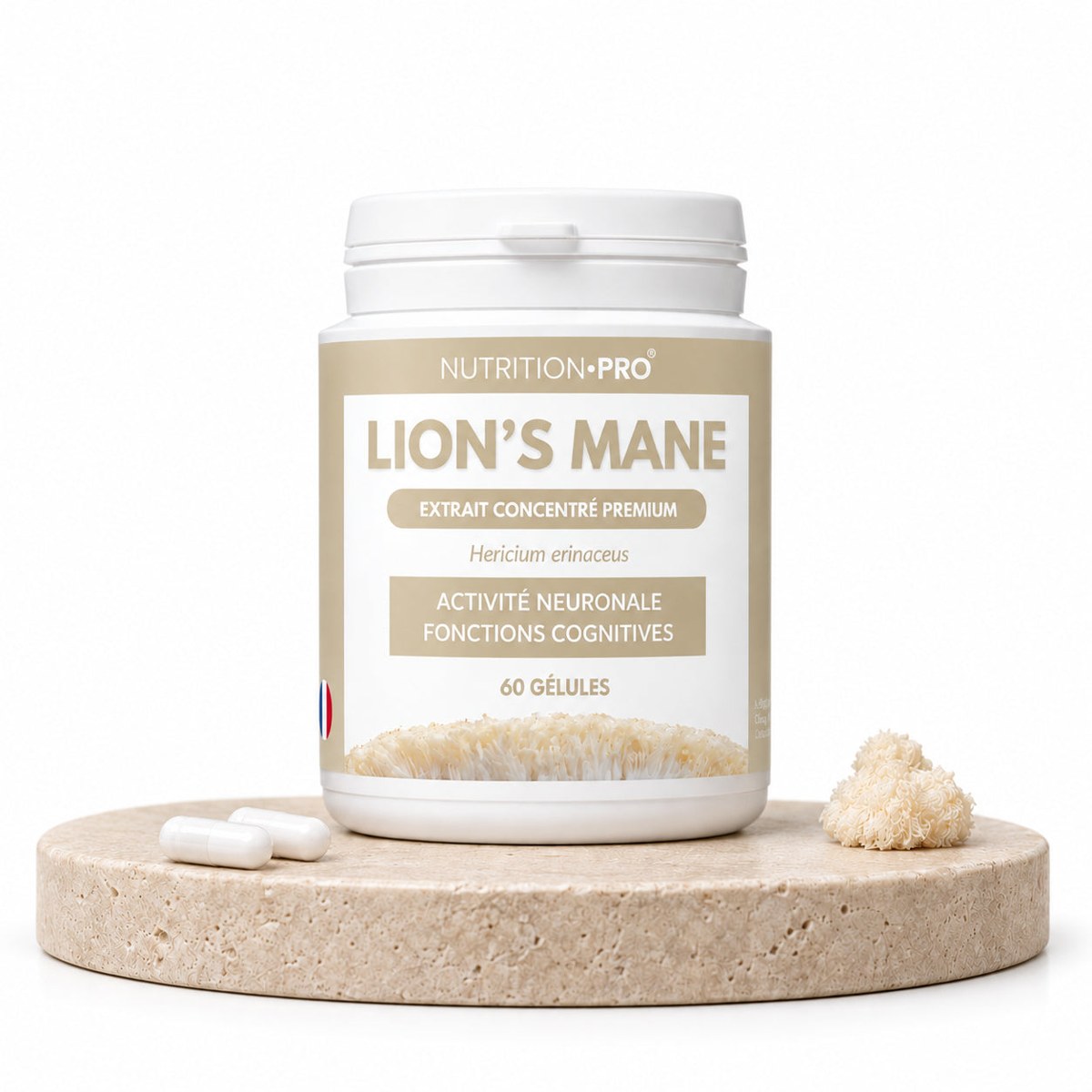
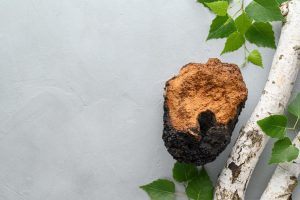
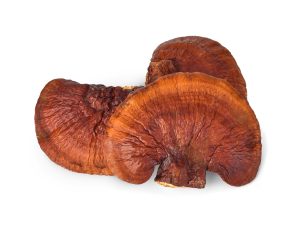
Nutrition•pro is a French brand based in Paris that makes its supplements in France. Its functional mushroom range includes lion’s mane, cordyceps, reishi, chaga and shiitake. Its Lion’s Mane keeps the formula simple and clear:
- 4:1 concentrated extract of Hericium erinaceus: at this ratio, the 1,500 mg of extract per day match about 6 g of mushroom;
- single ingredient, no unnecessary additives, in vegetable capsules;
- made in France;
- 60 capsules, a 30-day course at 2 capsules a day, taken in the morning;
- €29.99 per bottle (price checked on 22/11/2026), about €1 a day.
Good to know: the trials above used other preparations and doses. Their results do not apply as such to this product, or to any other lion’s mane supplement.
Promo code: SEOCONSULTINGSL for 10% off your order, €26.99 per bottle (as of 22/11/2026).
See Nutrition•pro Lion’s Mane →
Partner link: we earn a commission if you order through this link, at no extra cost to you.
Looking for a mushroom for physical performance instead? Read our cordyceps guide.
Frequently asked questions
What does lion’s mane do for the brain?
In the lab, its compounds stimulate nerve growth factors. In people, the best result is a small improvement on memory tests in older adults with mild decline, which faded after stopping in the 2009 trial. No trial shows it prevents a neurological disease.
What are the side effects of lion’s mane supplements?
Mostly stomach discomfort, nausea, headache and allergic reactions. Ask a doctor if you are pregnant, breastfeeding, allergic to mushrooms or on medication.
Does lion’s mane really work?
The 2025 systematic review calls the results promising, but based on few trials with few participants. It is a lead that needs larger trials before it can be called proven.
How long does lion’s mane take to work?
In the 2009 trial, the difference with placebo appeared from week 8. Positive trials lasted 12 to 49 weeks, so one month is short to judge.
Does lion’s mane help with ADHD?
None of the clinical trials we read studied ADHD. It does not replace medical care.
Sources
- Menon A. et al. Benefits, side effects, and uses of Hericium erinaceus as a supplement: a systematic review. Front Nutr, 2025; 12: 1641246. PubMed 40959699
- Mori K. et al. Improving effects of the mushroom Yamabushitake (Hericium erinaceus) on mild cognitive impairment: a double-blind placebo-controlled clinical trial. Phytother Res, 2009; 23(3): 367-72. PubMed 18844328
- Saitsu Y. et al. Improvement of cognitive functions by oral intake of Hericium erinaceus. Biomed Res, 2019; 40(4): 125-131. PubMed 31413233
- Li IC. et al. Prevention of Early Alzheimer’s Disease by Erinacine A-Enriched Hericium erinaceus Mycelia Pilot Double-Blind Placebo-Controlled Study. Front Aging Neurosci, 2020; 12: 155. PubMed 32581767
- Docherty S. et al. The Acute and Chronic Effects of Lion’s Mane Mushroom Supplementation on Cognitive Function, Stress and Mood in Young Adults. Nutrients, 2023; 15(22): 4842. PubMed 38004235
- Grozier CD. et al. Four Weeks of Hericium erinaceus Supplementation Does Not Impact Markers of Metabolic Flexibility or Cognition. Int J Exerc Sci, 2022; 15(2): 1366-1380. PubMed 36582308
- Maes MF. et al. Occupational allergic contact dermatitis from the mushroom White Pom Pom (Hericium erinaceum). Contact Dermatitis, 1999; 40(5): 289-90. PubMed 10344494