Chaga mushroom: benefits, side effects, oxalates and who should avoid it
The short answer
Chaga (Inonotus obliquus) is a birch fungus rich in antioxidants, but no clinical trial in people has yet shown any health benefit. Its effects on immunity, blood sugar or cancer cells come from lab and animal studies. Its main risk, on the other hand, is well documented: chaga is very high in oxalates, and several cases of serious kidney damage have been published in people who took it daily for months. At a reasonable dose, for a short course and with healthy kidneys, the risk looks low, but it is real.
This article is for information and does not replace medical advice.
What is chaga?
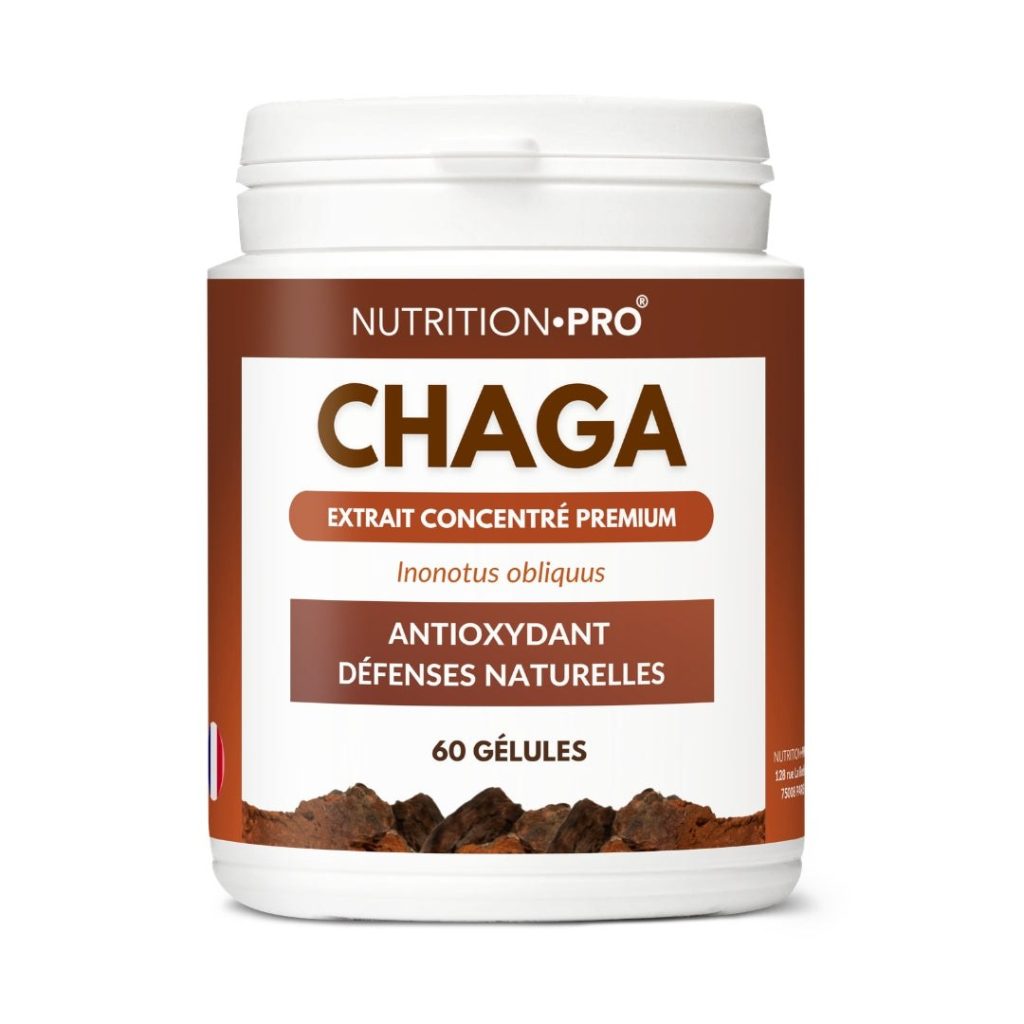
Chaga grows mainly on birch trees in cold forests (Russia, Scandinavia, Canada, Alaska). It is not a cap mushroom: it forms a black, cracked mass on the bark, orange-brown inside. It is not eaten as food. In Russia it is traditionally brewed as chaga tea, and today it is also sold as a powder or a concentrated extract.
Lab analyses find:
- phenolic compounds (gallic and protocatechuic acids) and pigments, behind its strong antioxidant activity in the test tube;
- polysaccharides, including beta-glucans;
- triterpenes, including betulin from the birch;
- and a lot of oxalic acid: it is the main organic acid found in chaga extracts.
Strong antioxidant power in the lab does not mean an effect in the body. For antioxidants on your plate, see our guide to antioxidant foods.
Chaga mushroom benefits: what the research shows
A 2021 review sums it up: chaga extracts show antioxidant, anti-inflammatory and insulin-sensitising effects in the lab and in animals, and activity against some viruses and cancer cells. But the authors conclude that studies meeting evidence-based medicine standards are still needed. In PubMed, we found no randomised trial in humans: the only clinical publications are case reports of side effects.
| Claimed benefit | Level of evidence |
|---|---|
| Antioxidant | Test-tube measurements. No human data. |
| Immunity | Cells and animals. No clinical trial. |
| Blood sugar | Diabetic rodents. No clinical trial. |
| Cancer | Tumour cells in culture. No trial in patients. |
| Liver | Animal models. No human data. |
Chaga and cancer. It is the most common question, and the answer is clear: there is no evidence in people. The very first kidney case described involved a 72-year-old woman taking chaga powder for liver cancer. If you are being treated for cancer, tell your care team about any supplement.
For blood sugar, better studied options exist: see our best blood sugar supplement comparison. For immunity, food matters most: read our guide on how to boost your immune system with food.
Chaga mushroom side effects: oxalates and your kidneys
Oxalates bind to calcium. In excess, they form crystals that can build up in the kidneys: this is called oxalate nephropathy. Three chaga-related cases have been published in medical journals:
| Case | Chaga intake | Outcome |
|---|---|---|
| Japan, woman aged 72 (2014) | Powder, 4 to 5 teaspoons a day for 6 months | Kidney failure requiring dialysis. Oxalate crystals in the kidneys. |
| Korea, man aged 49 (2020) | Powder, 3 g a day for 4 years, then 9 g a day for 1 year | End-stage kidney disease. |
| Korea, man aged 69 (2022) | Powder, 10 to 15 g a day for 3 months, plus 500 mg of vitamin C a day | Acute kidney injury; dialysis, then recovery within a month. |
Some numbers. In the 2020 Korean case, doctors had the powder analysed: 14.2 g of oxalate per 100 g. Two other brands contained 2.8 and 11.2 g per 100 g. The patient was taking in 420 to 1,260 mg of oxalate a day, while a typical diet provides 200 to 300 mg, and the target for preventing kidney stones is under 100 mg a day. Extracts analysed in another study held 6.7 to 97.6 mg of oxalate per gram: the content varies hugely between products. In 2026, a rat study confirmed that a high dose of chaga powder causes crystal deposits and kidney damage, which the standard dose did not.
For comparison, spinach and rhubarb are well-known high-oxalate foods. Chaga tea does not solve the problem: oxalic acid dissolves in water, and the highest amount was found precisely in a water extract.
In practice:
- no chaga if you have kidney disease, a history of kidney stones (especially calcium oxalate) or a gut condition that increases oxalate absorption;
- stick to the label dose, and do not increase it yourself when you feel no effect (as the 2020 patient did);
- prefer short courses with breaks rather than years of continuous use;
- avoid combining it with high-dose vitamin C, part of which turns into oxalate;
- drink enough water, and have your kidney function (creatinine) checked if you take it long term.
Who should avoid chaga?
- People on blood thinners or antiplatelet drugs: a peptide from chaga slows platelet clumping in the lab. No human data: ask your doctor, and stop before surgery.
- People with diabetes: the blood sugar effects seen in animals justify monitoring if you take glucose-lowering medicine.
- Autoimmune disease or immunosuppressants: ask your doctor first.
- Pregnancy, breastfeeding, children: no safety data, avoid.
How much chaga per day?
There is no dose validated by a clinical trial. The only human reference points come from the kidney cases, all involving several grams of powder a day for months or years. A cautious approach: stick to the manufacturer’s dose, in one-month courses with breaks, and never stack several chaga products (capsules, chaga tea, chaga coffee).
Nutrition•pro: a chaga extract made in France
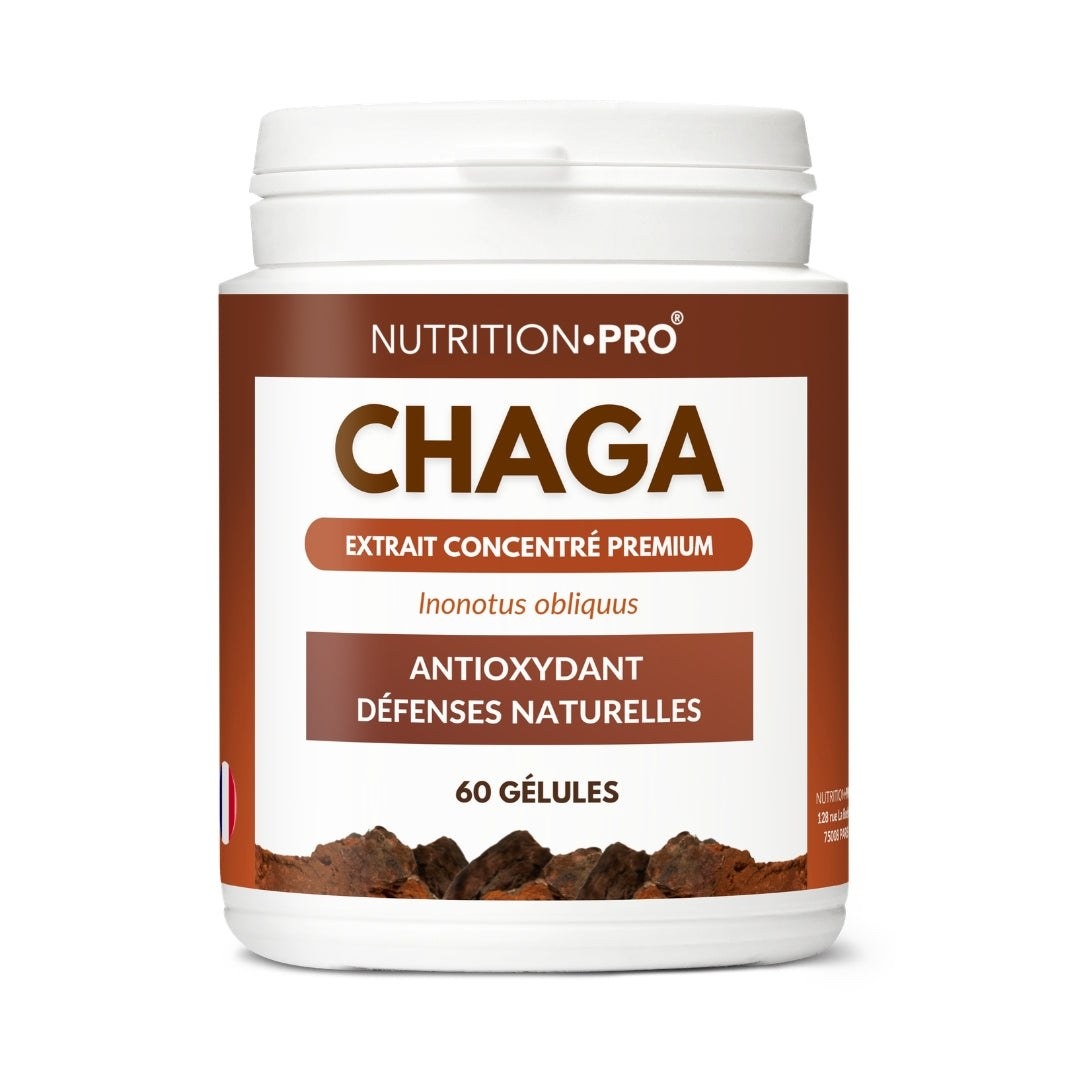
Nutrition•pro is a French brand based in Paris that makes its supplements in France. Its functional mushroom range includes chaga, reishi, shiitake, lion’s mane and cordyceps. Its Chaga stands out for:
- a 4:1 concentrated extract of Inonotus obliquus, with a precise daily dose: 1,500 mg of extract in 2 capsules;
- a single-ingredient formula, in vegetable capsules;
- 60 capsules, a 30-day course, a format well suited to short courses with breaks;
- €29.99 per bottle (price checked on 22/11/2026), about €1 a day.
Since there is no human trial on chaga, no supplement can rely on a proven effect. And since oxalate content varies widely between products, the precautions above (kidneys, stones, blood thinners) apply to every chaga supplement, this one included.
Promo code: SEOCONSULTINGSL for 10% off your order, €26.99 per bottle (as of 22/11/2026).
Partner link: we earn a commission if you order through this link, at no extra cost to you.
For other options, see our best immune support supplement comparison, or our shiitake guide, a mushroom you can actually cook.
Frequently asked questions
What is chaga good for?
In the lab, it is a strong antioxidant and acts on immune cells and blood sugar in animals. In people, no benefit has been shown yet.
Is chaga tea safe?
It also contains oxalates, which dissolve into the water. The same precautions apply, especially if you drink it every day.
Can chaga hurt your kidneys?
Yes, at high doses over long periods: three published cases of oxalate kidney damage involved 3 to 15 g of powder a day for months or years. Avoid it if you have kidney disease or kidney stones.
Does chaga fight cancer?
There is no evidence in people. The effects seen concern cells in culture. It does not replace any treatment and should be reported to your care team.
Who should not take chaga?
People with kidney disease or a history of stones, people on blood thinners or diabetes medicine, and pregnant or breastfeeding women.
Sources
- Kikuchi Y. et al. Chaga mushroom-induced oxalate nephropathy. Clin Nephrol, 2014; 81(6): 440-4. PubMed 23149251
- Lee S. et al. Development of End Stage Renal Disease after Long-Term Ingestion of Chaga Mushroom: Case Report and Review of Literature. J Korean Med Sci, 2020; 35(19): e122. PubMed 32419395
- Kwon O. et al. Chaga mushroom-induced oxalate nephropathy that clinically manifested as nephrotic syndrome: A case report. Medicine, 2022; 101(10): e28997. PubMed 35451393
- Lee S. et al. Kidney Injury Induced by High-Dose Chaga Mushroom Consumption: Experimental Evidence in a Rat Model. J Korean Med Sci, 2026; 41(3): e37. PubMed 41555803
- Glamočlija J. et al. Chemical characterization and biological activity of Chaga (Inonotus obliquus), a medicinal mushroom. J Ethnopharmacol, 2015; 162: 323-32. PubMed 25576897
- Szychowski K.A. et al. Inonotus obliquus, from folk medicine to clinical use. J Tradit Complement Med, 2021; 11(4): 293-302. PubMed 34195023