Glycine benefits for sleep: dosage, collagen link and side effects
The short answer
Glycine is an amino acid, the smallest one. Your body makes it on its own (around 45 g a day according to the estimates researchers cite) and food adds roughly 3 to 5 g. It is one of the main building blocks of collagen. As a supplement, its best-studied use is sleep: small Japanese trials gave 3 g of glycine before bed and found better perceived sleep and less fatigue the next day. The results are encouraging but the trials are tiny: glycine is not a sleeping pill and does not replace proper care for insomnia.
This article is for information and does not replace medical advice.
What is glycine?
Glycine is a “non-essential” amino acid, meaning your body can make it. It has several jobs:
- protein building block, especially for collagen in skin, tendons, bones and cartilage;
- nervous system messenger: in the spinal cord and brainstem it acts as a brake (an inhibitory neurotransmitter), and in the brain it helps some glutamate receptors (NMDA receptors) work;
- it is also used to make other molecules, such as creatine.
In food, glycine comes from all proteins, and even more from collagen-rich foods: skin, cartilage, gelatin and long-simmered stocks (see our guide to bone broth benefits). A diet with enough protein (high-protein foods) supplies some every day.
Not to be confused with wisteria, the climbing plant called “glycine” in French: it has nothing to do with the amino acid.
Glycine for sleep: what the studies show
Research on glycine and sleep comes mostly from one Japanese team (Ajinomoto labs, a glycine maker). The protocol is always the same: 3 g of glycine about 30 minutes before bed, compared with a placebo.
| Study | Who | Protocol | Results |
|---|---|---|---|
| Bannai et al., 2012 | 10 healthy men aged 30 to 61 | 3 g glycine or placebo 30 min before bed, 3 nights with sleep cut by 25% (5.5 h on average), crossover | Less perceived fatigue, a trend toward less sleepiness, better score on a vigilance test the next day |
| Earlier trials by the same team (summarised by Bannai and Kawai, 2012) | Adults with poor sleep quality | Glycine before bed | Better perceived sleep quality |
| Fan et al. review, 2026 | 22 trials identified | Glycine or collagen supplements | All 3 glycine sleep trials found a benefit on at least one outcome; blood glycine rises after a dose |
How might it work? In rats, oral glycine lowers core body temperature by increasing blood flow to the skin. Falling asleep goes hand in hand with a drop in core temperature, so this is the main hypothesis, seen in animals. In the 2012 study, glycine did not change melatonin in rats.
The limits: very few participants (10 in the most detailed trial), a single research team linked to the manufacturer, mostly subjective outcomes (questionnaires) and only a few nights. The 2026 review calls the effect plausible but says larger trials are needed. If you have slept badly for weeks, the priority is finding the cause with a doctor.
To compare with other options (magnesium, melatonin, herbs), see our best sleep supplement comparison and our guide to foods that help you sleep.
Glycine and collagen
Collagen is very rich in glycine, which is why the two are often linked. Taking collagen raises blood glycine, and some researchers think part of collagen’s effect on sleep could come from it. The 2026 review reports one trial where collagen reduced measured night-time awakenings and another where it reduced fatigue, but stresses that the role of glycine has not been shown directly.
Taking glycine alone is not the same as taking collagen, which also brings other amino acids (proline, hydroxyproline). If skin or joints are your goal, our best marine collagen comparison covers it.
Glycine side effects and safety
At the sleep dose (3 g), glycine is an amino acid you already eat in similar amounts. Much higher doses have been given in psychiatric trials: 60 g a day for 8 weeks in 30 adults (Evins et al., 2000), or 0.8 g per kg of body weight (Serrita et al., 2019), with no notable clinical worsening reported. Those trials showed no benefit, but they give an idea of the margin compared with 3 g.
- Psychiatric medication: glycine acts on NMDA receptors, a research target in schizophrenia. If you take an antipsychotic (such as clozapine) or another drug acting on the nervous system, ask your doctor first.
- Pregnancy and breastfeeding: there are no studies on glycine supplements. Ask for medical advice.
- Chronic disease (kidney, liver) or long-term medication: get medical advice before a course.
- Sleeping pills: do not replace or stop a prescribed treatment without talking to your doctor.
Glycine dosage: how much and when?
- Dose studied for sleep: 3 g.
- Timing: about 30 minutes before bed, as in the trials.
- How: the powder dissolves in a glass of water or a warm drink (herbal tea, milk). It tastes slightly sweet.
- Duration: trials lasted a few nights. There is no validated course length: review after a few weeks and see a doctor if sleep problems persist.
It fits with good sleep habits and a diet rich in magnesium, which remain the foundation.
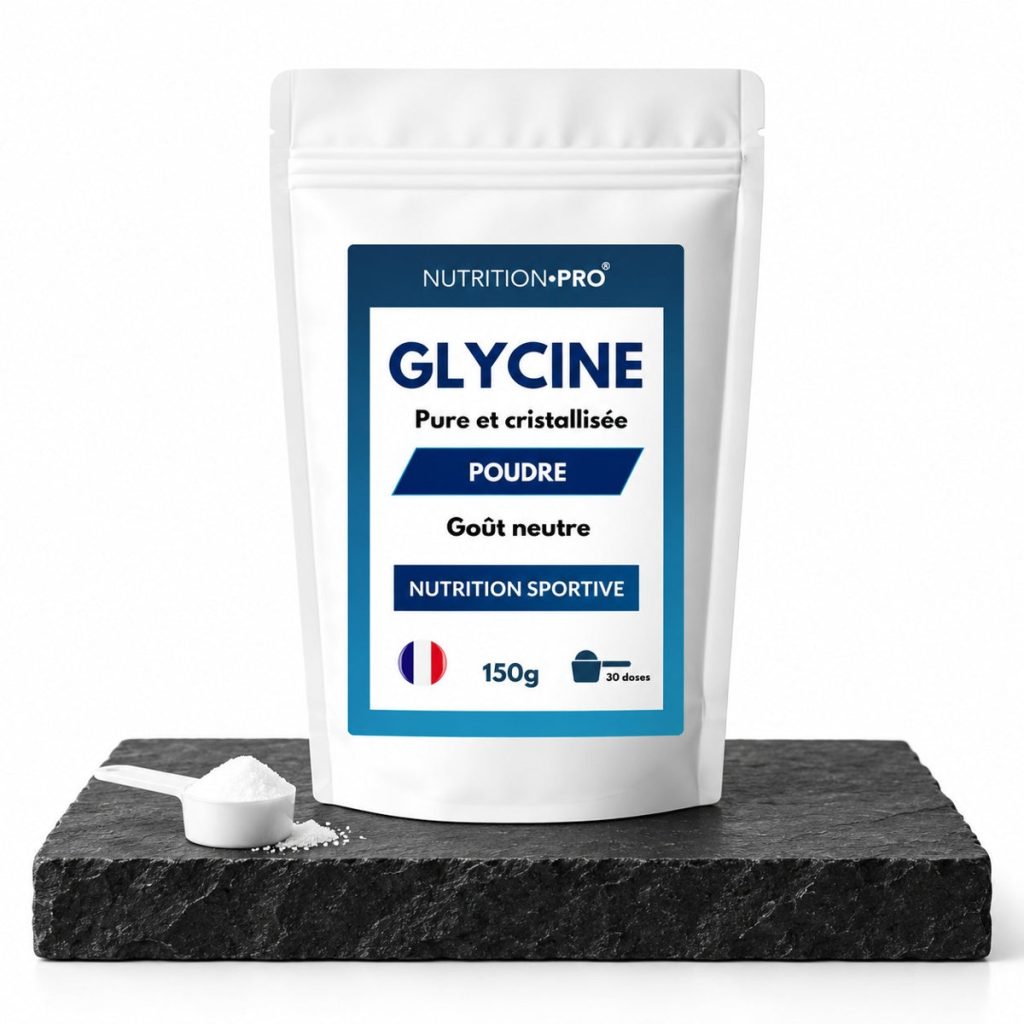
Nutrition•pro: pure crystalline glycine, checked batch by batch
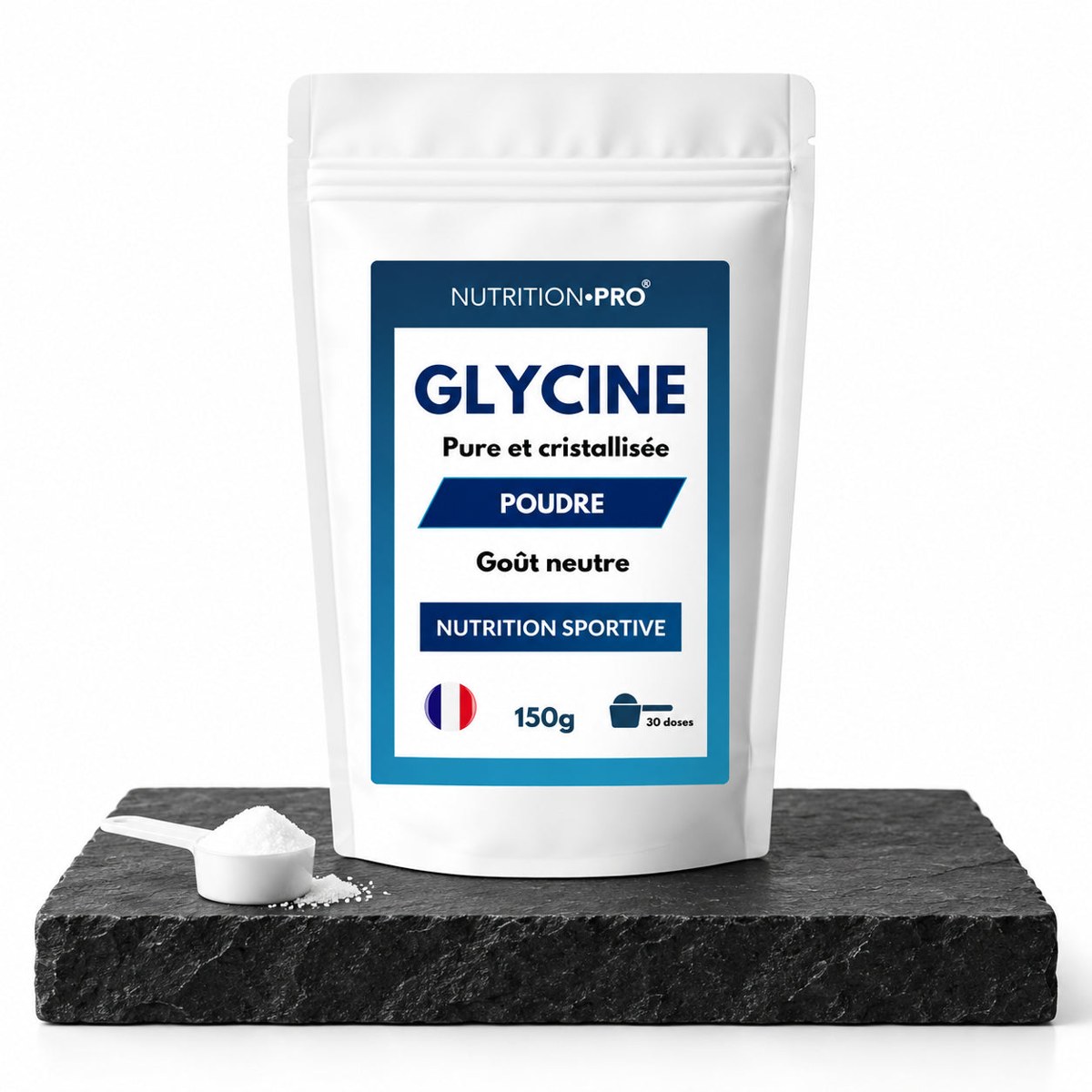
Nutrition•pro is a French brand based in Paris that says it designs and makes its formulas in France. Its crystalline glycine focuses on simplicity and transparency:
- a single ingredient: pure crystalline glycine, no excipient, no anti-caking agent, no flavouring or sweetener;
- every batch checked for heavy metals and microbiology, with a certificate of analysis available on request;
- fine crystals that dissolve in cold water as well as in hot drinks;
- a 150 g pouch with a 5 g scoop: 30 doses of 5 g, or 50 nights at 3 g, the dose used in sleep studies;
- €14.99 per pouch (price checked on 22/11/2026), €0.30 a night at 3 g.
The scoop holds 5 g: to match the 3 g used in studies, a small kitchen scale is the most accurate.
Promo code: SEOCONSULTINGSL for 10% off your order, €13.49 per pouch (as of 22/11/2026).
Partner link: we earn a commission if you order through this link, at no extra cost to you.
Frequently asked questions
What are the benefits of glycine?
The best documented in humans is sleep: small trials with 3 g before bed show better perceived sleep and less next-day fatigue. Other claims (skin, joints, blood sugar) rest mostly on animal studies or on collagen, not on glycine alone.
Does glycine have side effects?
At usual doses, trials report no notable problems. Be careful if you take psychiatric medication, are pregnant or breastfeeding: ask a doctor first.
Glycine or magnesium for sleep?
They work differently. Magnesium mainly corrects a low intake; glycine has been studied directly before bed. No trial compares the two.
Can I take glycine every night?
Published sleep trials lasted a few nights, and much higher doses have been taken for 8 to 12 weeks in other studies. For regular use over months, talk to your doctor or pharmacist.
Glycine powder or capsules?
Same molecule. Powder gets you to 3 g without swallowing several capsules and lets you dose precisely.
Sources
- Bannai M. et al. The effects of glycine on subjective daytime performance in partially sleep-restricted healthy volunteers. Front Neurol, 2012; 3: 61. PubMed 22529837
- Bannai M., Kawai N. New therapeutic strategy for amino acid medicine: glycine improves the quality of sleep. J Pharmacol Sci, 2012; 118(2): 145-8. PubMed 22293292
- Fan Z. et al. Glycine Bioavailability and Sleep-Related Outcomes Following Oral Glycine and Collagen Supplementation: A Scoping Review. J Diet Suppl, 2026; 23(5): 602-622. PubMed 42687500
- Evins A.E. et al. Placebo-controlled trial of glycine added to clozapine in schizophrenia. Am J Psychiatry, 2000; 157(5): 826-8. PubMed 10784481
- Serrita J. et al. A Pilot Randomized, Placebo-Controlled Trial of Glycine for Treatment of Schizophrenia and Alcohol Dependence. J Dual Diagn, 2019; 15(1): 46-55. PubMed 30633660