Bromelain: benefits, side effects, dosage and GDU explained
The short answer
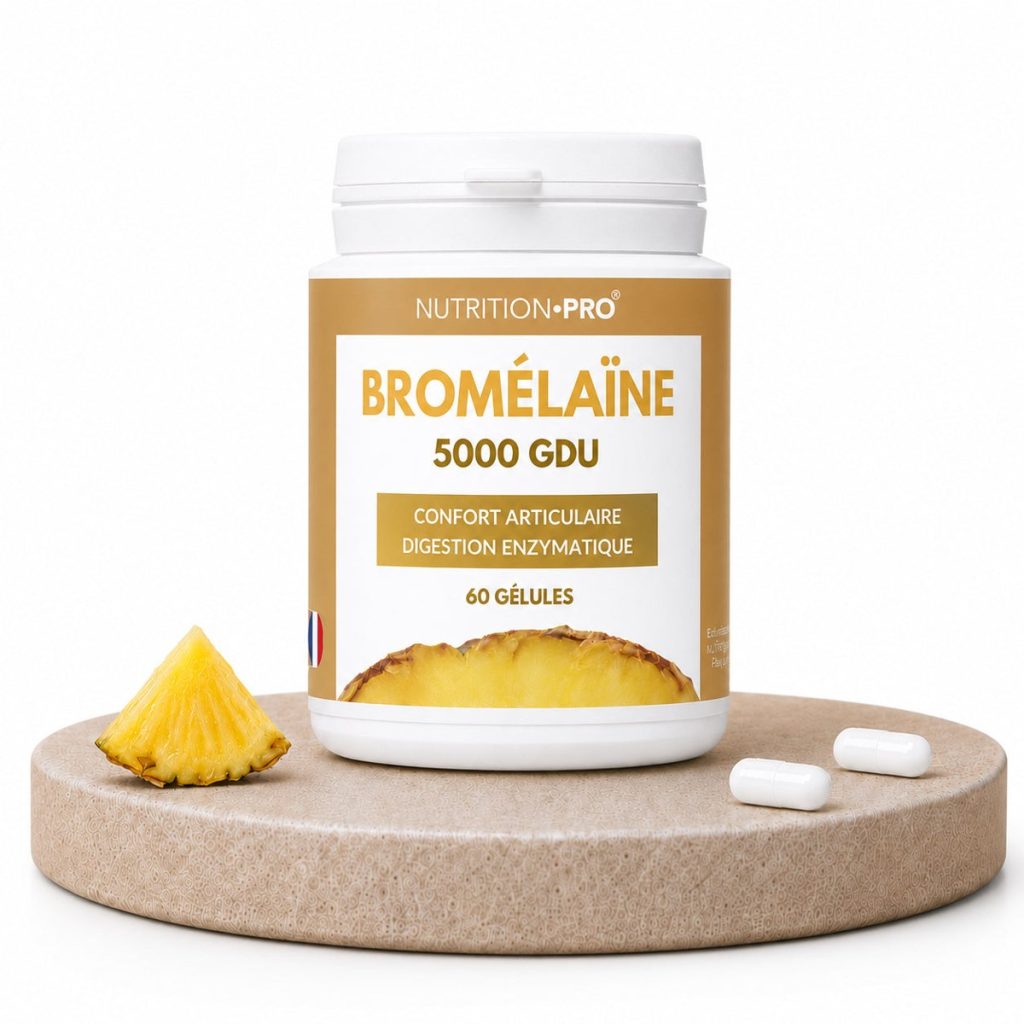
Bromelain is a mix of enzymes taken from the pineapple plant, mostly from the stem. These enzymes break down proteins, much like a meat tenderiser. Its best-studied use in humans is swelling and pain after surgery, especially wisdom tooth removal: a meta-analysis of 6 trials found slightly less swelling and less pain by day 7, a moderate effect. For inflammation in general, results are inconsistent. It is not a fat burner: no human trial shows weight loss. It is generally well tolerated, but it calls for caution with blood thinners and should be avoided if you have a pineapple allergy.
This article is for information and does not replace medical advice. If you take a blood thinner or have surgery planned, talk to your doctor first.
What is bromelain?
Bromelain is not a single molecule but a group of protein-digesting (proteolytic) enzymes. It is found throughout the pineapple plant, but supplements mostly extract it from the stem, where it is more concentrated. It belongs to the same enzyme family as papain from papaya.
What about the fruit? Fresh pineapple does contain bromelain, which is why it tingles on your tongue and stops jelly from setting. But heat damages enzymes, so cooked or tinned pineapple provides very little, and no meal comes close to the amounts used in trials. If you enjoy pineapple, our guide pineapple and diabetes explains how to fit it in without spiking your blood sugar.
Bromelain units: what GDU means
An enzyme is judged by its activity, not just its weight. Two 500 mg powders can differ widely in enzyme strength, so labels show activity units:
- GDU (Gelatin Digesting Units): how well the enzyme digests gelatin in the lab. “5,000 GDU/g” means each gram of powder has that activity; a 430 mg capsule provides proportionally less.
- FIP units: used by bromelain medicines sold in Germany, and so by some clinical trials.
These units do not convert neatly into one another. To compare two products, multiply grams per day by activity per gram. Comparing a product with a study is harder: many trials give a dose in milligrams without the activity.
Bromelain benefits: what the studies show
Swelling and pain after surgery: the best-supported use
Wisdom tooth surgery is a useful model: the operation is standardised and swelling is easy to measure. A meta-analysis of 6 randomised placebo-controlled trials (Liu et al., 2019) found:
| Outcome | Bromelain vs placebo |
|---|---|
| Facial swelling, days 2 to 3 | Slightly reduced (small effect) |
| Facial swelling, day 7 | Reduced (moderate effect) |
| Pain, days 2 to 3 | No difference |
| Pain, day 7 | Reduced (moderate effect) |
| Difficulty opening the mouth (trismus) | No effect |
A double-blind German trial (Bormann et al., 2016) compared three doses in 68 patients who had surgery on both sides, once with bromelain and once with placebo. Notably, doses 3 and 4.5 times higher did no better than the standard dose, and side effects were no more frequent than with placebo. After nose surgery (rhinoplasty), a trial in 46 patients (Rahmaty et al., 2025) found less bruising around the eyes on day 7, but no difference in swelling itself.
Bottom line: a modest benefit, mostly visible after a week, in small trials. After surgery, your surgeon decides what you take, and bromelain does not replace prescribed painkillers.
Inflammation and joints: inconsistent results
A systematic review of 7 randomised trials (Pereira et al., 2023) looked at blood markers of inflammation (CRP, IL-6, TNF-alpha…). Doses ranged from 200 to 1,050 mg a day for 1 to 16 weeks. The authors call the effect inconsistent: too dependent on population, dose and markers to draw a rule.
A broader meta-analysis (Leelakanok et al., 2023, 39 articles) found a small but significant reduction in pain with oral bromelain, a possible benefit in sinusitis, and no effect in cardiovascular disease. For knee osteoarthritis, a small pilot trial (40 patients, 500 mg a day) found no difference from diclofenac at 4 weeks, but it was too small to settle anything. For joint support, see our best joint supplement comparison and our anti-inflammatory diet guide.
Digestion: a traditional use
Since bromelain breaks down proteins, using it for digestion makes sense on paper, and the US LiverTox database lists oral use for digestive problems. But we found no solid trial showing a digestive benefit in healthy people. A 2026 critical review (Sanlier et al.) sums it up: most effects attributed to bromelain come from lab or animal studies, clinical evidence is limited, and part of the enzyme may be broken down in the gut.
Bromelain for weight loss: where the “fat burner” idea comes from
It is easy to see why the idea spread: pineapple was a diet favourite for decades, bromelain acts on swelling, and a less bloated belly can feel like a loss. But bromelain digests proteins, not fat. A 2025 review on obesity (Sethia et al.) describes possible pathways through inflammation and fat cells while admitting they are poorly understood. We found no human trial showing weight loss with bromelain alone. What actually works is in how to lose belly fat.
Bromelain side effects and safety
Side effects
In studies, bromelain is well tolerated. Reported effects are mostly digestive: gas, nausea, sometimes headache (Leelakanok, 2023). In the Pereira review, 11 participants across all trials had side effects and 2 stopped. LiverTox links it to no cases of liver injury.
Blood thinners: the main precaution
In the lab, bromelain stops platelets from clumping, and in rats it reduces clot formation (Metzig et al., 1999). In humans, the rhinoplasty trial reports increased clot-dissolving activity and lower fibrinogen. These effects can add up with blood-thinning treatment. Take particular care with:
- anticoagulants (warfarin, apixaban, rivaroxaban…);
- antiplatelet drugs (aspirin, clopidogrel);
- anti-inflammatory painkillers (ibuprofen, naproxen…), which the brand also lists in its precautions;
- other supplements that affect clotting, such as ginkgo biloba.
In these cases, no bromelain without your doctor’s agreement. Tell your surgeon or dentist before any procedure.
Pineapple allergy
Bromelain is a pineapple protein: if you are allergic to pineapple, avoid it. Respiratory allergies to bromelain have also been described in people exposed to its powder at work (van Kampen et al., 2007). If you notice itching, swollen lips or breathing trouble, stop and seek medical help.
Pregnancy, breastfeeding, children
With no data, bromelain supplements are not recommended during pregnancy or breastfeeding, or for children. The Nutrition•pro label says the same.
How to take bromelain (dosage)
- Doses studied: 200 to 1,050 mg a day of bromelain alone in inflammation trials, often without the activity stated.
- More is not better: in the Bormann trial, tripling the standard dose added nothing.
- Timing: follow the label. In surgery trials, it was given around the operation for a few days.
- Duration: 1 to 16 weeks in trials. Longer-term safety data are lacking.
- How long does it take to work? In dental trials, the difference from placebo shows mainly by day 7.
Nutrition•pro: a pineapple-stem bromelain at 5,000 GDU/g
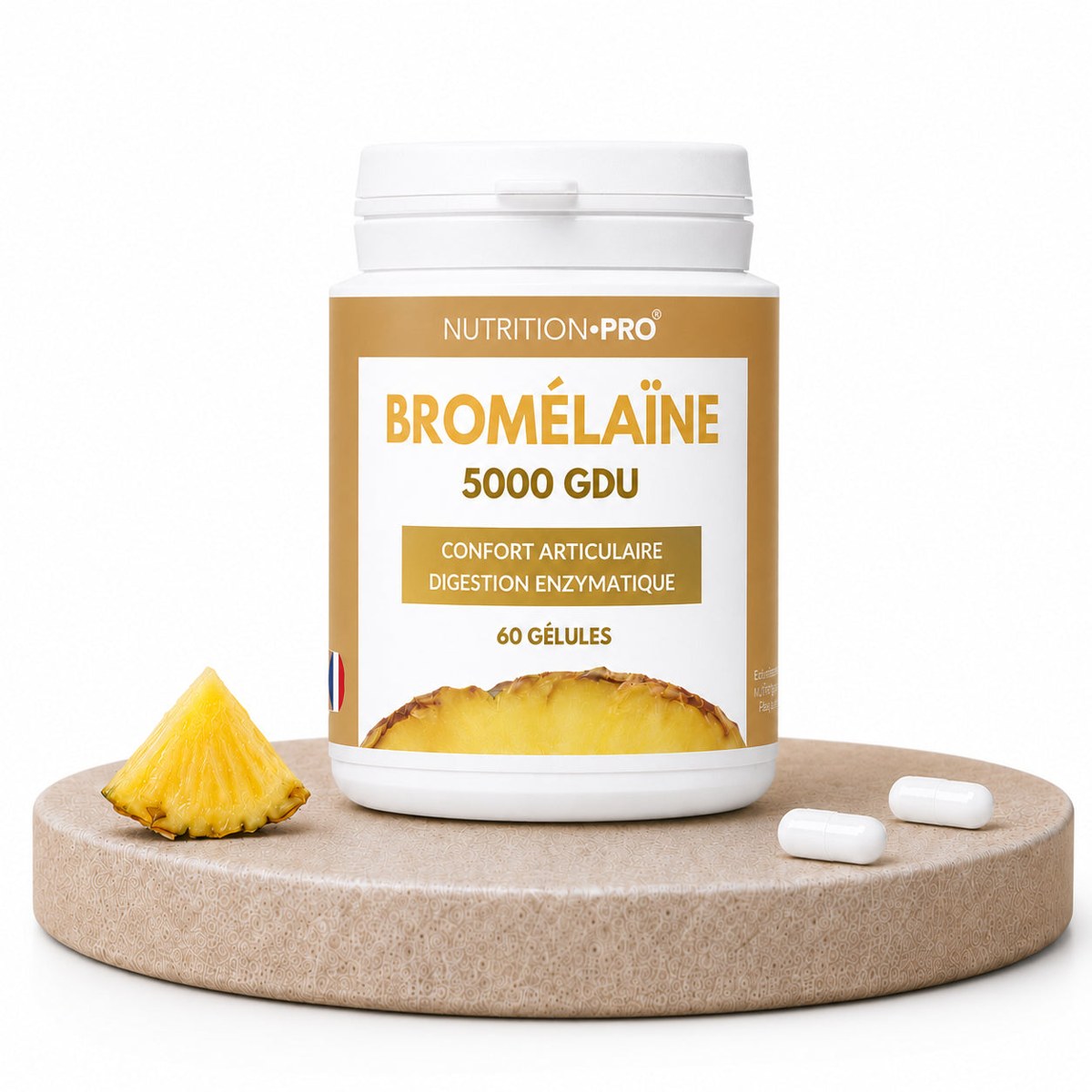
Nutrition•pro is a French brand based in Paris, which says it designs and makes its formulas in France. Its Bromelain 5000 GDU keeps things simple and focuses on enzyme activity:
- bromelain from pineapple stem, standardised to 5,000 GDU per gram;
- single ingredient: no blend of other plants, no unnecessary additives;
- gastro-resistant vegetable capsule (HPMC), a sensible choice for an enzyme that stomach acid can break down;
- 2 capsules a day, ideally in the morning with a large glass of water, for 860 mg of bromelain, about 4,300 GDU a day;
- each batch is analysed, checked and packed in France, according to the brand;
- 60 capsules, a 30-day course;
- €24.99 per jar (price checked on 22/11/2026), about €0.83 a day.
How does this dose compare? 860 mg a day falls within the trial range (200 to 1,050 mg a day). Comparing activity is only approximate, since studies often use FIP units or do not state activity. The results above come from other preparations and do not automatically apply to this product. The same precautions apply: not with a pineapple allergy, pregnancy or breastfeeding, and ask your doctor if you take a blood thinner or an anti-inflammatory.
Promo code: SEOCONSULTINGSL for 10% off your order, €22.49 per jar, about €0.75 a day (as of 22/11/2026).
Partner link: we earn a commission if you order through this link, at no extra cost to you.
Frequently asked questions
What is bromelain good for?
The best evidence: a moderate effect on swelling and pain after dental surgery, mainly after a week, plus a small pain reduction in a broader meta-analysis. Evidence for general inflammation and digestion is weak.
What are the side effects of bromelain?
Mostly digestive (gas, nausea), sometimes headache. Allergic reactions are possible, especially with a pineapple allergy. Trials report no serious effects.
Does bromelain help with weight loss?
No human trial shows it. It breaks down proteins, not fat. Less swelling can make your belly look flatter, but that is not fat loss.
How long does it take for bromelain to work?
In trials after wisdom tooth removal, the difference from placebo became clear around day 7, not in the first 2 to 3 days.
Can I take bromelain with blood thinners?
Not without your doctor’s agreement: bromelain affects platelets and clotting, and its effect could add to that of the medicine.
Sources
- Liu S. et al. Oral Bromelain for the Control of Facial Swelling, Trismus, and Pain After Mandibular Third Molar Surgery: A Systematic Review and Meta-Analysis. J Oral Maxillofac Surg, 2019; 77(8): 1566-1574. PubMed 30986376
- Leelakanok N. et al. Efficacy and safety of bromelain: A systematic review and meta-analysis. Nutr Health, 2023; 29(3): 479-503. PubMed 37157782
- Pereira I.C. et al. Bromelain supplementation and inflammatory markers: A systematic review of clinical trials. Clin Nutr ESPEN, 2023; 55: 116-127. PubMed 37202035
- Bormann K.H. et al. Perioperative Bromelain Therapy after Wisdom Teeth Extraction: A Randomized, Placebo-Controlled, Double-Blinded, Three-Armed, Cross-Over Dose-Finding Study. Phytother Res, 2016; 30(12): 2012-2019. PubMed 27601419
- Rahmaty B. et al. The Effectiveness of Bromelain on Oedema, Subconjunctival Haemorrhage, and Ecchymosis After Rhinoplasty: A Randomised, Double-Blind, Placebo-Controlled Trial. Aesthetic Plast Surg, 2025; 49(13): 3648-3657. PubMed 39904804
- Metzig C. et al. Bromelain proteases reduce human platelet aggregation in vitro, adhesion to bovine endothelial cells and thrombus formation in rat vessels in vivo. In Vivo, 1999; 13(1): 7-12. PubMed 10218125
- Sanlier N. et al. Potential health benefits of bromelain: a critical review of the current literature. Front Nutr, 2026; 13: 1744666. PubMed 42245557
- LiverTox. Bromelain. National Institute of Diabetes and Digestive and Kidney Diseases, updated 2024. PubMed 38381908