Magnesium glycinate (bisglycinate): benefits, side effects and dosage

The short answer
Magnesium glycinate (also called magnesium bisglycinate) is magnesium bound to two molecules of glycine, an amino acid. This chelated form is known for being gentle on the gut, and that is its best-documented advantage: it was better tolerated than magnesium oxide in a small trial. The claim that it is “the best absorbed” rests on thin, conflicting data, often industry-funded. For sleep, a recent trial found a small effect on insomnia with 250 mg of magnesium a day. Safety benchmark: 250 mg a day of supplemental magnesium, the upper limit set in Europe by EFSA, and no supplement without medical advice if you have kidney disease.
This article is for information and does not replace medical advice. If you have kidney disease, are pregnant or take medication, talk to your doctor or pharmacist.
What is magnesium glycinate?
Supplement magnesium always comes paired with another molecule: oxide, citrate, chloride, malate… In glycinate (bisglycinate), it is bound to two glycines. The mineral is the same; only its carrier changes, which affects how it crosses the gut and how well it is tolerated.
Label trap: a 750 mg capsule of magnesium bisglycinate does not provide 750 mg of magnesium. Only a fraction is elemental magnesium (at least 18% for Albion bisglycinate, according to its maker). Always read the “magnesium” line of the nutrition panel. Our best magnesium supplement comparison does that maths for eleven products.
What about the glycine? A dose providing 300 mg of magnesium carries under 2 g of glycine (based on molecular weights), less than the 3 g used in sleep studies. See glycine benefits for sleep.
Magnesium glycinate benefits: what the studies show
Magnesium glycinate vs citrate and oxide: absorption is less clear-cut than claimed
| Study | Comparison | Result |
|---|---|---|
| Schuette et al., 1994 | 12 patients after ileal resection, 100 mg labelled magnesium, glycinate vs oxide | Same absorption overall (23.5% vs 22.8%); twice as high (23.5% vs 11.8%) in the 4 patients who absorbed least; glycinate better tolerated by all |
| Pajuelo et al., 2024 | 40 volunteers, single doses of oxide, citrate, bisglycinate and microencapsulated magnesium | Blood magnesium rose with microencapsulated magnesium, and at some time points with oxide and citrate; no significant rise with bisglycinate. Funded by the maker of the microencapsulated form |
Neither study proves glycinate is poorly absorbed. Together they show that the ranking of magnesium forms rests on limited data. The most solid point in glycinate’s favour is digestive tolerance.
Magnesium glycinate for sleep
In a double-blind trial (Schuster et al., 2025), 155 healthy adults with poor sleep took 250 mg of magnesium as bisglycinate or a placebo daily. After 4 weeks, insomnia severity dropped slightly more with magnesium, but the effect was small (effect size 0.2), and other psychological measures did not change. The effect seemed larger in people with low dietary magnesium.
Leg cramps
In 80 pregnant women with leg cramps (Supakatisant and Phupong, 2015), 300 mg a day of magnesium bisglycinate chelate for 4 weeks halved cramp frequency in 86% of women versus 61% on placebo, without more nausea or diarrhoea. Other trials disagree, and Cochrane reviews rate the evidence as conflicting and low-certainty. In pregnancy, ask your midwife or doctor first.
For deficiency signs and food sources, see magnesium benefits, deficiency and foods.
Magnesium glycinate side effects and safety
Glycinate is usually well tolerated, but no form is free of gut effects at high doses: loose stools, diarrhoea, cramps or nausea. Lower the dose, split it or take it with food.
EFSA sets 250 mg a day as the upper limit for added magnesium, from age 4 and in pregnancy. It covers readily dissociable salts and magnesium oxide in supplements, waters and fortified foods, not magnesium naturally present in food. Glycinate is not named, but with no specific benchmark, 250 mg a day across all your supplements is a prudent ceiling, counting magnesium-rich water if you drink a lot of it. More in too much magnesium: symptoms.
- kidney disease: magnesium can build up in the blood; no supplement without medical advice;
- some antibiotics (tetracyclines, fluoroquinolones), osteoporosis drugs (bisphosphonates) and thyroid hormones: space the doses as advised;
- magnesium laxatives or antacids: intakes add up;
- pregnancy and children: medical advice first, and no more than 250 mg a day from supplements.
Magnesium glycinate dosage: how to take it
- Food first: 30 g of pumpkin seeds provide about 178 mg of magnesium. See foods high in magnesium.
- Dose: the trials above used 250 to 300 mg of magnesium a day. Use the lowest helpful dose and stay within 250 mg from supplements.
- When to take magnesium glycinate? No official rule. Evening if you take it for sleep, split if it upsets your stomach.
- How long? The sleep trial measured an effect at 4 weeks. Review after one or two months.
- With vitamin B6? Often added, with no proven benefit if you are not deficient. Do not stack several B6 products.
Sensilab: a plain magnesium glycinate, 300 mg in 2 capsules
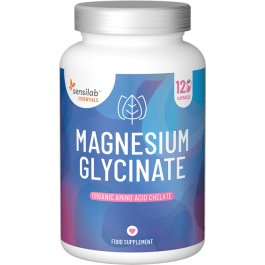
For a glycinate with nothing else mixed in, Sensilab’s Essentials Magnesium Glycinate tops our comparison on the price of the magnesium it actually provides:
- magnesium bisglycinate only, no oxide, no vitamin B6;
- 300 mg of magnesium per 2 capsules (80% of the EU reference intake);
- other ingredients: vegetable capsule (HPMC), corn starch, coconut milk powder and bamboo shoot extract (note the coconut if you are allergic);
- 2 capsules a day, ideally spread over the day; 120 capsules, a two-month supply;
- vegan, gluten- and lactose-free, made in the EU according to the brand, with third-party lab testing announced;
- €19.99 per jar (price checked on 22/11/2026), about €0.33 a day and €0.11 per 100 mg of magnesium.
How does the dose compare? 300 mg matches the pregnancy cramp trial and is close to the 250 mg of the sleep trial, but it is above the prudent 250 mg ceiling for supplements. The 150 mg capsules make it easy to adjust: one capsule a day is often enough if your diet already provides magnesium, and the jar then lasts four months. The studies above were not done on this specific product. The brand advises against use in pregnancy and breastfeeding, and recommends medical advice if you take medication.
See Sensilab Magnesium Glycinate →
Partner link: we earn a commission if you order through this link, at no extra cost to you.
To compare with other glycinates (Novoma, Nutrimea, Dynveo…), see our best magnesium supplement comparison.
Our pick: Chelated magnesium bisglycinate Dynveo (Dynveo) See the product → Partner link
Frequently asked questions
What is magnesium glycinate good for?
Providing magnesium with good digestive tolerance. One recent trial found a small effect on insomnia at 250 mg a day. Benefits for fatigue mostly concern people who are low in magnesium.
Magnesium glycinate vs citrate: which is better?
Both are common, well-absorbed forms; glycinate has a reputation for being gentler on the gut. Direct comparisons are rare: choose on tolerance, elemental dose and price.
What are the side effects of magnesium glycinate?
Loose stools or diarrhoea at high doses, sometimes nausea. People with kidney disease should not take it without medical advice.
When is the best time to take magnesium glycinate?
There is no rule: evening for sleep, with food if your stomach is sensitive, and away from certain medicines.
Is magnesium glycinate the same as magnesium bisglycinate?
Yes, both names describe magnesium bound to glycine; bisglycinate specifies the two glycine molecules.
Sources
- Schuette S.A. et al. Bioavailability of magnesium diglycinate vs magnesium oxide in patients with ileal resection. JPEN J Parenter Enteral Nutr, 1994; 18(5): 430-5. PubMed 7815675
- Pajuelo D. et al. Comparative Clinical Study on Magnesium Absorption and Side Effects After Oral Intake of Microencapsulated Magnesium (MAGSHAPE Microcapsules) Versus Other Magnesium Sources. Nutrients, 2024; 16(24): 4367. PubMed 39770988
- Schuster J. et al. Magnesium Bisglycinate Supplementation in Healthy Adults Reporting Poor Sleep: A Randomized, Placebo-Controlled Trial. Nat Sci Sleep, 2025; 17: 2027-2040. PubMed 40918053
- Supakatisant C., Phupong V. Oral magnesium for relief in pregnancy-induced leg cramps: a randomised controlled trial. Matern Child Nutr, 2015; 11(2): 139-45. PubMed 22909270
- EFSA. Overview on Tolerable Upper Intake Levels as derived by the SCF and the EFSA NDA Panel (magnesium: SCF, 2001). efsa.europa.eu