Group · Nuts & seeds
Pumpkin seeds
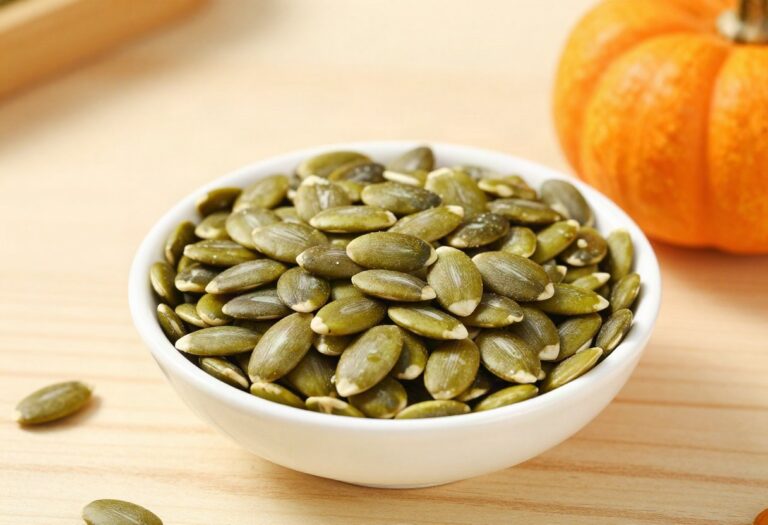
Pumpkin seeds, also known as pepitas, are the small, flat, green seeds taken from various types of squash. You can find them raw, dried, roasted, salted or hulled, ready to sprinkle over your dishes. Crunchy and tasty, they belong to the family of nuts and seeds and naturally have a place in a balanced diet, in small amounts. Their nutritional value is real: they provide plant protein, good-quality fat, minerals such as magnesium, zinc and iron, as well as fibre. Versatile, they work in both savoury and sweet recipes, and make a handy, nourishing snack to take anywhere.
Macronutrient breakdown
Nutrition table per 100 g
| Calories | 618 kcal |
| Kilojoules | 2560 kJ |
| Protein | 35,6 g |
| Carbohydrate | 5,4 g |
| Fat | 49,1 g |
| Fibre | 6 g |
Micronutrients per 100 g
All measured nutrients, ranked by share of the daily reference intake.
- Manganese4,54 mg227 %
- Omega-6 LA20,7 g207 %
- Phosphorus1230 mg176 %
- Magnesium592 mg158 %
- Copper1,34 mg134 %
- Zinc7,81 mg78 %
- Iron8,82 mg63 %
- Potassium809 mg40 %
- Vitamin B9dietary folate equivalents58 µg
See the other 11 nutrients
- Vitamin B34,99 mg31 %
- Vitamin B10,27 mg25 %
- Vitamin E2,18 mg18 %
- Vitamin B50,75 mg13 %
- Vitamin B20,15 mg11 %
- Vitamin B60,14 mg10 %
- Vitamin K17,3 µg10 %
- Omega-3 ALA0,12 g6 %
- Calcium46 mg6 %
- Vitamin C1,9 mg2 %
- Vitamin A0,75 µg0 %
Anses Ciqual 2025. Source: Anses, 2025, Ciqual food composition table
Tips
To enjoy pumpkin seeds without overdoing it, aim for a portion of around 15 to 25 g a day, which is one to two tablespoons. Rich in protein and unsaturated fat, they are energy-dense (around 618 kcal per 100 g): a plus for energy, but something to watch if you are controlling your weight. It is better to measure them with a spoon than to dip straight into the bag.
- How to eat them: plain as a snack, dry-roasted for a few minutes in a frying pan to bring out their aroma, or sprinkled over a salad, a pumpkin soup, a yoghurt, a muesli or homemade bread.
- Tasty pairings: they go well with other nuts and seeds such as sunflower seeds or chia seeds for a crunchy, well-rounded mix.
- Storage: keep them in an airtight jar, away from light and heat, to protect their fatty acids and stop them going rancid.
In terms of nutrition facts, pumpkin seeds stand out for their magnesium, zinc, iron and phosphorus content, as well as their fibre, which helps you feel full. Their carbohydrate content is low (around 5.39 g per 100 g), which gives them a moderate glycaemic index, useful as part of a well-managed balanced diet.
For active people: these pepitas make a handy snack that combines plant protein, healthy fat and minerals. Magnesium contributes to normal muscle function, which makes them useful during periods of intense training. You can add them to a homemade bar, a pre-workout porridge or a recovery plate. To top up your protein after exercise, pair them with sources such as almonds or a balanced protein snack.
To discover other crunchy foods rich in good nutrients, explore the Nuts & Seeds family, and compare their values using the food calorie table. In short, pumpkin seeds are a smart option for weight loss when eaten in moderation: their nutritional richness makes up for their calorie content, as long as you stick to the portions and vary your sources of nuts and seeds through the week.