Iron bisglycinate: absorption, side effects and how to take it
The short answer
Iron bisglycinate (ferrous bisglycinate) is iron bound to two molecules of glycine, an amino acid. This “chelated” form is generally easier on the stomach than ferrous sulfate: in trials in pregnant women it caused roughly two to three times fewer digestive side effects, with at least the same effect on haemoglobin, often at a lower dose. But its absorption is still controlled by your iron stores, so it is not a risk-free iron: excess iron builds up and can cause harm. Before taking any, get a blood test including ferritin.
This article is for information and does not replace medical advice. Do not take iron without a blood test: tiredness is not always iron deficiency.
What is iron bisglycinate?
Supplement iron always comes paired with another molecule. The most common forms are iron salts (ferrous sulfate, fumarate or gluconate). In iron bisglycinate, the iron is held between two glycines, which partly shields it in the gut: less direct irritation, and less blocking by dietary phytates from whole grains.
Label tip: 70 mg of iron bisglycinate provides about 14 mg of elemental iron. Always look at the elemental iron, not the weight of the compound.
Iron bisglycinate vs ferrous sulfate: what the studies show
Absorption: better with phytate-rich meals, still regulated by your stores
In an absorption study with labelled iron (Bovell-Benjamin et al., American Journal of Clinical Nutrition, 2000), iron bisglycinate added to whole-maize porridge was absorbed at 6.0% versus 1.7% for ferrous sulfate, about 4 times more. The same work showed that bisglycinate absorption falls as ferritin rises, like other forms: the body stays in control, and better absorption is pointless if you are not deficient.
Effectiveness: a benefit shown mainly in pregnancy
The largest meta-analysis (Fischer et al., Nutrition Reviews, 2023) pooled 17 randomised trials comparing bisglycinate with other iron forms over 4 to 20 weeks:
| Population | Bisglycinate vs other iron forms |
|---|---|
| Pregnant women (9 trials) | Higher haemoglobin (standardised difference 0.54) and 64% fewer digestive side effects (rate ratio 0.36) |
| Pregnant women, ferritin | Trend towards higher ferritin, not significant |
| Children (4 trials) | No difference in haemoglobin or ferritin |
| Men and non-pregnant women (4 trials) | Too few trials to pool |
So for non-pregnant adults, the case for bisglycinate rests mostly on tolerability and absorption studies, not on large trials.
A lower dose for the same result
In a double-blind Danish trial of 80 pregnant women (Milman et al., 2014), 25 mg of iron as bisglycinate worked as well as 50 mg as ferrous sulfate to prevent deficiency and anaemia, with fewer gut complaints.
Why tolerability matters
Ferrous sulfate remains the standard, but a meta-analysis of 43 trials and 6,831 adults (Tolkien et al., 2015) found it raises the odds of digestive side effects 2.3-fold versus placebo. Iron that upsets your stomach often gets stopped too early.
Iron bisglycinate side effects and safety
Side effects are less frequent than with sulfate but possible: nausea, stomach discomfort, constipation or diarrhoea. Black stools are common with any iron supplement and reflect unabsorbed iron; EFSA notes they are not harmful in themselves.
The real danger is taking iron you do not need. Your body cannot excrete excess iron, and EFSA (2024) confirms that iron overload damages organs. It set a safe level of intake of 40 mg of iron a day for adults, including pregnant and breastfeeding women, from all sources (35 mg at 15 to 17 years, 10 mg at 1 to 3 years). Prescribed anaemia treatment may exceed this under medical supervision. People with genetic iron overload (haemochromatosis) often do not know it: see our guide to high ferritin.
- haemochromatosis, polycythaemia or any iron-loading condition: do not use;
- normal or high ferritin: no iron supplement;
- pregnancy: needs rise, but supplementation should follow your doctor or midwife’s advice;
- children: never without medical advice, and keep capsules out of reach;
- medication: iron can reduce absorption of some drugs taken at the same time; ask your pharmacist how to space them.
How to take iron bisglycinate
- Blood test first: ferritin, plus haemoglobin if your doctor sees fit.
- Dose: common supplements provide 14 mg of iron a day. Anaemia is usually treated with higher, prescribed doses.
- Timing: away from meals (for example 1 hour before), and away from tea, coffee and dairy, which reduce iron absorption.
- Every other day? One study in iron-depleted women found better absorption with alternate-day dosing (Stoffel et al., 2017), using 60 mg of ferrous sulfate. More in our iron deficiency anaemia guide; discuss it with your doctor.
- Duration: usually a few months, then a repeat ferritin test.
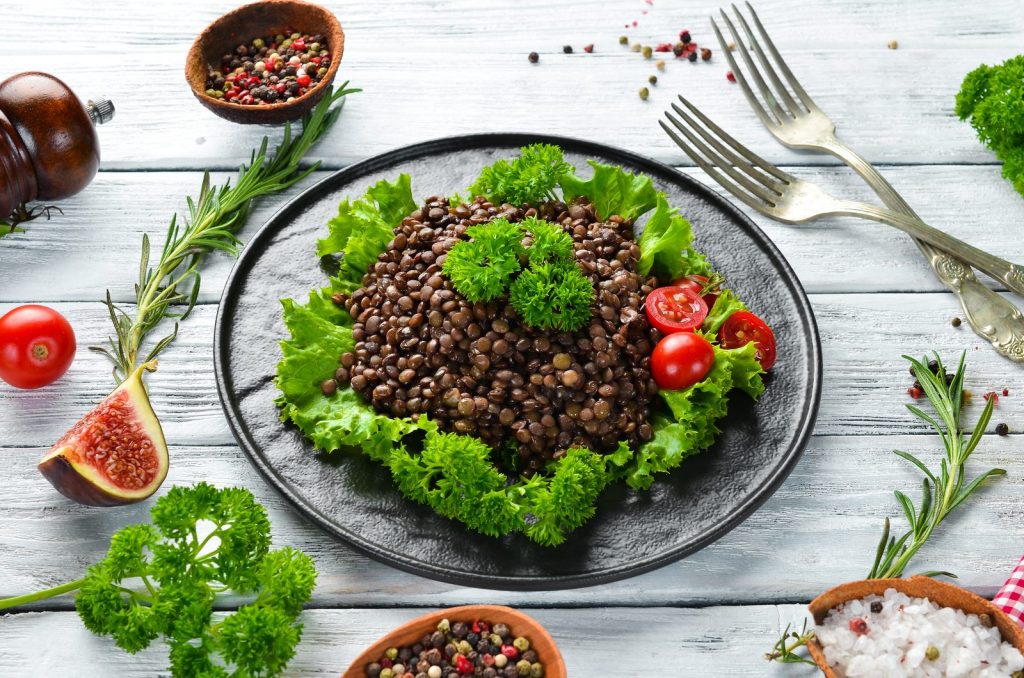
Iron bisglycinate with vitamin C? Vitamin C is known to boost absorption of non-haem iron from plant foods; its added value with bisglycinate is less documented, but combining them is fine. On your plate, kiwi or red pepper helps you absorb the iron in lentils. See our full list of foods high in iron.
Nutrition•pro: iron bisglycinate with vitamins C and B9
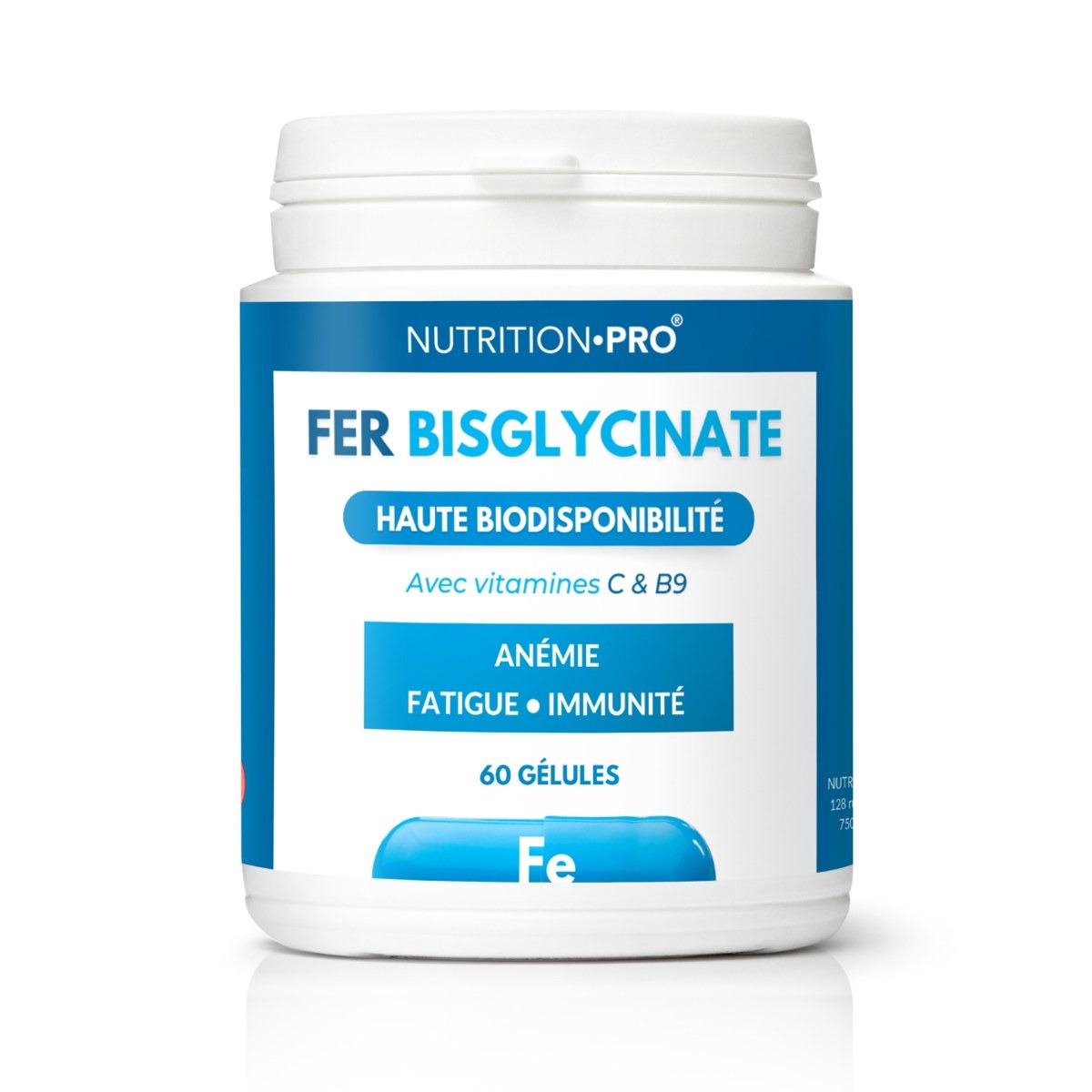
Nutrition•pro is a French brand based in Paris, which says it designs and makes its formulas in France. Its Iron bisglycinate keeps the formula short and the routine simple:
- 70 mg of iron bisglycinate per capsule, providing 14 mg of iron (100% of the EU reference intake);
- with 80 mg of vitamin C and 200 µg of vitamin B9 (folic acid), each 100%;
- 1 capsule a day, 1 hour before a meal, vegetable capsule;
- 60 capsules, a 2-month supply;
- €19.99 per jar (price checked on 22/11/2026), about €0.33 a day.
How does the dose compare? 14 mg is the standard dose for iron bisglycinate supplements and about half the 25 mg that prevented deficiency in pregnancy in Milman’s trial: a maintenance or mild-deficiency dose, not an anaemia treatment. With a usual diet it stays below EFSA’s 40 mg safe level, as long as you do not combine several iron products. Taking it an hour before a meal suits absorption. The studies above often used other doses and populations, so their results do not transfer automatically. The brand advises against use with haemochromatosis or polycythaemia, and in pregnancy and breastfeeding. To compare it with other options, see our best iron supplement comparison.
Promo code: SEOCONSULTINGSL for 10% off your order, €17.99 per jar, about €0.30 a day (as of 22/11/2026).
See Nutrition•pro Iron bisglycinate →
Partner link: we earn a commission if you order through this link, at no extra cost to you.
Our pick: Iron bisglycinate Dynveo (Dynveo) See the product → Partner link
Frequently asked questions
Is iron bisglycinate better than ferrous sulfate?
It is better tolerated and less blocked by phytates. For haemoglobin, it showed an advantage in pregnant women; in other adults, the trials are too few to say.
What are the side effects of iron bisglycinate?
Less common than with sulfate: nausea, stomach discomfort, constipation. Dark or black stools are normal. The real risk is iron overload if you take it without being deficient.
When is the best time to take iron bisglycinate?
Away from meals, for example an hour before, and away from tea, coffee and dairy.
Can I take iron bisglycinate while pregnant?
It is the most studied group, with good results, but supplementation in pregnancy should be decided with your doctor or midwife, based on blood tests. See our pregnancy diet guide.
How much iron bisglycinate per day?
Common supplements provide 14 mg of iron a day. Stay within EFSA’s 40 mg total safe level unless your doctor prescribes a treatment dose.
Sources
- Fischer J.A.J. et al. The effects of oral ferrous bisglycinate supplementation on hemoglobin and ferritin concentrations in adults and children: a systematic review and meta-analysis of randomized controlled trials. Nutr Rev, 2023; 81(8): 904-920. PubMed 36728680
- Milman N. et al. Ferrous bisglycinate 25 mg iron is as effective as ferrous sulfate 50 mg iron in the prophylaxis of iron deficiency and anemia during pregnancy in a randomized trial. J Perinat Med, 2014; 42(2): 197-206. PubMed 24152889
- Bovell-Benjamin A.C. et al. Iron absorption from ferrous bisglycinate and ferric trisglycinate in whole maize is regulated by iron status. Am J Clin Nutr, 2000; 71(6): 1563-9. PubMed 10837299
- Tolkien Z. et al. Ferrous sulfate supplementation causes significant gastrointestinal side-effects in adults: a systematic review and meta-analysis. PLoS One, 2015; 10(2): e0117383. PubMed 25700159
- Stoffel N.U. et al. Iron absorption from oral iron supplements given on consecutive versus alternate days and as single morning doses versus twice-daily split dosing in iron-depleted women. Lancet Haematol, 2017; 4(11): e524-e533. PubMed 29032957
- EFSA, NDA Panel. Scientific opinion on the tolerable upper intake level for iron. EFSA Journal, 2024. doi.org/10.2903/j.efsa.2024.8819