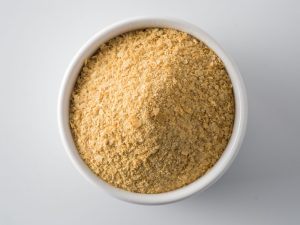
Red yeast rice: benefits for cholesterol, side effects and safety rules
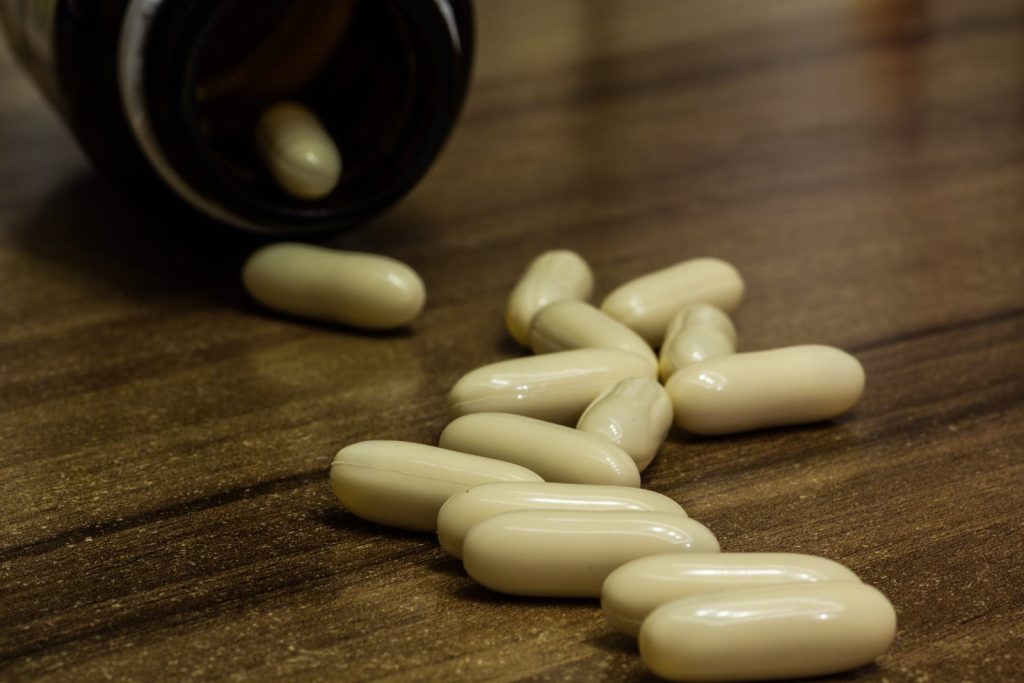
The short answer
Red yeast rice is rice fermented with a mold, Monascus purpureus, which produces monacolins. The main one, monacolin K, is identical to lovastatin, a statin drug. That is why it lowers LDL (“bad”) cholesterol in trials, and why it shares statin side effects: muscle pain, liver injury and drug interactions. The European Food Safety Authority (EFSA) could not identify a safe intake, and serious reactions have been reported at doses as low as 3 mg a day. Since EU Regulation 2022/860, supplements sold in Europe must provide less than 3 mg of monacolins a day. Never combine it with a statin, avoid it if pregnant, under 18 or over 70, and talk to your doctor first.
This article is for information and does not replace medical advice. High cholesterol should be managed with your doctor: depending on your cardiovascular risk, a proven treatment may be needed, and a supplement is not a substitute.
What is red yeast rice?
It is made by fermenting rice with Monascus purpureus, which turns the grain deep red. Long used in Asia as a food coloring and ingredient, it is sold in the West as a cholesterol supplement.
During fermentation, the mold produces monacolins. EFSA notes that monacolin K in its lactone form is identical to lovastatin, an approved prescription drug. It blocks the same liver enzyme that makes cholesterol. In other words, a red yeast rice capsule is a small, unregulated dose of a statin.
Depending on the strain and process, the mold can also make citrinin, a toxin that damages the kidneys. The EU caps it at 100 mcg per kilo in these supplements (Regulation (EU) 2023/915).
Does red yeast rice lower cholesterol?
Yes, roughly like a low-intensity statin
- Gerards et al., 2015: across 20 trials, red yeast rice lowered LDL by 1.02 mmol/L (about 39 mg/dL) versus placebo, no different from the statins it was compared with. The authors add that safety assessment was poor quality in most trials;
- Li et al., 2022: in 15 high-quality trials (1,012 people), it matched the statins it was compared with on LDL;
- Lu et al., 2008: nearly 5,000 Chinese patients with a previous heart attack took a red yeast rice extract (Xuezhikang) or placebo for 4.5 years on average. Major coronary events fell from 10.4% to 5.7%. This is the only large outcome trial, using one specific Chinese extract.
What about low doses (under 3 mg)?
Most older trials used 5 to 10 mg of monacolin K a day. Two randomized trials still found an effect at lower doses:
| Study | Monacolin K dose | Duration | LDL reduction |
|---|---|---|---|
| Heinz et al., 2016 (142 people, vs placebo) | 3 mg + folic acid | 12 weeks | 14.8% |
| Angelopoulos et al., 2023 (105 people) | 3 mg + CoQ10 and plant extracts | 8 weeks | 16.8% |
| Angelopoulos et al., 2023, same trial | 10 mg + CoQ10 and plant extracts | 8 weeks | 26.5% |
These trials are short and say nothing about heart attacks or survival at these doses.
Red yeast rice vs statins
Its active compound is a statin, at a lower and less controlled dose: content varies between products, and no outcome trial exists for supplements sold in Europe or the US. If you have had a heart attack or stroke, or have diabetes or familial hypercholesterolemia, prescription treatments are the evidence-based option. Red yeast rice is most often discussed for mildly raised cholesterol or statin intolerance, with your doctor.
Red yeast rice side effects and safety
What European regulators concluded
In 2018, EFSA found monacolins to be of significant safety concern at 10 mg a day, with individual serious reactions reported at 3 mg a day: muscle damage, including rhabdomyolysis, and liver injury. It could not identify a safe intake. In 2025, after reviewing new industry data, EFSA upheld this view, even below 3 mg.
EU Regulation 2022/860 now requires a daily portion to provide less than 3 mg of monacolins, with a label stating it should not be consumed by pregnant or breastfeeding women, children under 18 and adults over 70.
Reported side effects
| Source | What was found |
|---|---|
| Italian surveillance system, 2002 to 2015 | 55 reactions: 19 muscle pain or raised CK, 1 rhabdomyolysis, 10 liver injuries, 12 digestive, 9 skin; 13 hospitalizations |
| French pharmacovigilance and literature | 15 cases of muscle injury, including 3 rhabdomyolysis |
| Meta-analysis of 53 trials (8,535 people) | No more muscle problems than placebo or comparator |
Trials in selected volunteers are reassuring; real-world reports show serious cases, often in people taking other drugs. Unexplained muscle pain or weakness, dark urine, yellow skin or eyes, severe fatigue: stop and see a doctor.
Red yeast rice brands to avoid: the quality issue
Quality varies widely, and some products have exceeded citrinin limits. In 2024 in Japan, contaminated batches of a “beni-koji” red yeast rice supplement caused kidney injury: 2,628 people had sought medical care by November 2024. The culprit, puberulic acid, came from contamination by another mold (Sekiguchi et al., 2026). Avoid products that do not state their monacolin content per day or publish batch testing.
Interactions and who should avoid it
- Statins and other cholesterol drugs: never together;
- some anticoagulants, antifungals, HIV protease inhibitors, antiarrhythmics and antibiotics can boost its effects, and so can grapefruit juice;
- pregnancy, breastfeeding, trying to conceive, under 18, over 70;
- liver disease, heavy drinking, kidney disease, hypothyroidism, muscle disorders; extra caution for intense regular exercise.
How to take it, and alternatives
- Diet first: soluble fiber, better fats, less saturated fat. See foods to lower cholesterol and dietary fiber benefits; oats are an easy start.
- Dose: under 3 mg of monacolins a day, never two red yeast rice products at once.
- Duration: low-dose trials lasted 8 to 12 weeks. Recheck your lipids, and liver and muscle markers if your doctor advises.
- Alternatives: plant sterols and stanols lower LDL by 6% to 12% at 0.6 to 3.3 g a day (Ras et al., 2014, 124 studies), without statin-like effects. A fiber supplement such as psyllium is another option; berberine has its own interactions.
Nutrimea: red yeast rice under 3 mg of monacolin K, with plant sterols
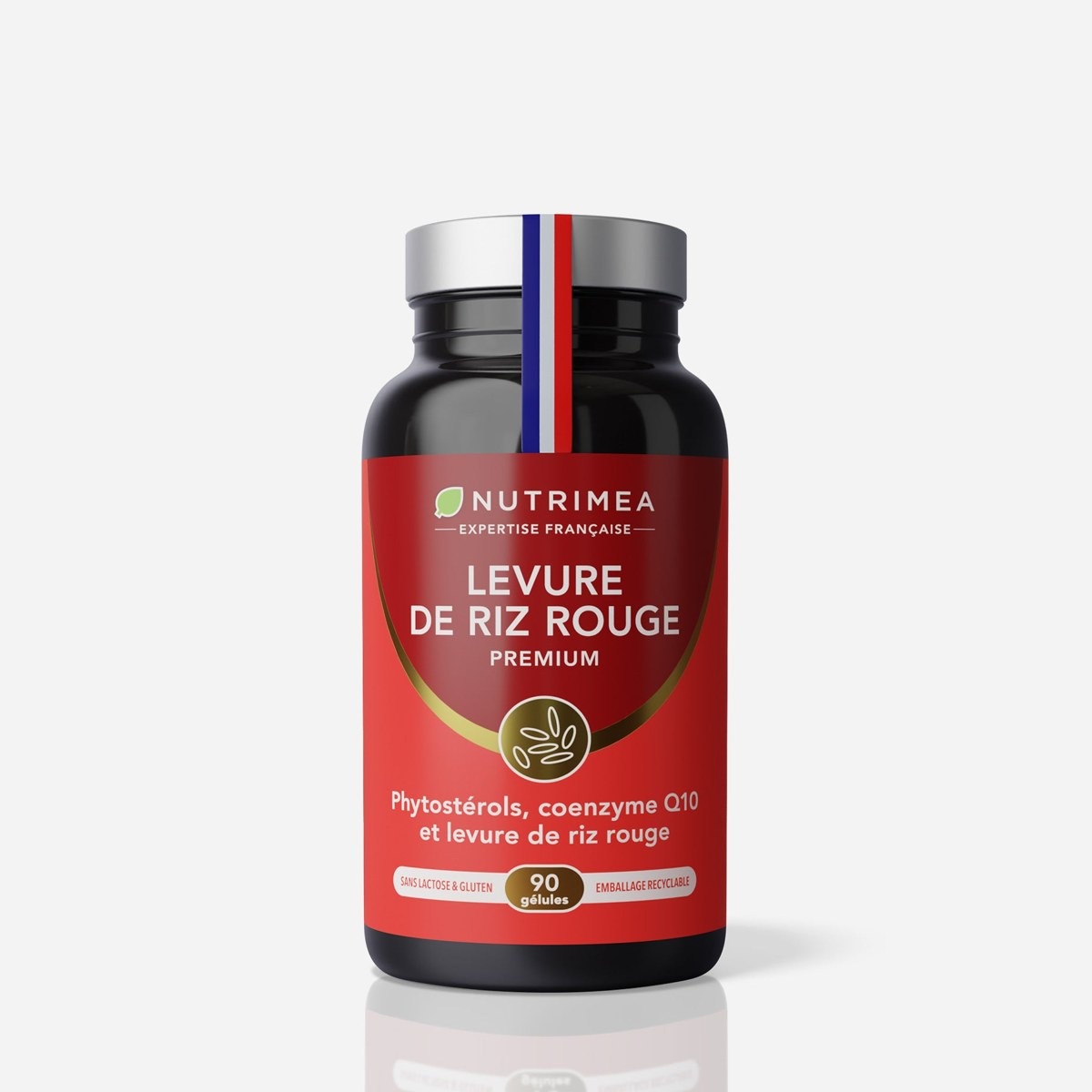
If you and your doctor decide to try it, Nutrimea’s Levure de Riz Rouge Premium stands out because it complies with the EU limit and its page lists every required warning:
- 2.8 mg of monacolin K a day (175 mg of red yeast rice standardized to 1.6%), under the 3 mg cap;
- 800 mg of pine plant sterols (microencapsulated Lipophytol®) and 30 mg of CoQ10;
- 3 capsules a day before the main meal; 90 capsules, a 30-day supply; vegan, gluten and lactose free;
- warnings: not during pregnancy or breastfeeding, under 18, over 70, or with statins or other cholesterol drugs; not with another red yeast rice product; no more than 3 mg of monacolins a day; ask your doctor;
- batch tests published on the page (microbiology, heavy metals); the brand highlights its “French expertise”;
- €23.90 per jar (price checked on 22/11/2026), about €0.80 a day.
How does the dose compare? 2.8 mg is close to the 3 mg used in the Heinz and Angelopoulos trials (15% to 17% LDL reduction with other formulas). 800 mg of sterols sits at the low end of the Ras meta-analysis range. These studies did not test this product, and EFSA’s caution applies to it too: no monacolin dose is considered risk-free. The page does not mention citrinin testing; you can ask the brand.
See Nutrimea Red Yeast Rice Premium →
Partner link: we earn a commission if you order through this link, at no extra cost to you.
Frequently asked questions
What is red yeast rice good for?
Lowering LDL cholesterol: about 1 mmol/L in older trials at higher doses, and 15% to 17% in two recent trials at 3 mg of monacolin K.
What are the side effects of red yeast rice?
The same as statins: muscle pain, rarely rhabdomyolysis, liver injury, digestive upset and skin reactions. Contaminated products have also caused kidney damage.
Is red yeast rice as good as a statin?
It lowered LDL as much as the statins compared in trials, but it is a low, variable dose of the same drug, without outcome trials for Western supplements. Don’t swap without your doctor.
Should I take red yeast rice with CoQ10?
Many products add it. It does not make red yeast rice safe to combine with a statin, and the trials above used combinations, not CoQ10’s own effect.
Who should not take red yeast rice?
Anyone on a statin or other cholesterol drug, pregnant or breastfeeding women, people under 18 or over 70, and people with liver, kidney or muscle disease.
Sources
- EFSA ANS Panel. Scientific opinion on the safety of monacolins in red yeast rice. EFSA Journal, 2018; 16(8): e05368. PubMed 32626016
- EFSA NDA Panel. Scientific Opinion on additional scientific data related to the safety of monacolins from red yeast rice. EFSA Journal, 2025; 23(2): e9276. PubMed 40027377
- Gerards M.C. et al. Red yeast rice results in significant LDL reduction but safety is uncertain. Atherosclerosis, 2015; 240(2): 415-23. PubMed 25897793
- Li P. et al. Red Yeast Rice for Hyperlipidemia: A Meta-Analysis of 15 High-Quality Randomized Controlled Trials. Front Pharmacol, 2022; 12: 819482. PubMed 35111069
- Lu Z. et al. Effect of Xuezhikang on coronary events in a Chinese population with previous myocardial infarction. Am J Cardiol, 2008; 101(12): 1689-93. PubMed 18549841
- Heinz T. et al. Low daily dose of 3 mg monacolin K from RYR reduces the concentration of LDL-C. Nutr Res, 2016; 36(10): 1162-1170. PubMed 27865358
- Angelopoulos N. et al. Low Dose Monacolin K Combined with Coenzyme Q10, Grape Seed, and Olive Leaf Extracts Lowers LDL Cholesterol. Nutrients, 2023; 15(12): 2682. PubMed 37375586
- Fogacci F. et al. Safety of red yeast rice supplementation: meta-analysis of randomized controlled trials. Pharmacol Res, 2019; 143: 1-16. PubMed 30844537
- Mazzanti G. et al. Adverse reactions to dietary supplements containing red yeast rice. Br J Clin Pharmacol, 2017; 83(4): 894-908. PubMed 28093797
- Sekiguchi Y. et al. Beni-koji Choleste-Help or Puberulic Acid-Induced Kidney Injury. Kidney Int Rep, 2026; 11(4): 103793. PubMed 41732753
- Ras R.T. et al. LDL-cholesterol-lowering effect of plant sterols and stanols across different dose ranges. Br J Nutr, 2014; 112(2): 214-9. PubMed 24780090
- Santé.fr (French public health information service). Pourquoi faut-il se méfier de la levure de riz rouge ?, 18/10/2024. sante.fr