Cholesterol: which foods to choose
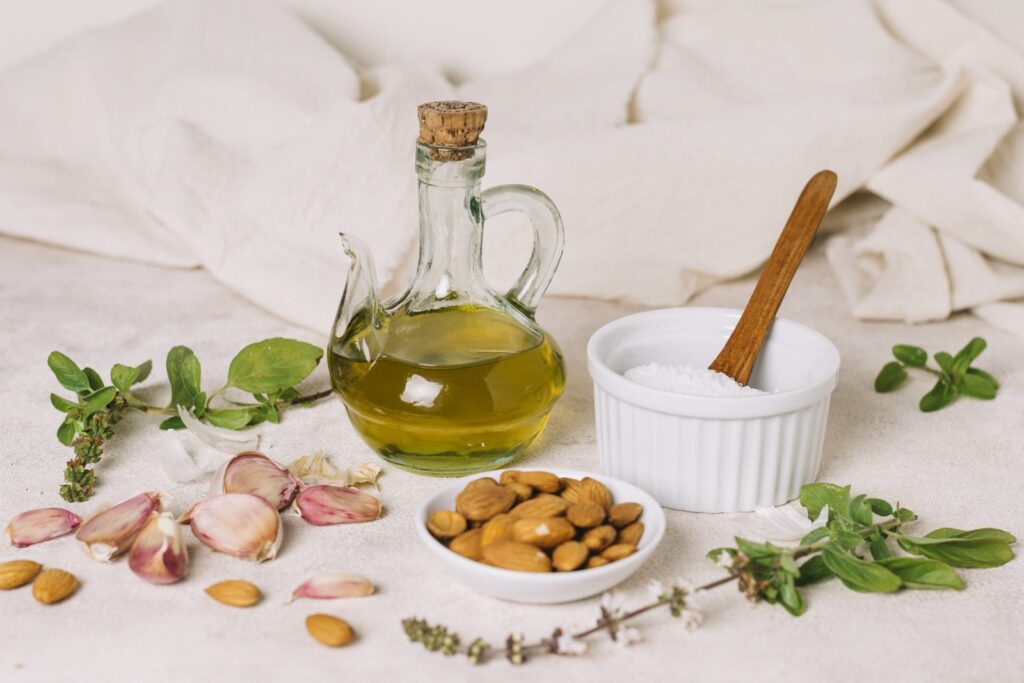
To lower your LDL cholesterol through your plate, two levers matter more than all the others: replacing saturated fat with unsaturated fat (rapeseed, walnut and olive oils, nuts, oily fish) and eating viscous fibre every day (oats, barley, pulses). Foods fortified with plant sterols add a measurable effect, but they do not replace the rest of your diet or prescribed treatment. Here is what the health authorities and the trials say, with the amounts that actually make a difference.
👉 Free tool: BMI calculator: get your result in 30 seconds, no sign-up needed.
Your lipid profile in 2 minutes
Cholesterol travels in the blood carried by lipoproteins. The one we watch most closely is LDL cholesterol: it is the one that builds up in the artery walls. HDL cholesterol makes the opposite journey, and triglycerides are another family of blood fats, very sensitive to sugar and alcohol. Hypercholesterolaemia means an excess of cholesterol in the blood, most often LDL.
There is no single « right number » for LDL that applies to everyone. The European guidelines from the European Society of Cardiology and the European Atherosclerosis Society (ESC/EAS, 2019) set a target that depends on your overall cardiovascular risk level, assessed by your doctor.
| Cardiovascular risk level | LDL cholesterol target (mmol/L) | Equivalent in g/L |
|---|---|---|
| Low | below 3.0 | below 1.16 |
| Moderate | below 2.6 | below 1.00 |
| High | below 1.8 | below 0.70 |
| Very high | below 1.4 | below 0.55 |
Take one thing from this table: the higher your risk, the lower the target, and the more likely diet alone is to fall short. For someone at low or moderate risk, diet may be enough to stay on target. For someone at high risk, it comes on top of treatment.
What really moves your LDL
There is plenty of advice about cholesterol, and not all of it carries the same weight. Here are the levers, ranked by the strength of the evidence.
Saturated fat: lever number one
Saturated fatty acids are the ones that raise LDL the most. The 2020 Cochrane review (15 randomised trials, 56,675 participants followed for at least two years) concludes that cutting saturated fat reduces the risk of combined cardiovascular events by 17%. The authors note that the bigger the cut in saturated fat, the bigger the drop in blood cholesterol, and the clearer the benefit.
In France, Anses sets saturated fat at a maximum of 12% of energy intake, including a maximum of 8% for the trio of lauric, myristic and palmitic acids, the most atherogenic ones. The European Union has also approved an official claim: « replacing saturated fats in the diet with unsaturated fats contributes to the maintenance of normal blood cholesterol levels ».
Trans fatty acids: to be avoided
Industrial trans fatty acids (partially hydrogenated oils) are even worse than saturated fat. In the meta-analysis of 60 trials by Mensink et al. (American Journal of Clinical Nutrition, 2003), replacing trans fat improves the ratio of total cholesterol to HDL almost twice as much as replacing the same amount of saturated fat. The authors conclude that the risk falls most when both trans and saturated fats are replaced with unsaturated fats. On a label, the words « partially hydrogenated » are the signal to look out for. Our guide to reading food labels helps you spot them.
Dietary cholesterol: a smaller effect than you might think
This is the most persistent myth. The meta-analysis by Berger et al. (American Journal of Clinical Nutrition, 2015) pooled 40 studies. In the trials, dietary cholesterol does raise LDL, by 6.7 mg/dL on average, but the effect remains moderate. In large cohorts, it is not significantly associated with coronary heart disease. The authors stress that the studies are heterogeneous and do not allow a firm conclusion. Anses does not set a numerical ceiling for dietary cholesterol and points out that it comes exclusively from animal products.
In practice: keeping an eye on saturated fat pays off more than counting every milligram of cholesterol. The two often overlap (butter, cheese, cold cuts), but not always: the egg is high in cholesterol and low in saturated fat. For a sensible amount, see our guide on how many eggs a day.
Viscous fibre and plant sterols
So-called viscous soluble fibres form a gel in the gut and limit the reabsorption of cholesterol. Phytosterols compete with cholesterol at the point of absorption. These two mechanisms convinced the European Food Safety Authority (EFSA): they carry the most specific claims, detailed below.
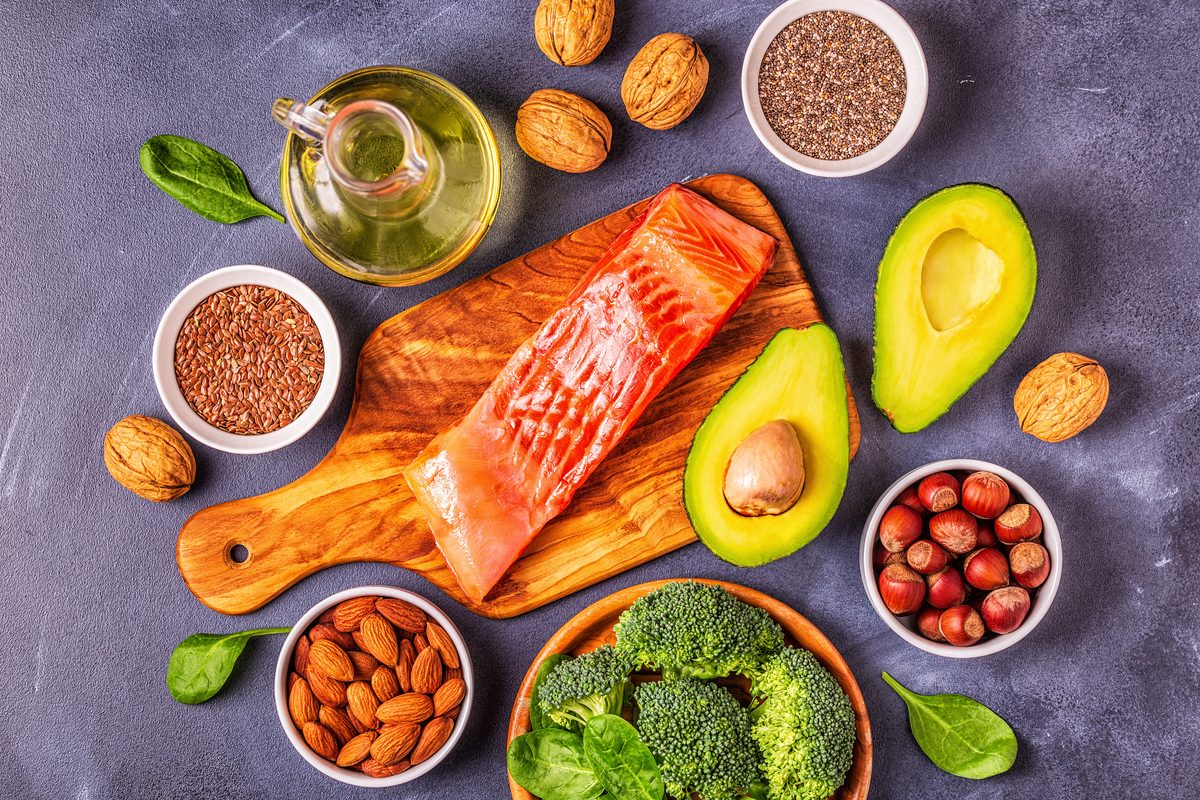
The foods to choose, one by one
Oats and barley: beta-glucans
Oats and barley contain beta-glucans, a viscous fibre. It is one of the few everyday foods to benefit from a European health claim for risk reduction: « oat beta-glucan has been shown to lower/reduce blood cholesterol ». The condition is clear: the effect is obtained with 3 g of beta-glucans a day, and a product can only make this claim if it provides at least 1 g per portion. In practice, that means about three portions of beta-glucan-rich foods spread across the day: oat flakes at breakfast, pearl barley or barley bread at a meal, oat bran in a yoghurt.
On the research side, the meta-analysis by Ho et al. (British Journal of Nutrition, 2016, 58 trials, 3,974 participants) shows that a median dose of 3.5 g a day of oat beta-glucans lowers LDL by 0.19 mmol/L compared with control diets. It is a modest but real effect, which adds to your other changes.
The beta-glucan content varies a lot from one product to another and does not appear in the Ciqual table: rely on the label. For total fibre, Ciqual gives 11.2 g per 100 g of oat flakes, 16.7 g for oat bran and 17.3 g for raw wholegrain barley.
Pulses
Lentils, chickpeas and white beans combine fibre, plant protein and almost no saturated fat (0.09 g per 100 g of cooked lentils according to Ciqual). Santé publique France recommends eating them at least twice a week, and notes that more than 85% of adults fall short. Swapping a red meat dish for a pulse dish kills two birds with one stone: less saturated fat, more fibre.
Nuts
Walnuts, almonds, hazelnuts and pistachios: the official recommendation is a small handful a day, unsalted. The review by Guasch-Ferré et al. (Nutrients, 2023), which looked at 19 meta-analyses of randomised trials, finds a consistent drop in LDL, between 0.09 and 0.26 mmol/L depending on the analysis, with no effect on HDL. The effect is stronger when starting cholesterol is high. To size your handful, see how many walnuts a day and how many almonds a day.
The right oils
Santé publique France advises favouring rapeseed and walnut oils, rich in omega-3, and olive oil. These oils are low in saturated fat and take the place of butter or cream. EFSA has approved two claims that concern them: alpha-linolenic acid (ALA) contributes to the maintenance of normal blood cholesterol levels at 2 g a day, and linoleic acid at 10 g a day. Rapeseed oil provides 7.8 g of ALA per 100 g and walnut oil 11.9 g (Ciqual). Let’s do the maths: 10 g of rapeseed oil provides about 0.8 g of ALA, already 40% of the 2 g target.
Oily fish
The long-chain omega-3s (EPA and DHA) in oily fish have little effect on LDL, but they lower triglycerides. The European claim is precise: EPA and DHA contribute to the maintenance of normal blood triglyceride levels from 2 g a day, a dose that is rarely reached without a supplement, and without exceeding 5 g a day from supplements. At dietary doses, 250 mg a day of EPA and DHA contributes to the normal function of the heart. The official guideline: fish twice a week, including one oily fish (sardine, mackerel, herring, salmon). You will find the details in our guides to omega-3 and how much fish per week.
Fruit, vegetables and pectins
Pectins, fibres found notably in apples and citrus fruit, also carry a European claim, but at a dose of 6 g a day that is mostly reached with fortified products. Fruit and vegetables remain useful for another reason: they provide fibre, replace fattier desserts and snacks, and are associated with a lower cardiovascular risk according to Santé publique France. The guideline remains at least five portions a day. Our selection of high-fibre vegetables helps you choose.
Soy: useful, but no miracle
Tofu and other soy products are good alternatives to meat, low in saturated fat. However, in 2010 EFSA rejected the claim « soy protein reduces blood cholesterol », as no cause-and-effect relationship had been established. Soy therefore helps mainly by substitution.
The fat showdown according to Ciqual
To choose what goes in your frying pan or on your bread, the key criterion is the share of saturated fat. The differences are striking.
| Fat (per 100 g) | Saturated fatty acids | Monounsaturated fatty acids | Omega-3 ALA | Cholesterol |
|---|---|---|---|---|
| Rapeseed oil | 7.3 g | 59.7 g | 7.8 g | 0 mg |
| Walnut oil | 10.0 g | 16.8 g | 11.9 g | 0 mg |
| Extra virgin olive oil | 15.2 g | 73.1 g | 0.65 g | 0 mg |
| Refined palm oil | 49.3 g | 37.0 g | 0.2 g | 0 mg |
| Unsalted butter (80% fat) | 60.0 g | 19.0 g | 0.35 g | 235 mg |
| Refined coconut oil | 86.5 g | 5.8 g | not available | 0 mg |
| Thick cream (30% fat) | 19.5 g | 6.1 g | 0.11 g | 87.3 mg |
Two lessons. First, coconut oil, often presented as « healthy », is the fat with the most saturated fat in the table, well ahead of butter. Its lauric acid strongly increases total cholesterol, partly via HDL, and its real effect on coronary risk remains uncertain according to Mensink et al.: nothing justifies making it your main cooking fat. Second, a vegetable oil can contain no cholesterol at all and still raise yours, like palm or coconut oil: it is the fatty acid composition that counts.
Foods fortified with plant sterols
Some margarines, drinking yoghurts and fermented milks are fortified with plant sterols or stanols. Their effect is documented and governed by European law (Regulation 686/2014): with 1.5 to 2.4 g a day, LDL falls by 7 to 10%; with 2.5 to 3 g a day, by 10 to 12.5%. The effect appears within 2 to 3 weeks. For simply maintaining normal blood cholesterol, the general claim requires at least 0.8 g a day.
These products are of interest to someone whose LDL is moderately high. They are of no interest to someone whose cholesterol is normal, and the regulations require it to be stated that they should be part of a varied and balanced diet. If you take cholesterol-lowering medication, talk to your doctor before adding them.
What is best cut back
- Cold cuts and processed meat: 150 g maximum per week, or about three slices of cooked ham, according to Santé publique France. Dry sausage contains 11.3 g of saturated fat per 100 g (Ciqual).
- Red meat (beef, pork, veal, lamb, offal): 500 g maximum per week, or about three to four steaks. Favour poultry and alternate with fish, eggs and pulses. See how much red meat per week.
- Butter, cream, high-fat cheeses: emmental contains 19.7 g of saturated fat per 100 g (Ciqual). The official guideline remains two dairy products a day: choose a plain yoghurt and a sensible portion of cheese. Our guide on how much cheese per day details the portions.
- Ultra-processed foods: biscuits, pastries, fatty ready meals. Santé publique France recommends limiting them and favouring home cooking.
- Sugar and alcohol if they push up your triglycerides: Santé publique France sets a maximum of two alcoholic drinks a day and not every day, and no more than one sugary drink a day.
Two eating patterns with proven results
The Mediterranean diet
The PREDIMED trial (New England Journal of Medicine, corrected version of 2018) followed 7,447 people aged 55 to 80 at high cardiovascular risk. The « Mediterranean + extra virgin olive oil » group had a 31% lower risk of a major cardiovascular event (hazard ratio 0.69) and the « Mediterranean + nuts » group a 28% lower risk (0.72), compared with the control group, who were simply told to cut back on fat. Full details are in our guide to the Cretan diet.
The « Portfolio » diet: adding up the cholesterol-lowering foods
The Portfolio diet combines precisely the foods described above: nuts, plant protein, viscous fibre and plant sterols. The meta-analysis by Chiavaroli et al. (Progress in Cardiovascular Diseases, 2018, 7 comparisons, 439 participants) measures an LDL reduction of about 17% (0.73 mmol/L) when it is added to a diet already low in saturated fat. It is the most telling proof that small effects add up.
A typical day for your cholesterol
Here is what a day that ticks the main boxes might look like. Adapt the amounts to your appetite and needs.
- Breakfast: an oat porridge with red berries made with semi-skimmed milk or a plant-based drink, a spoonful of oat bran, a few walnut kernels.
- Lunch: a sardine and white bean salad dressed with rapeseed oil, wholemeal bread, a piece of fruit.
- Snack: a small handful of almonds and an apple.
- Dinner: a lentil and vegetable soup, a drizzle of olive oil, a plain yoghurt.
Over the week, aim for two fish meals including one oily fish, at least two pulse dishes and limited red meat. For more ideas, browse our cholesterol-friendly recipes, or try the oven-baked mustard mackerel.
Common myths about cholesterol
- « You have to cut out eggs. » False in most cases. Eggs are high in cholesterol (372 mg per 100 g of raw whole egg according to Ciqual, 612 mg per 100 g of cooked yolk), but the effect of dietary cholesterol on LDL is modest. It is mainly the saturated fats that often come with them (bacon, butter) that cause problems.
- « An oil with no cholesterol is necessarily good. » False: all vegetable oils are cholesterol-free, but coconut oil contains 86.5 g of saturated fat per 100 g.
- « Diet is always enough. » Not necessarily. Even the Portfolio diet, the most effective one tested, lowers LDL by about 17%. If your target is below 1.8 mmol/L and you are starting from far away, the gap to close may be much bigger: that is where treatment takes over.
- « Reduced-fat products lower cholesterol. » Not necessarily. A reduced-fat product can be high in sugar. Only a product that is low in saturated fat or fortified with sterols has a proven benefit.
- « High HDL protects against everything. » LDL is the main target in the ESC/EAS guidelines. Good HDL does not make up for LDL above your target.
Precautions
- Never replace prescribed treatment with food or supplements. Diet is a support.
- Red yeast rice: it contains monacolin K, a molecule identical to lovastatin, a medicine from the statin family. In its opinion of 14 February 2014, Anses analysed 25 admissible reports of adverse effects and strongly advises against these supplements for pregnant or breastfeeding women, children and teenagers, and people who have previously tolerated a statin badly. Ask your doctor for advice before taking it.
- Powdered fibres (glucomannan, guar gum, psyllium): EFSA requires a warning about the risk of choking if they are taken without enough water or in the event of swallowing difficulties. See our guide on psyllium.
- Plant sterols: only useful if your LDL is high, and to be discussed with your doctor if you are already being treated.
Frequently asked questions
How long does it take for diet to lower cholesterol?
For plant sterols, European regulations indicate an effect within 2 to 3 weeks. For other changes, the oat beta-glucan trials lasted at least 3 weeks. A blood test is generally done a few weeks to a few months after the changes, depending on what your doctor decides.
How many oats do you need for an effect?
The target is 3 g of beta-glucans a day. The content varies between products: foods that carry the claim provide at least 1 g per portion, so you need about three portions a day. Read the label and combine with barley and oat bran.
Is cheese forbidden if you have high cholesterol?
No. It is high in saturated fat, so keep it to a sensible portion, within the limit of two dairy products a day recommended by Santé publique France, and favour plain yoghurts too.
Do you have to stop eating meat?
No. Santé publique France recommends limiting meat other than poultry to 500 g a week and cold cuts to 150 g a week, and alternating with poultry, fish, eggs and pulses. Choosing lean cuts and replacing a few meals with pulses is often enough to cut saturated fat significantly.
Do omega-3 supplements lower cholesterol?
They act mainly on triglycerides, from 2 g of EPA and DHA a day according to the European claim, not on LDL. Using them at this dose should be discussed with a doctor. Our omega-3 comparison details the content of the products.
This article is for information only and does not replace the advice of your doctor or a dietitian.
Our sources
- Mach F, Baigent C, Catapano AL et al. 2019 ESC/EAS Guidelines for the management of dyslipidaemias: lipid modification to reduce cardiovascular risk. European Heart Journal, 2020;41(1):111-188. PMID 31504418.
- Hooper L, Martin N, Jimoh OF, Kirk C, Foster E, Abdelhamid AS. Reduction in saturated fat intake for cardiovascular disease. Cochrane Database of Systematic Reviews, 2020. PMID 32827219.
- Ho HV, Sievenpiper JL, Zurbau A et al. The effect of oat β-glucan on LDL-cholesterol, non-HDL-cholesterol and apoB for CVD risk reduction: a systematic review and meta-analysis of randomised-controlled trials. British Journal of Nutrition, 2016. PMID 27724985.
- Berger S, Raman G, Vishwanathan R, Jacques PF, Johnson EJ. Dietary cholesterol and cardiovascular disease: a systematic review and meta-analysis. American Journal of Clinical Nutrition, 2015. PMID 26109578.
- Guasch-Ferré M, Tessier AJ, Petersen KS et al. Effects of Nut Consumption on Blood Lipids and Lipoproteins: A Comprehensive Literature Update. Nutrients, 2023. PMID 36771303.
- Chiavaroli L, Nishi SK, Khan TA et al. Portfolio Dietary Pattern and Cardiovascular Disease: A Systematic Review and Meta-analysis of Controlled Trials. Progress in Cardiovascular Diseases, 2018. PMID 29807048.
- Estruch R, Ros E, Salas-Salvadó J et al. Primary Prevention of Cardiovascular Disease with a Mediterranean Diet Supplemented with Extra-Virgin Olive Oil or Nuts. New England Journal of Medicine, 2018. PMID 29897866.
- Mensink RP, Zock PL, Kester AD, Katan MB. Effects of dietary fatty acids and carbohydrates on the ratio of serum total to HDL cholesterol and on serum lipids and apolipoproteins: a meta-analysis of 60 controlled trials. American Journal of Clinical Nutrition, 2003. PMID 12716665.
- European Commission. Regulation (EU) No 432/2012 establishing a list of permitted health claims (beta-glucans, ALA, linoleic acid, EPA and DHA, pectins, plant sterols, glucomannan, guar gum), 2012; Regulation (EU) No 1160/2011 (oat beta-glucan, rejection of the claim on soy protein), 2011; Regulation (EU) No 686/2014 (plant sterols and stanols), 2014.
- Anses. Les lipides : références nutritionnelles (acides gras saturés, acides gras essentiels), accessed in 2026.
- Anses. Avis relatif aux risques liés à la présence de « levure de riz rouge » dans les compléments alimentaires, saisine 2012-SA-0228, 14 February 2014.
- Santé publique France, Manger Bouger. L’essentiel des recommandations sur l’alimentation (2019 recommendations for adults).
- Anses. Table de composition nutritionnelle des aliments Ciqual 2025.
Further reading
Food pages: White beans, Chickpeas
Recipes to try: Lentil balls in tomato sauce, Warm lentil and salmon salad, Egyptian koshari