Berberine: benefits, side effects, drug interactions and dosage
The short answer
Berberine is an alkaloid extracted from plants such as barberry (Berberis vulgaris). It is one of the few supplements with a measurable effect on blood sugar in controlled trials: on average, fasting glucose drops by about 9 mg/dL and HbA1c by about 0.4 percentage points compared with placebo. It also slightly lowers LDL cholesterol and triglycerides. But it is not “nature’s Ozempic”: average weight loss is under 1 kg (2 lb). And because it acts like a real drug, it often causes digestive side effects, interacts with many medicines, and should be avoided in pregnancy and breastfeeding.
This article is for information and does not replace medical advice. If you have diabetes or take any medication, do not take berberine without talking to your doctor.
What is berberine?
Berberine is a yellow compound found in the bark and roots of several plants: barberry, Chinese goldthread (coptis), goldenseal and Oregon grape. It has a long history in Asian traditional medicine, especially for infectious diarrhoea. Supplements usually contain purified berberine hydrochloride (berberine HCl).
Today’s interest is metabolic. In the lab, berberine activates AMPK, an enzyme that acts as the cell’s “energy sensor”, somewhat like the diabetes drug metformin. It also affects gut bacteria and sugar absorption. These mechanisms explain the research interest, but what matters are human trials.
Berberine benefits: what the studies show
Blood sugar: a real but modest effect
The strongest summary to date (Zhao et al., Journal of Nutrition, 2023) pooled 20 randomised placebo-controlled trials with 1,761 participants:
| Marker | Average effect of berberine vs placebo | Trials |
|---|---|---|
| Fasting glucose | -0.52 mmol/L (about -9 mg/dL) | 18 trials, 1,522 people |
| HbA1c | -4.5 mmol/mol (about -0.4 percentage points) | 7 trials, 756 people |
| 2-hour post-meal glucose | -1.81 mmol/L (about -33 mg/dL) | 4 trials, 501 people |
| Fasting insulin | -2.36 mU/L | 11 trials, 966 people |
| Insulin resistance (HOMA-IR) | -0.85 | 12 trials, 1,065 people |
Drops were larger in people with diabetes: the higher the starting level, the more room to fall. The authors describe a modest improvement in glucose metabolism. A small 2008 Chinese study (Yin et al., 36 newly diagnosed patients) found an effect similar to metformin at 1.5 g a day for 3 months. That is exactly why caution matters: something that lowers blood sugar like a drug can also add up with a drug.
Limits: most trials were run in China, lasted 2 to 6 months, and used different preparations and doses. No trial has shown fewer diabetes complications (heart, kidneys, eyes). Berberine does not replace prescribed treatment, diet or exercise: see our type 2 diabetes diet guide and our guide to the glycaemic index.
Cholesterol and triglycerides
A meta-analysis of 16 trials (Ju et al., Phytomedicine, 2018, 2,147 participants) found average drops of 0.47 mmol/L (about 18 mg/dL) in total cholesterol, 0.38 mmol/L (about 15 mg/dL) in LDL and 0.28 mmol/L (about 25 mg/dL) in triglycerides. The authors warn that trial quality was often low and results varied widely. Food still comes first: see foods to lower cholesterol.
Berberine for weight loss: why it is not “nature’s Ozempic”
On social media, berberine is often sold as a natural alternative to GLP-1 drugs such as semaglutide (Ozempic, Wegovy). The numbers do not back this up:
| Berberine | Semaglutide 2.4 mg | |
|---|---|---|
| Evidence | Meta-analysis of 23 trials | STEP 1 trial, 1,961 adults, 68 weeks |
| Weight loss beyond control group | -0.88 kg (about 2 lb) on average | -12.7 kg (about 28 lb) on average |
| Status | Dietary supplement | Prescription drug |
Berberine can support a healthier routine; it does not replace one.
What about berberine patches? We found no published clinical trial of them. A 2026 review (White et al., Annals of Pharmacotherapy) looked at 24 “natural GLP-1” patches sold in the US, many containing berberine: none posted a certificate of analysis, and many used deceptive advertising. Under US law, dietary supplements must be swallowed. All the studies above are on oral berberine.
Berberine side effects, interactions and safety
Digestive side effects
These are the most common: constipation, diarrhoea, bloating, cramps or nausea. In the Yin study, 34.5% of patients had temporary digestive problems at 1.5 g a day. No liver or kidney damage was seen in that study (a frequent question: “is berberine bad for your kidneys?”), and meta-analyses report no serious effects, but trials are short. Splitting the dose across meals is the usual way to reduce these issues.
Drug interactions: the main concern
In healthy volunteers, two weeks of berberine (300 mg three times a day) slowed three liver enzymes that clear many drugs (Guo et al., 2012): CYP2D6 activity fell sharply, CYP2C9 too, and exposure to midazolam (cleared by CYP3A4) rose by 40%. In practice, berberine can raise blood levels of some medicines and their side effects. Watch out especially for:
- diabetes drugs (metformin, sulfonylureas, insulin): effects can add up and cause low blood sugar;
- blood thinners (anticoagulants and antiplatelets): changes in how they are cleared can alter bleeding risk;
- drugs cleared by these enzymes: some antidepressants, beta-blockers, antiarrhythmics, statins, immunosuppressants (ciclosporin, tacrolimus);
- blood pressure medicines, whose effect berberine may strengthen.
This list is not complete. If you take any long-term medication, ask your doctor or pharmacist first. Our blood sugar supplement comparison also covers the French food safety agency’s cautious 2019 opinion on berberine.
Pregnancy, breastfeeding and children: avoid
Berberine displaces bilirubin from its carrier proteins in the blood (Chan, 1993), raising concern about severe jaundice in newborns (kernicterus). It is therefore not for use in pregnancy or breastfeeding, nor for children. Our pregnancy diet guide covers the basics.
How to take berberine (doses studied)
- Dose in trials: usually 900 mg to 1.5 g a day, split into two or three doses (for example 300 mg or 500 mg three times a day).
- Best time to take berberine: with or just before meals, as in the studies; it is also better tolerated this way.
- Duration: trials last 2 to 6 months. Beyond that, data are lacking: keep to a limited course and check in with your doctor.
- Follow-up: if your blood sugar is high, a blood test before and after tells you whether it actually helps.
Nutrition•pro: a 97% pure berberine
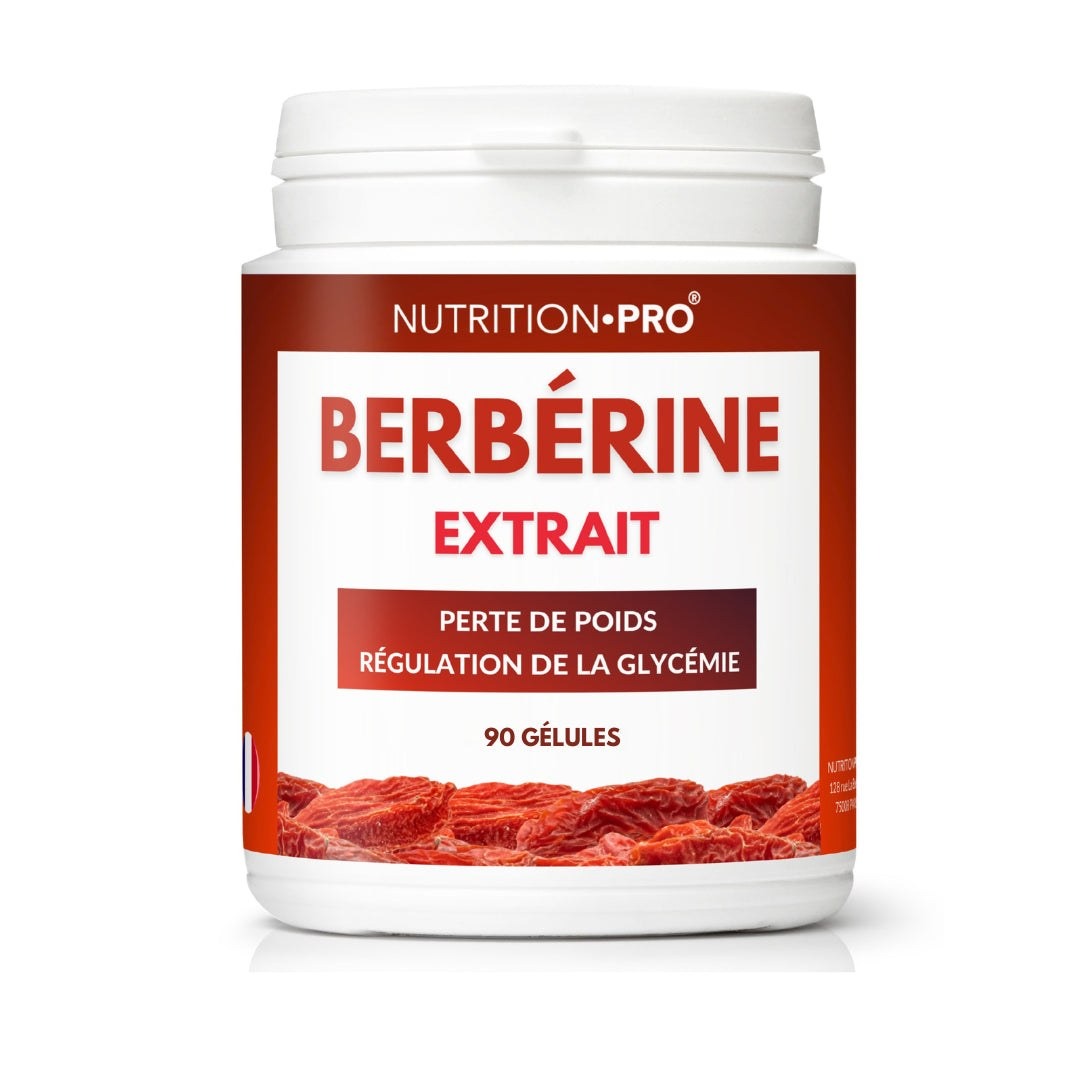
Nutrition•pro is a French brand based in Paris, which says it designs and makes its formulas in France. Its Berberine focuses on purity and a dose in line with the trials:
- 97% berberine extract from the root of Berberis vulgaris;
- 3 capsules a day, ideally before main meals, for 1 g of 97% extract (about 970 mg of berberine HCl): comparable to the 900 mg to 1.5 g in studies, and split across meals as in the trials;
- vegetable capsules, with 300 mg of coconut flour;
- 90 capsules, a 30-day course;
- €34.99 per bottle (price checked on 22/11/2026), about €1.17 a day.
This is the dose of an ingredient that really acts, so it calls for the precautions above. It is meant for healthy adults, not pregnant or breastfeeding, who do not take medication that could interact; if in doubt, show the label to your pharmacist.
Promo code: SEOCONSULTINGSL for 10% off your order, €31.49 per bottle, about €1.05 a day (as of 22/11/2026).
Partner link: we earn a commission if you order through this link, at no extra cost to you.
Frequently asked questions
What does berberine do for the body?
Its best-documented effects are on blood sugar (fasting, after meals, HbA1c) and, to a lesser extent, LDL cholesterol and triglycerides. Effects are modest and were mostly measured in people with type 2 diabetes or high blood lipids.
Is berberine safe?
Short-term trials report no serious side effects, but digestive issues are common, it interacts with many drugs, and it is not for pregnancy or breastfeeding. Taken with diabetes medication, it can cause low blood sugar.
Does berberine help with weight loss?
Very little: the latest meta-analysis finds 0.88 kg (about 2 lb) more lost than with placebo, plus a small drop in waist size. That is far from the 12.7 kg difference seen with semaglutide in STEP 1.
Can I take berberine with metformin?
Not without medical advice. Both lower blood sugar and the effects could add up.
When should I take berberine?
In studies, it is taken two or three times a day with meals, when blood sugar rises, and it is better tolerated that way.
Sources
- Zhao J.V. et al. Overall and Sex-Specific Effect of Berberine on Glycemic and Insulin-Related Traits: a Systematic Review and Meta-Analysis of Randomized Controlled Trials. J Nutr, 2023; 153(10): 2939-2950. PubMed 37598753
- Ju J. et al. Efficacy and safety of berberine for dyslipidaemias: A systematic review and meta-analysis of randomized clinical trials. Phytomedicine, 2018; 50: 25-34. PubMed 30466986
- Elahi Vahed I. et al. The effect of berberine on obesity indices: a systematic review and meta-analysis. Int J Obes, 2026; 50(1): 53-73. PubMed 41310257
- Yin J. et al. Efficacy of berberine in patients with type 2 diabetes mellitus. Metabolism, 2008; 57(5): 712-7. PubMed 18442638
- Guo Y. et al. Repeated administration of berberine inhibits cytochromes P450 in humans. Eur J Clin Pharmacol, 2012; 68(2): 213-7. PubMed 21870106
- Wilding J.P.H. et al. Once-Weekly Semaglutide in Adults with Overweight or Obesity (STEP 1). N Engl J Med, 2021; 384(11): 989-1002. PubMed 33567185
- White C.M. et al. Transdermal “Natural GLP-1” Dietary Supplements Violate Law and Place Patients at Risk. Ann Pharmacother, 2026; 60(8): 813-816. PubMed 41480958
- Chan E. Displacement of bilirubin from albumin by berberine. Biol Neonate, 1993; 63(4): 201-8. PubMed 8513024