Astaxanthin: benefits, side effects, sources and safe dose
The short answer
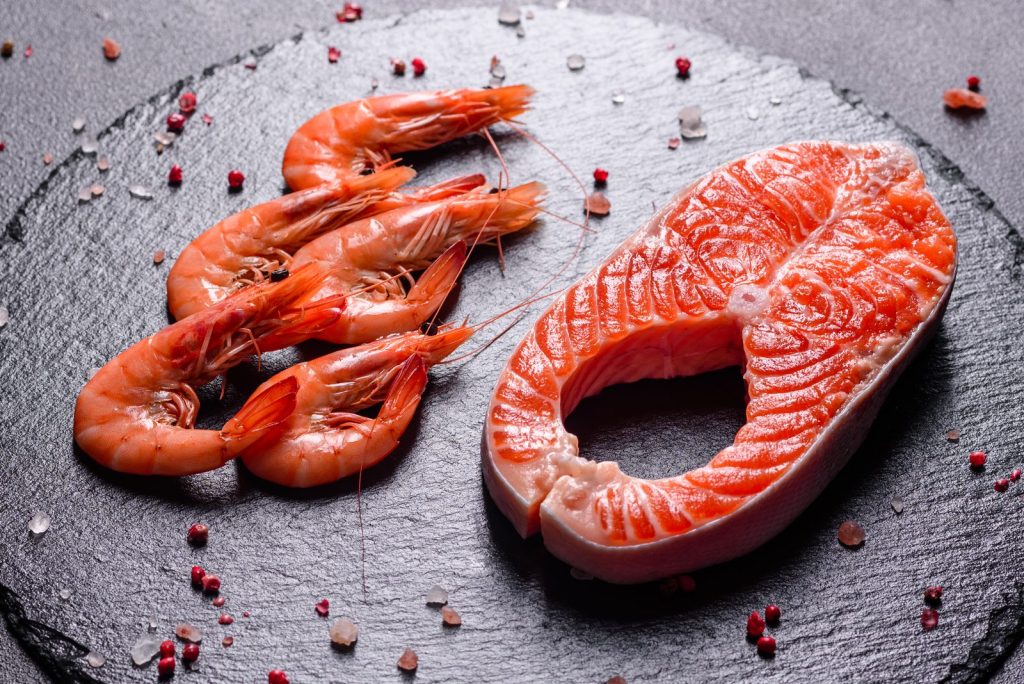
Astaxanthin is the red pigment in salmon, shrimp and krill. It is made by a microalga, Haematococcus pluvialis, which is where most supplements come from. It is a strong antioxidant in the lab, but human evidence is modest: in trials it slightly improves skin moisture and elasticity, lowers some oxidation markers and limits the rise of a muscle enzyme after exercise, without improving athletic performance. On safety, the European Food Safety Authority (EFSA) considers 8 mg a day from supplements safe for adults, but not for children and young teens. 12 mg products go beyond the assessed dose.
This article is for information and does not replace medical advice. If you take medication or are pregnant, check with your doctor or pharmacist before any supplement.
What is astaxanthin?
Astaxanthin is a carotenoid, like the beta-carotene in carrots or the lutein in spinach. It is red and fat-soluble.
Microscopic algae make it. Krill and shrimp eat the algae, and fish that eat them store it in their flesh: it is what makes salmon and trout pink, and shrimp turn red when cooked.
Sources: algae, salmon, krill
| Source | What to know |
|---|---|
| Haematococcus pluvialis algae (supplements) | Main source of “natural” capsules, as a CO2-extracted oleoresin; EFSA has assessed an extract with about 10% astaxanthin |
| Wild salmon | About 10 times more astaxanthin than farmed salmon in one US analysis |
| Cooking salmon | 35% to 57% of astaxanthin lost, depending on method and salmon type |
| Krill oil | Naturally contains astaxanthin along with omega-3s |
Eating oily fish once or twice a week already gives you some, plus omega-3s: see our guide to omega-3 foods and supplements.
Astaxanthin benefits: what the research shows
It is often sold as “the most powerful antioxidant”. That holds in a test tube; what matters is human trials. Here are recent meta-analyses of randomized, placebo-controlled trials:
| Area | Measured | Result |
|---|---|---|
| Skin (9 oral trials) | Moisture, elasticity, wrinkles | Better moisture and elasticity; no significant change in wrinkles |
| Oxidative stress (12 trials, 380 people) | Malondialdehyde (MDA), inflammation markers | Lower MDA; CRP and TNF-alpha unchanged |
| Exercise (24 trials) | VO2max, time trial, power; recovery markers | No performance gain; slightly lower creatine kinase (CK) |
| Cholesterol, blood sugar, blood pressure (14 studies) | LDL, glucose, HbA1c, weight, BP | No effect, except a small HDL rise |
| Overweight and obesity (16 trials, 694 people) | Lipids, inflammation, weight | Small drops in lipids and inflammation; weight and BP unchanged; low to very low certainty |
A lower oxidation marker shows the compound is active, but a marker is not a disease prevented: no trial shows it prevents heart disease, cancer or aging. Trials are small and short. For antioxidants with real-world value, start with your plate: see our guide to antioxidant foods.
Astaxanthin for skin
This is the most promising area: better moisture and elasticity versus placebo, but no significant wrinkle reduction. It does not replace sunscreen. If skin is your goal, also look at marine collagen.
Astaxanthin for exercise
The latest meta-analysis (Liu, 2026) found no gain in VO2max, endurance or power, only slightly lower creatine kinase after exercise, a hint of better recovery.
Astaxanthin benefits for women: eyes, hair, liver, thyroid
Many claims, little data. Eye-strain trials often use blends, so astaxanthin’s own effect is unclear. Human data on hair and liver are thin, and we found no human study on the thyroid in PubMed.
Astaxanthin side effects and dangers
Algal astaxanthin is an authorized novel food in the EU. In 2020, EFSA assessed 8 mg a day from supplements on top of diet, using an acceptable daily intake (ADI) of 0.2 mg per kg of body weight (14 mg a day for a 70 kg adult):
| Age | 8 mg/day supplement + diet |
|---|---|
| Adults | Safe |
| Teens 14 to 17 | Reach the ADI |
| Children 10 to 13 | ADI exceeded by 28% |
| Infants 4 to 6 months | ADI exceeded by up to 524% |
- Side effects: trials report no notable problems at usual doses, but they are small, so rare effects are not well known;
- Pregnancy and breastfeeding: no data; skip it or ask your doctor;
- Medications: interactions are poorly studied; if you take blood thinners, blood pressure or diabetes drugs, show the label to your pharmacist;
- Shellfish allergy: algal astaxanthin is fine, but krill oil comes from a crustacean.
How to take astaxanthin
- Dose: commercial capsules analyzed in one US study held 3 to 10 mg; some meta-analysis effects only appeared at 12 mg or more. Stay at 8 mg or less to match EFSA’s assessment.
- Timing: with a meal containing some fat.
- Duration: reassess after 2 to 3 months; if you notice nothing, stop.
Nutrimea: algal astaxanthin at 4 mg a day
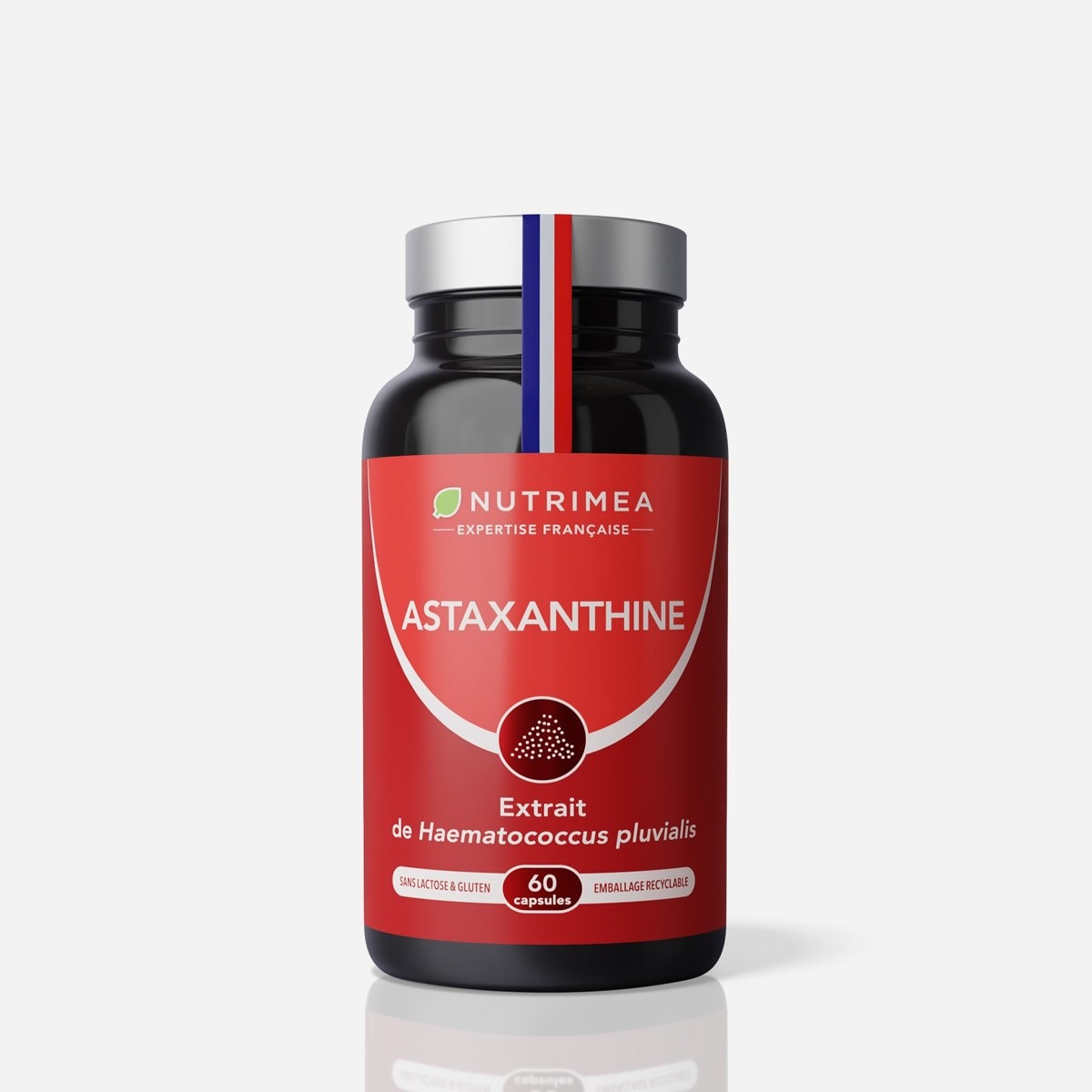
If you want to try it, Nutrimea’s Astaxanthine has a simple, naturally sourced formula at a sensible dose:
- 40 mg of Haematococcus pluvialis oleoresin at 10%, i.e. 4 mg of astaxanthin per capsule;
- supercritical CO2 extraction, no synthetic solvents, from fermenter-grown algae;
- 1 capsule a day; 60 capsules, a 2-month supply; vegan capsule, palm-oil, gluten and lactose free;
- batch tests published (microbiology, heavy metals); the brand highlights its “French expertise”;
- €21.90 per jar (price checked on 22/11/2026), about €0.37 a day.
How does the dose compare? 4 mg is half of EFSA’s safe adult amount and at the low end of doses on sale: a cautious choice. The studies above did not test this product, and some effects were mainly seen at 12 mg or more, so expect modest effects at best. The brand advises against use under 10; given EFSA’s opinion, we suggest keeping it for adults.
Partner link: we earn a commission if you order through this link, at no extra cost to you.
Prefer krill oil for omega-3s and astaxanthin together? See our best omega-3 supplement comparison.
Frequently asked questions
What is astaxanthin good for?
In humans: slightly better skin moisture and elasticity, lower oxidation markers and lower creatine kinase after exercise. No proven effect on wrinkles, performance, weight or blood pressure.
What are the side effects of astaxanthin?
Trials report none of note at usual doses, but they are small. EFSA considers 8 mg a day safe for adults, not for children at that dose.
Is astaxanthin dangerous?
Not at assessed adult doses. The concerns are high-dose products (12 mg and up), stacking supplements, and use in children, teens or pregnancy, where data are lacking.
Which foods contain astaxanthin?
Salmon (especially wild), trout, shrimp and krill. Vegetables do not contain it.
What is the best astaxanthin supplement?
One from Haematococcus algae, with the dose per capsule clearly stated (8 mg a day or less) and published batch testing.
Sources
- EFSA NDA Panel. Safety of astaxanthin for its use as a novel food in food supplements. EFSA Journal, 2020; 18(2): e05993. PubMed 32874213
- EFSA NDA Panel. Safety of a change in specifications of the novel food oleoresin from Haematococcus pluvialis containing astaxanthin. EFSA Journal, 2023; 21(11): e08338. PubMed 38027444
- Zhou X. et al. Systematic Review and Meta-Analysis on the Effects of Astaxanthin on Human Skin Ageing. Nutrients, 2021; 13(9): 2917. PubMed 34578794
- Ma B. et al. Astaxanthin supplementation mildly reduced oxidative stress and inflammation biomarkers. Nutr Res, 2022; 99: 40-50. PubMed 35091276
- Liu S. et al. The Effects of Astaxanthin Supplementation on Exercise Recovery Biomarkers and Exercise Performance. Nutrients, 2026; 18(10): 1570. PubMed 42197030
- Xia W. et al. The effects of astaxanthin supplementation on obesity, blood pressure, CRP, glycemic biomarkers, and lipid profile. Pharmacol Res, 2020; 161: 105113. PubMed 32755613
- Pei A. et al. Astaxanthin supplementation and cardiometabolic risk factors in overweight and obese adults. Nutr Metab, 2026; 23(1): 133. PubMed 43015860
- Chitchumroonchokchai C., Failla M.L. Bioaccessibility and intestinal cell uptake of astaxanthin from salmon and commercial supplements. Food Res Int, 2017; 99: 936-943. PubMed 28847430