Vitamin B6: benefits, foods, toxicity (neuropathy), upper limit and pregnancy nausea
The short answer
Vitamin B6 (pyridoxine) helps your body use protein, carbs and fat and make hemoglobin. Poultry, fish, liver, potatoes, pistachios and seeds supply plenty, so deficiency is rare. The real issue is too much: taken for long periods as a supplement, B6 can damage nerves (peripheral neuropathy: tingling, numbness, burning in the feet and hands). In 2023, the European Food Safety Authority (EFSA) set the safe upper limit at 12 mg a day for adults, including in pregnancy, while many supplements contain far more. Add up the B6 from every product you take. For morning sickness, B6 has a modest effect, at doses to discuss with your doctor or midwife.
This article is for information and does not replace medical advice.
What does vitamin B6 do?
“Vitamin B6” covers several related forms: pyridoxine (the usual supplement form), pyridoxal and pyridoxamine. The body converts them into pyridoxal 5-phosphate (P5P), the active form. According to the Belgian drug information center (CBIP), B6 is involved in amino acid metabolism, in carbohydrate and fat metabolism and in making hemoglobin. It also supports the nervous system, which is why both too little and far too much B6 cause similar nerve symptoms.
How much vitamin B6 do you need?
| Who | Reference intake | Upper limit (EFSA 2023) |
|---|---|---|
| Adult men | 1.7 mg/day | 12 mg/day |
| Adult women | 1.6 mg/day | 12 mg/day |
| Pregnancy | 1.8 mg/day | 12 mg/day |
| Breastfeeding | 1.7 mg/day | 12 mg/day |
| Children 1 to 6 | – | 3.2 to 4.5 mg/day by age |
| Children 7 to 17 | – | 6.1 to 10.7 mg/day by age |
Vitamin B6 foods
| Food | Vitamin B6 (mg per 100 g) |
|---|---|
| Dried baker’s yeast | 1.5 |
| Pistachios, roasted | 1.41 |
| Beef liver, cooked | 1.4 |
| Sunflower seeds | 1.24 |
| Turkey cutlet, grilled | 0.59 |
| Salmon, cooked | 0.5 |
| Tuna, cooked | 0.47 |
| Potato, baked | 0.31 |
| Banana | 0.18 |
A 150 g serving of turkey or salmon gives about 0.75 to 0.9 mg, a handful of pistachios (30 g) about 0.4 mg. A varied diet easily meets your needs without coming near the upper limit. According to EFSA, only regular users of high-dose supplements are likely to exceed it.
Deficiency is uncommon. The CBIP notes it mainly occurs with heavy alcohol use, long-term isoniazid (a tuberculosis drug) and some inherited metabolic diseases in infants, and may cause dermatitis, rash and neuropathy.
Vitamin B6 toxicity: neuropathy and side effects
In 1983, US doctors described 7 adults with unsteady gait and severe loss of sensation after taking high daily doses of pyridoxine; 4 were severely disabled and all improved after stopping (Schaumburg et al., 1983). EFSA now calls the link between excess B6 and peripheral neuropathy “well established”. Symptoms are mostly sensory: pain, tingling, numbness in the feet and limbs, burning, prickling or itching sensations. Published cases usually involve months to years at 50 mg to several grams a day.
Lower doses: what pharmacovigilance shows
- Netherlands, 2018: the Lareb pharmacovigilance center reviewed 90 neuropathy reports with products containing 1.4 to 100 mg of B6 per tablet. Causality was plausible, especially at high doses and long use, but doses under 50 mg a day could not be ruled out (van Hunsel et al., 2018);
- Netherlands, 2018 to 2023: the country capped B6 in supplements at 21 mg a day from October 2018. Across 224 reports to the end of 2023, high doses nearly vanished and reporting fell, but cases at low doses are still reported (van Hunsel et al., 2025);
- Europe, 2023: EFSA started from 50 mg a day linked to neuropathy in a case-control study, divided by 4 for uncertainty (the lower the dose, the longer symptoms take to appear) and set 12 mg a day for adults. Only regular users of high-dose supplements are likely to exceed it.
The most plausible mechanism, per a 2021 review: excess pyridoxine blocks the enzyme that activates it (pyridoxal kinase) in peripheral nerves, disturbing nerve signaling in sensory neurons first (Hadtstein and Vrolijk, 2021). We found no study showing that high-dose P5P is safe for nerves, and EFSA’s limit applies to vitamin B6 as a whole.
Watch out for stacking
B6 hides in magnesium-B6 combos, B-complexes, multivitamins, “hair”, “stress” and “energy” formulas. Check labels for “vitamin B6”, “pyridoxine hydrochloride” or “pyridoxal 5-phosphate” and add them up. If you have tingling or numbness while taking a B6 supplement, stop it and see your doctor, who can test your blood B6. In the 1983 case series, all patients improved after stopping.
B6 for nausea in pregnancy
- Sahakian et al., 1991 (59 women): 25 mg every 8 hours for 3 days reduced nausea only in women with severe nausea; at the end, 8 of 31 were still vomiting on B6 vs 15 of 28 on placebo;
- Vutyavanich et al., 1995 (342 women): 30 mg a day for 5 days reduced nausea more than placebo; the drop in vomiting was not significant.
The Cochrane review (Matthews et al., 2015; 41 trials, 5,449 women) rates the evidence for B6, doxylamine-pyridoxine and other anti-nausea options as limited: no intervention has high-quality evidence, which is not the same as being ineffective. These trials used 30 to 75 mg a day, above EFSA’s 12 mg limit, but for only a few days. In pregnancy, that decision belongs to your doctor or midwife, who may also suggest a licensed medicine. Don’t take high-dose B6 on your own or for weeks. For ginger, see our guide to ginger side effects, and for food, our pregnancy diet guide.
Magnesium and vitamin B6
B6 is often paired with magnesium. If your magnesium already contains B6, check the dose before adding more. For a magnesium without B6, see our magnesium glycinate guide and our best magnesium supplement comparison.
How to take vitamin B6 safely
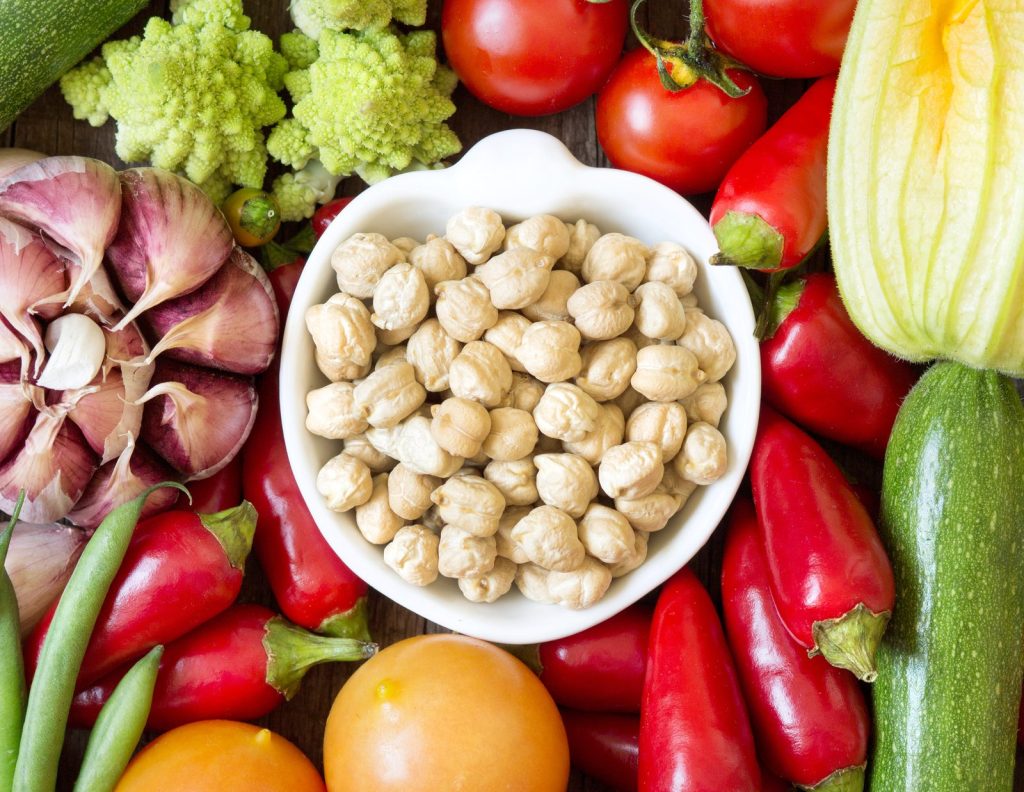
- Food first: poultry, fish, potatoes, pistachios, seeds and legumes.
- As a supplement: a dose close to your needs (1.4 to 2 mg) is enough to fill a gap; stay under 12 mg a day in total.
- Timing: with a meal; no time of day has been shown to be better.
- Skip high-dose “hair” or “energy” courses: we found no trial supporting them.
- Extra care: pregnancy and breastfeeding, children (lower limits), and people with existing neuropathy, such as from diabetes.
Dynveo: an active P5P vitamin B6 dosed at 1.4 mg
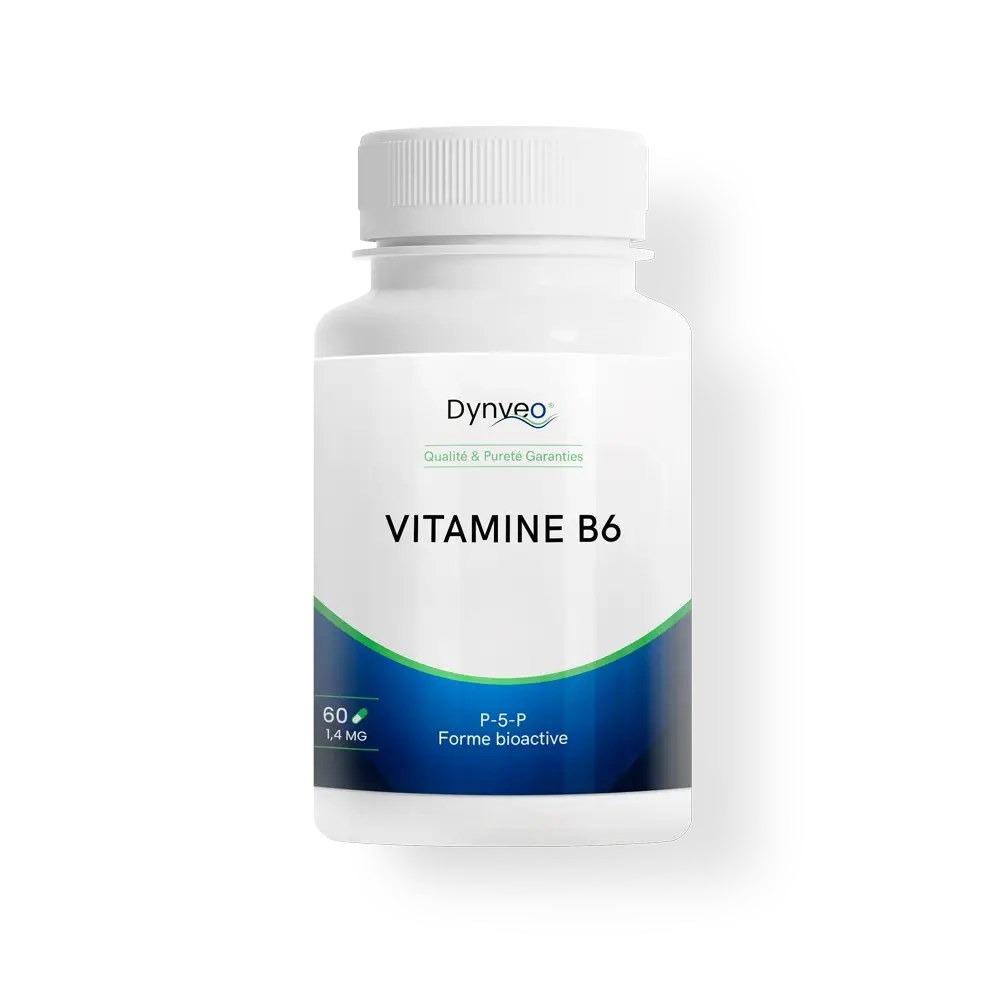
In a market where many B6 supplements far exceed needs, Dynveo’s Vitamine B6 active P5P takes a sensible, low-dose approach. The product page lists:
- 1.4 mg of vitamin B6 per capsule as pyridoxal 5-phosphate (P5P), 100% of the EU reference value;
- a short formula: acacia fiber, plant capsule (pullulan), vitamin B6;
- 1 capsule a day with a glass of water; 60 capsules, a 2-month supply;
- batch certificates of analysis online (microbiology, heavy metals);
- €10.90 per bottle (price checked on 22/11/2026), about €0.18 a day.
How does the dose compare? At 1.4 mg you stay below one-eighth of EFSA’s 12 mg limit, leaving room for B6 from food or other products. The page quotes an older 25 mg limit; the current European limit is 12 mg, and this product stays well under it. It is a top-up dose, not the dose used in morning sickness trials (30 to 75 mg), and this exact product has not been studied. The page advises asking a health professional in pregnancy and breastfeeding, and so do we.
See Dynveo Active P5P Vitamin B6 →
Partner link: we earn a commission if you order through this link, at no extra cost to you.
Frequently asked questions
What are the benefits of vitamin B6?
It helps you use protein, carbs and fat, make hemoglobin and keep your nervous system working. Extra B6 beyond your needs has no proven benefit, apart from a modest effect on pregnancy nausea under medical supervision.
What foods are high in vitamin B6?
Yeast, pistachios, liver, sunflower seeds, turkey, salmon, tuna and potatoes.
How much vitamin B6 is too much?
EFSA’s upper limit is 12 mg a day for adults, including pregnancy, counting all supplements. Neuropathy reports exist even below 50 mg a day.
What are the symptoms of vitamin B6 toxicity?
Tingling, numbness, burning or pain in the feet and hands, and balance problems. Stop the supplement and see your doctor.
Does B6 help with nausea in pregnancy?
Two trials found less nausea with 30 to 75 mg a day over a few days, mainly in severe nausea, but overall evidence is limited. Ask your doctor or midwife before taking it.
Sources
- EFSA NDA Panel. Scientific opinion on the tolerable upper intake level for vitamin B6. EFSA J, 2023; 21(5): e08006. PubMed 37207271
- EFSA. Dietary reference values: advice on vitamin B6, 24/06/2016. efsa.europa.eu
- van Hunsel F. et al. Vitamin B6 in Health Supplements and Neuropathy: Case Series Assessment of Spontaneously Reported Cases. Drug Saf, 2018; 41(9): 859-869. PubMed 29737502
- van Hunsel F. et al. Impact of Regulatory Action on Dose Maximalization for Vitamin B6 Dietary Supplements on the Reporting Pattern for Neuropathy. Pharmacoepidemiol Drug Saf, 2025; 34(2): e70108. PubMed 39888171
- Hadtstein F., Vrolijk M. Vitamin B-6-Induced Neuropathy: Exploring the Mechanisms of Pyridoxine Toxicity. Adv Nutr, 2021; 12(5): 1911-1929. PubMed 33912895
- Schaumburg H. et al. Sensory neuropathy from pyridoxine abuse. N Engl J Med, 1983; 309(8): 445-8. PubMed 6308447
- CBIP (Belgium). Neuropathies linked to prolonged use of high doses of vitamin B6 (in French). cbip.be
- Sahakian V. et al. Vitamin B6 is effective therapy for nausea and vomiting of pregnancy. Obstet Gynecol, 1991; 78(1): 33-6. PubMed 2047064
- Vutyavanich T. et al. Pyridoxine for nausea and vomiting of pregnancy. Am J Obstet Gynecol, 1995; 173(3): 881-4. PubMed 7573262
- Matthews A. et al. Interventions for nausea and vomiting in early pregnancy. Cochrane Database Syst Rev, 2015; (9): CD007575. PubMed 26348534