Vitamin A: benefits, foods, retinol vs beta carotene, pregnancy and toxicity
The short answer
Vitamin A is needed for vision in dim light, immunity, healthy skin and the development of an embryo. It comes in two forms: retinol, already active, found in animal foods (especially liver, plus butter and eggs), and beta carotene from orange and green vegetables, which your body converts as needed. Adults need 650 µg a day (women) to 750 µg (men). The European upper limit for retinol is 3,000 µg a day, and a single serving of liver can exceed it several times over. In pregnancy, too much retinol can cause birth defects: no liver and no vitamin A supplements without medical advice. And in smokers, beta carotene supplements increased lung cancer in two large trials.
This article is for information only and does not replace medical advice.
What does vitamin A do?
“Vitamin A” covers retinol and its derivatives (retinal, retinoic acid, retinyl esters) plus the carotenoids that can become retinol. The body stores it mainly in the liver, which is why you can go a long time without eating it, and also why excess builds up.
- Vision: in the retina, a retinol derivative captures light. The first sign of deficiency is poor vision in low light (night blindness);
- Skin and mucous membranes: it controls the renewal of cells lining the skin, eyes, airways and gut;
- Immunity: retinoic acid regulates more than 500 genes, many linked to immune function;
- Growth and pregnancy: it guides organ formation, which is exactly why excess is dangerous early in pregnancy.
Retinol vs beta carotene
| Retinol (preformed vitamin A) | Beta carotene (provitamin A) | |
|---|---|---|
| Sources | Liver, organ meats, butter, cheese, eggs, supplements | Carrots, sweet potatoes, pumpkin, leafy greens, apricots, mango |
| Activity | Active as is | Converted as needed: 6 µg beta carotene = 1 µg retinol (12 µg for other carotenoids) |
| Toxicity risk | Yes: birth defects, liver, bone; upper limit 3,000 µg/day | No vitamin A toxicity reported from carotenoids alone; harmless orange skin at very high intakes |
| As a supplement | Capped by the upper limit | Smokers should avoid it; no upper limit set for lack of data |
The key idea: beta carotene from vegetables is a safe source, because the body slows conversion when its stores are full. Retinol is absorbed whether you need it or not.
Vitamin A foods: the richest sources
| Food | Vitamin A (µg retinol equivalents per 100 g) | Main form |
|---|---|---|
| Beef liver | 7,740 (up to about 19,000 depending on the table) | Retinol |
| Sweet potato | 873 | Beta carotene |
| Carrot | 725 | Beta carotene |
| Pumpkin | 502 | Beta carotene |
| Kale | 239 | Beta carotene |
| Apricot | 196 | Beta carotene |
| Egg | 160 | Retinol |
| Spinach | 134 | Beta carotene |
| Mango | 72 | Beta carotene |
One medium carrot or a serving of sweet potato covers a large share of a day’s needs with no risk of excess. A little fat in the meal improves carotenoid absorption.
Liver: a special case to limit
With 7,740 µg per 100 g on our food page and an EU average close to 19,000 µg, a 100 g serving supplies 2.5 to 6 times the daily upper limit. An occasional serving is fine because the body stores vitamin A, but repeated servings are not. EFSA estimates that Europeans stay under the limit if liver, organ meats and their products (pâtés, liver sausage) are eaten once a month or less.
Vitamin A deficiency
Worldwide, vitamin A deficiency remains a public health problem where diets are very poor, and high-dose programs target young children there. In Western countries, with dairy, eggs and colorful vegetables, deficiency is rare in healthy adults. It mostly occurs with fat malabsorption, liver disease, alcohol misuse or bariatric surgery. Early signs are poor night vision, then dry eyes. Testing and treatment belong with your doctor: don’t self-supplement “for your eyes” without a diagnosis.
Vitamin A in pregnancy: too much can cause birth defects
This is the reason the upper limit exists. Retinol and its derivatives guide organ formation; in excess they disrupt development of the face, heart and nervous system. Prescription retinoids such as isotretinoin for acne are strictly contraindicated in pregnancy for the same reason.
- In a US study of 22,748 pregnant women (Rothman, 1995), those taking more than 10,000 IU (3,000 µg) of supplemental vitamin A a day had a 4.8-fold higher rate of certain birth defects; the authors estimated that about 1 in 57 exposed babies had a defect caused by the supplement;
- The risk was concentrated in exposure before week 7, often before women know they are pregnant. EFSA identifies the first 60 days as the most sensitive window;
- EFSA based its 3,000 µg limit on this risk and advises women planning a pregnancy or pregnant not to eat liver products.
Needs rise slightly in pregnancy, but orange and green vegetables, eggs and dairy cover them safely. Good prenatal vitamins use beta carotene or low retinol doses: read the label. See our pregnancy diet guide and our article on foie gras when pregnant.
Beta carotene and smokers: the ATBC and CARET trials
| Trial | Participants and dose | Result |
|---|---|---|
| ATBC (Finland, 1994) | 29,133 smokers, 20 mg beta carotene/day, 5 to 8 years | Lung cancer +18%, total mortality +8% |
| CARET (US, 1996) | 18,314 smokers, former smokers and asbestos workers, 30 mg beta carotene + 25,000 IU retinol/day | Lung cancer +28%, all-cause death +17%; stopped 21 months early |
EFSA’s 2024 conclusion: smokers should avoid supplements containing beta carotene, and everyone else should use them only to meet vitamin A needs. Nothing similar has been seen with carrots or sweet potatoes: the problem is concentrated doses. Watch out for “tanning” capsules, often high in beta carotene.
Vitamin A toxicity: other risks
- Bone: among 72,337 postmenopausal US nurses followed for 18 years (Feskanich, 2002), those getting 2,000 µg or more of retinol a day had 1.9 times more hip fractures than those under 500 µg. This is observational, but European experts had already advised capping retinol at 1,500 µg a day after menopause;
- Liver: liver damage has been reported with long-term intakes around 7,500 µg a day;
- Mortality: in the 2012 Cochrane review of antioxidants, vitamin A dose was associated with higher mortality, and beta carotene increased it in high-quality trials.
The classic trap is stacking: a multivitamin, a “skin” or “eye” supplement, cod liver oil and the odd liver pâté. Add up the labels; our multivitamin comparison shows the vitamin A in each product.
How much vitamin A do you need?
- Needs: 650 µg/day for women, 750 µg/day for men (EFSA).
- Upper limit: 3,000 µg retinol/day from food and supplements, including pregnancy; lower for children (600 to 2,600 µg by age).
- Every day: orange or green vegetables, eggs and dairy; liver once a month at most, and never if pregnant or planning to be.
- Supplements: only if your diet is genuinely low in vitamin A or on medical advice, well under the limit and counting everything else you take. With a meal containing some fat.
- Smokers: no beta carotene supplements.
Nutrition•pro Retinol: 1,000 µg, well under the upper limit
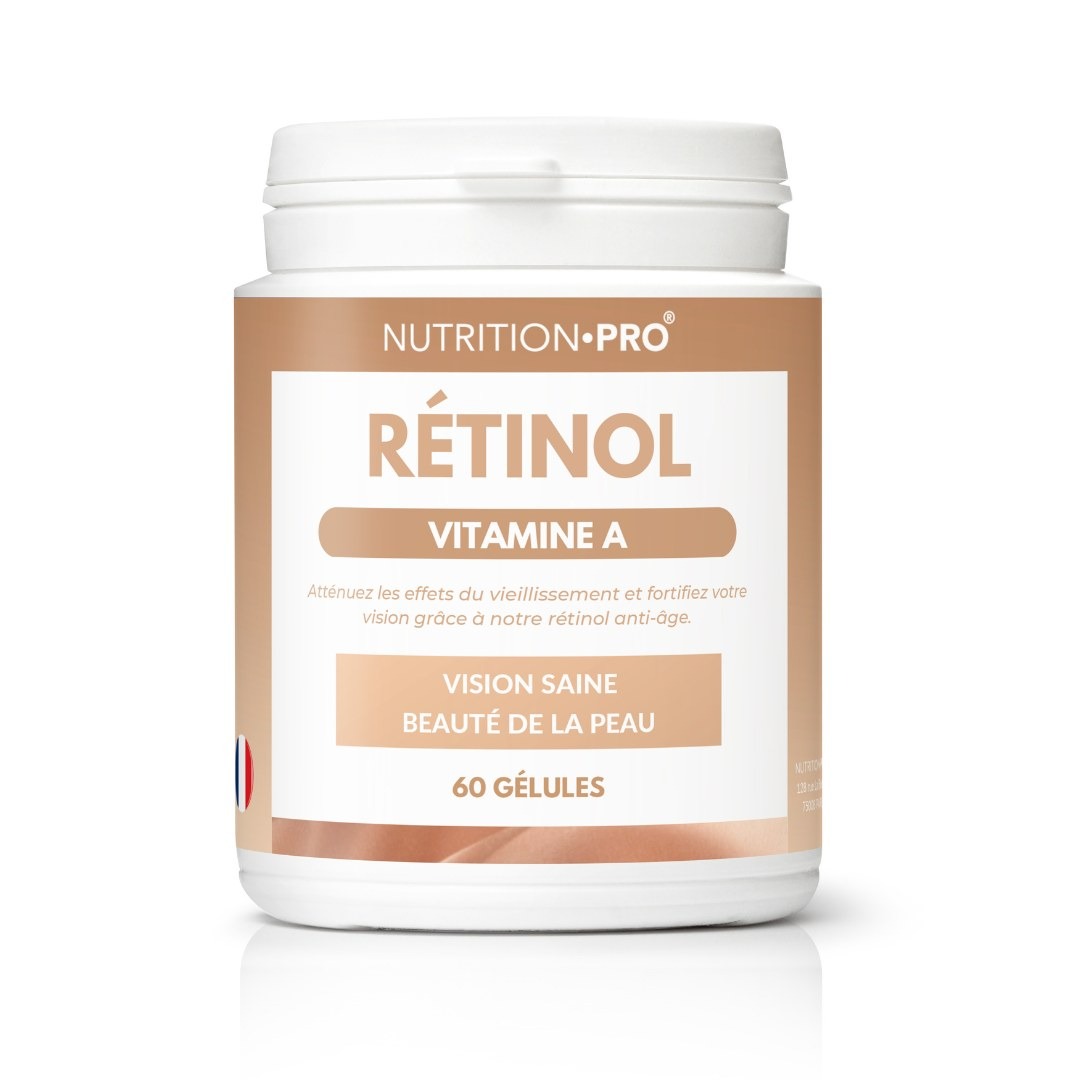
If your diet is low in vitamin A (little dairy, eggs or colorful vegetables) and you want a simple source, Nutrition•pro’s Retinol (vitamin A) has a short formula and a measured dose. The product page lists:
- 1 capsule a day with a meal and a large glass of water;
- per capsule: 1,000 µg vitamin A (retinyl acetate), 125% of the EU reference value, with acacia fiber (144 mg) in a plant-based capsule;
- a single-ingredient formula, with no beta carotene;
- 60 capsules, a 2-month course; the brand says it designs and makes its formulas in France;
- clear warnings on the label: not recommended in pregnancy or breastfeeding, medical advice recommended after menopause and when on medication;
- €24.99 per jar (price checked on 22/11/2026), about €0.42 a day; €22.49 with the code SEOCONSULTINGSL (10% off), about €0.37 a day.
How does the dose compare? 1,000 µg is slightly above daily needs and one third of the 3,000 µg upper limit: with an ordinary diet you stay below it. Using retinol rather than beta carotene avoids the risk seen with beta carotene capsules in smokers. However, we found no trial showing that oral retinol improves wrinkles or skin glow in people who are not deficient: proven anti-aging effects concern retinoids applied to the skin or prescribed.
To use it safely: never during pregnancy or if you are planning one; after menopause, check with your doctor (the European benchmark is 1,500 µg retinol a day in total); don’t combine it with a multivitamin containing vitamin A, cod liver oil or liver; keep it out of children’s reach; and take it in limited courses rather than indefinitely.
See Nutrition•pro Retinol (vitamin A) →
Partner link: we earn a commission if you order through this link, at no extra cost to you.
Frequently asked questions
What foods are high in vitamin A?
Liver by far, then sweet potatoes, carrots, pumpkin, kale, apricots, eggs and spinach. Orange and green vegetables are the safest source because their beta carotene does not cause excess.
What are the signs of vitamin A deficiency?
Poor vision in dim light first, then dry eyes. In Western countries it is rare outside malabsorption, liver disease or bariatric surgery.
What are the symptoms of vitamin A toxicity?
Chronic excess can harm the liver and bones; in pregnancy it can cause birth defects. It comes from retinol (liver, supplements), not from beta carotene in vegetables.
Is vitamin A safe during pregnancy?
Not as a retinol supplement or from liver without medical advice: above 3,000 µg a day from supplements, birth defect risk rises sharply, especially early on. Colorful vegetables cover needs safely.
Is beta carotene bad for smokers?
As a supplement, yes: two large trials found 18% and 28% more lung cancers. From food, no problem has been seen.
Sources
- EFSA NDA Panel. Scientific opinion on the tolerable upper intake level for preformed vitamin A and β-carotene. EFSA J, 2024; 22(6): e8814. PubMed 38846679
- Rothman K.J. et al. Teratogenicity of high vitamin A intake. N Engl J Med, 1995; 333(21): 1369-73. PubMed 7477116
- ATBC Study Group. The effect of vitamin E and beta carotene on the incidence of lung cancer and other cancers in male smokers. N Engl J Med, 1994; 330(15): 1029-35. PubMed 8127329
- Omenn G.S. et al. Effects of a combination of beta carotene and vitamin A on lung cancer and cardiovascular disease. N Engl J Med, 1996; 334(18): 1150-5. PubMed 8602180
- Feskanich D. et al. Vitamin A intake and hip fractures among postmenopausal women. JAMA, 2002; 287(1): 47-54. PubMed 11754708
- Bjelakovic G. et al. Antioxidant supplements for prevention of mortality. Cochrane Database Syst Rev, 2012; CD007176. PubMed 22419320