Group · Nuts & seeds
Sunflower seeds
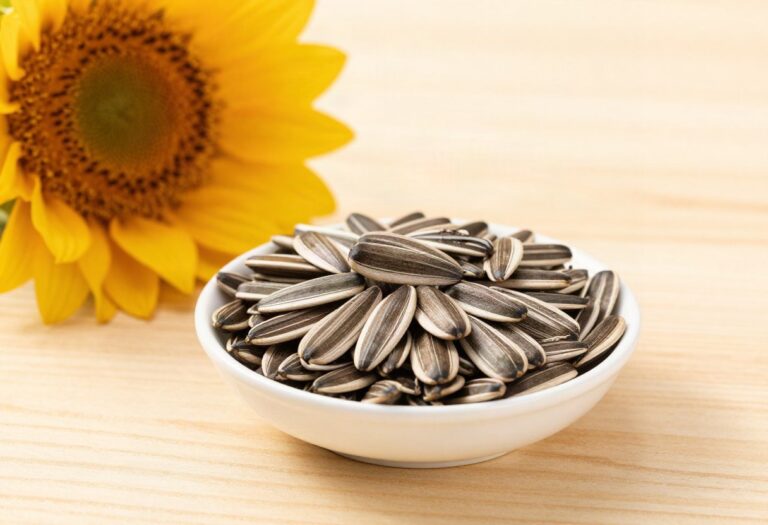
Small but remarkably nutritious, sunflower seeds are the hulled kernels of the sunflower (Helianthus annuus). They come in different forms: plain, roasted, salted or built into mixes of nuts and seeds, on salads, in bread or as a topping for yoghurt. Crunchy with a light nutty taste, they fit easily into a balanced diet as long as you keep an eye on the quantity. Rich in healthy fats, plant protein and micronutrients, they are among the nutrient-dense foods. With around 653 kcal per 100 g, they are energy-rich: a small handful is enough to enjoy their benefits without weighing down your day’s calorie total.
Macronutrient breakdown
Nutrition table per 100 g
| Calories | 653 kcal |
| Kilojoules | 2700 kJ |
| Protein | 25,1 g |
| Carbohydrate | 10,1 g |
| Fat | 55,5 g |
| Fibre | 6,4 g |
Micronutrients per 100 g
All measured nutrients, ranked by share of the daily reference intake.
- Vitamin E35,2 mg293 %
- Omega-6 LA27,8 g278 %
- Vitamin B11,98 mg180 %
- Copper1,5 mg150 %
- Manganese1,95 mg98 %
- Magnesium364 mg97 %
- Vitamin B61,24 mg89 %
- Phosphorus477 mg68 %
- Vitamin B9dietary folate equivalents254 µg
See the other 12 nutrients
- Zinc3,8 mg38 %
- Iron4,9 mg35 %
- Potassium645 mg32 %
- Vitamin B34,8 mg30 %
- Selenium8,41 µg15 %
- Vitamin B50,83 mg14 %
- Vitamin B20,16 mg11 %
- Calcium78 mg10 %
- Omega-3 ALA0,16 g8 %
- Iodine5 µg3 %
- Vitamin C1,4 mg2 %
- Vitamin A2,5 µg0 %
Anses Ciqual 2025. Source: Anses, 2025, Ciqual food composition table
Tips
Sunflower seeds are best eaten in small portions of 15 to 30 g, that is one to two tablespoons. Sprinkle them over a mixed salad, a bowl of soup, porridge or plain yoghurt for crunch and bite. You can also work them into homemade bread dough, cereal bars or a homemade granola. Store them in an airtight container, away from light and heat, because their fats oxidise and go rancid fairly quickly.
In terms of nutrition facts, these seeds provide plant protein, fibre and above all unsaturated fatty acids. They concentrate antioxidant vitamin E, as well as magnesium, phosphorus, zinc, copper and selenium. Their glycaemic index is low, which makes them a useful snack for curbing cravings. To best preserve their benefits, choose the plain version rather than very salty seeds: you can compare them with pumpkin seeds or sesame seeds, just as handy to slip into your recipes.
For active people, sunflower seeds are a practical snack before or after exercise: they combine energy, protein and minerals that are useful for muscle recovery and for maintaining electrolyte balance. Slip them into a homemade bar or a mix of dried fruit for a protein snack that is easy to carry in a gym bag. Remember, though, to pair them with good hydration and a source of complex carbohydrate if you want to replenish your energy stores.
For weight control, remember that the energy density is high: with nearly 585 calories per 100 g, it is better to measure your portion than to dip straight into the packet. A small handful fills you up and provides nutrients, but too much can quickly push up the energy total. You can place these values on the food calorie table and discover other options in the nuts and seeds family.
- How to eat them: plain, lightly dry-roasted or worked into your dishes.
- Slimming tip: swap a shop-bought snack for a measured portion of seeds.
- Variations: also try almonds to vary textures and flavours.
