Group · Nuts & seeds
Almond butter
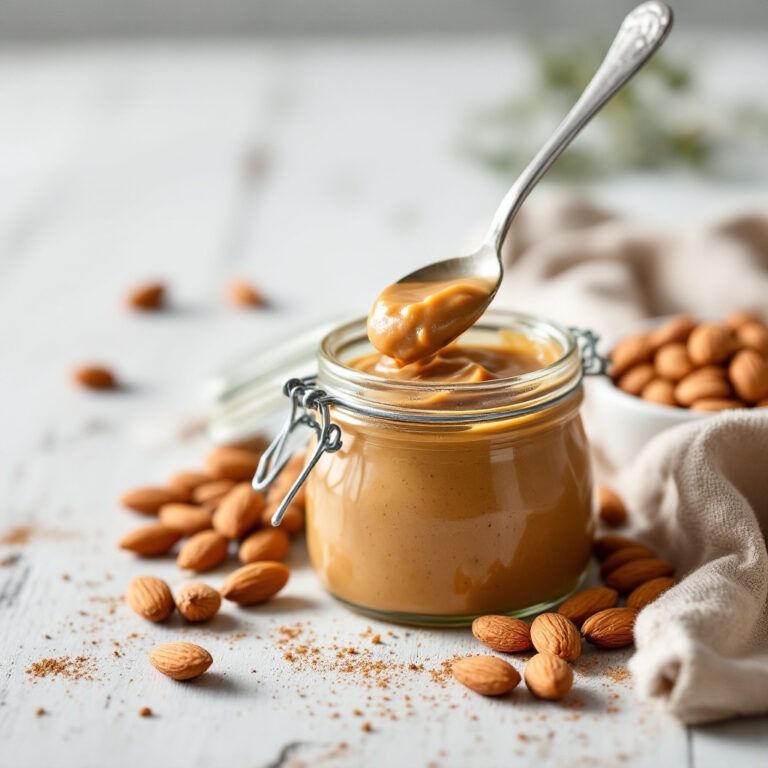
Almond butter is a smooth paste made by grinding almonds, with no additives. Rich in healthy fats, plant protein and magnesium, it is a good replacement for butter in many recipes and adds a mild, indulgent flavour. Calorie-dense, it should be eaten in small amounts.
Macronutrient breakdown
Nutrition table per 100 g
| Calories | 614 kcal |
| Kilojoules | 2568 kJ |
| Protein | 21 g |
| Carbohydrate | 18,9 g |
| Fat | 55,5 g |
| Fibre | 10,3 g |
Micronutrients per 100 g
All measured nutrients, ranked by share of the daily reference intake.
- Vitamin E24,21 mg202 %
- Manganese2,13 mg107 %
- Copper0,93 mg93 %
- Magnesium279 mg74 %
- Phosphorus508 mg73 %
- Vitamin B20,94 mg67 %
- Calcium347 mg43 %
- Potassium748 mg37 %
See the other 7 nutrients
- Zinc3,29 mg33 %
- Iron3,49 mg25 %
- Vitamin B33,16 mg20 %
- Vitamin B60,1 mg7 %
- Vitamin B50,32 mg5 %
- Selenium2,4 µg4 %
- Vitamin B10,04 mg4 %
USDA FoodData Central (SR Legacy)
Tips
Almond butter can be spread on toast, stirred into porridge or a smoothie, and used as a binder in healthier baking in place of butter. It is used in chocolate almond cookies and energy balls.
- Nutrition values: rich in unsaturated fat, plant protein, fibre, vitamin E and magnesium.
- For athletes: a spoonful on porridge or in a shaker helps meet calorie needs with good nutrients.
Choose a « wholegrain » one (made with the skins) and with no added sugar or oil. Like peanut butter, it is high in calories: one to two teaspoons are enough. See the Nuts & Seeds family.
Sources
Average nutrition values per 100 g, given as a guide only (they may vary by brand and preparation).